Florida’s Gulf Coast was struck by Hurricanes Ian, Helene, and Milton within just a few years. These disasters caused widespread disruption across the region.
Several coastal towns lost power, internet access, and critical services.
In one Florida community, however, things unfolded differently altogether.
A new development called Babcock Ranch in Lee County survived Hurricane Ian, Hurricane Helene, and Hurricane Milton. Unlike many surrounding communities, it avoided long-term outages and widespread disruption.
As these storms moved through the region, life in Babcock Ranch continued largely uninterrupted.
That outcome raised an obvious question. Why was this community able to maintain normalcy when all of the surrounding communities could not do so?
A town that became a refuge
Babcock Ranch is located inland from Florida’s Gulf Coast to minimize the threat from storm surges. The developers focused on building the community with a sustainable and resilient design as opposed to a post-storm retrofit.
In 2022, Hurricane Ian made landfall and severely damaged a majority of the surrounding coastal communities.
Coastal communities experienced massive power outages, flooding, and prolonged recovery times.
Babcock Ranch, on the other hand, experienced little to no issues related to these concerns. Reports from various news organizations indicated that Babcock Ranch maintained power throughout the storms.
Much of the surrounding area was left in disarray.
Residents from surrounding communities took shelter in Babcock Ranch as storms wreaked havoc elsewhere in Southwest Florida. At this point, Babcock Ranch was no longer simply a model for sustainable practices.
It had become an example of what can happen when a community is built with potential hazards in mind.
The community was now drawing attention far beyond southwest Florida.
The storms exposed a different kind of resilient infrastructure
Babcock Ranch also demonstrated how resilient infrastructure can withstand multiple hurricanes. Many hurricane-related outages begin with a single issue.
Fallen trees damage utility poles. Power lines fail.
Entire neighborhoods lose electricity, but Babcock Ranch was designed differently.
Its electrical infrastructure was underground rather than overhead on utility poles. Placing those lines underground provided added protection.
It reduced the risk posed by falling trees and damaged utility poles.
In addition to protecting its electrical infrastructure, Babcock Ranch also included several safeguards against flooding.
These protections include drainage systems, retention ponds, and preserved green spaces. They also include flood-management features designed to handle large volumes of rainwater.
Questions about resilient community design have also been explored by The University of Texas Permian Basin.
Many of these resilience measures have also been documented by Babcock Ranch.
Additionally, each home in the community was built to current hurricane-resistant standards and designed with severe weather in mind.
However, buried power lines and more durable construction alone were not enough. They did not fully explain why Babcock Ranch remained operational during numerous severe storms.
Something else helped maintain the operation of Babcock Ranch’s vital infrastructure under stressful environmental conditions.
More than 687,000 solar panels
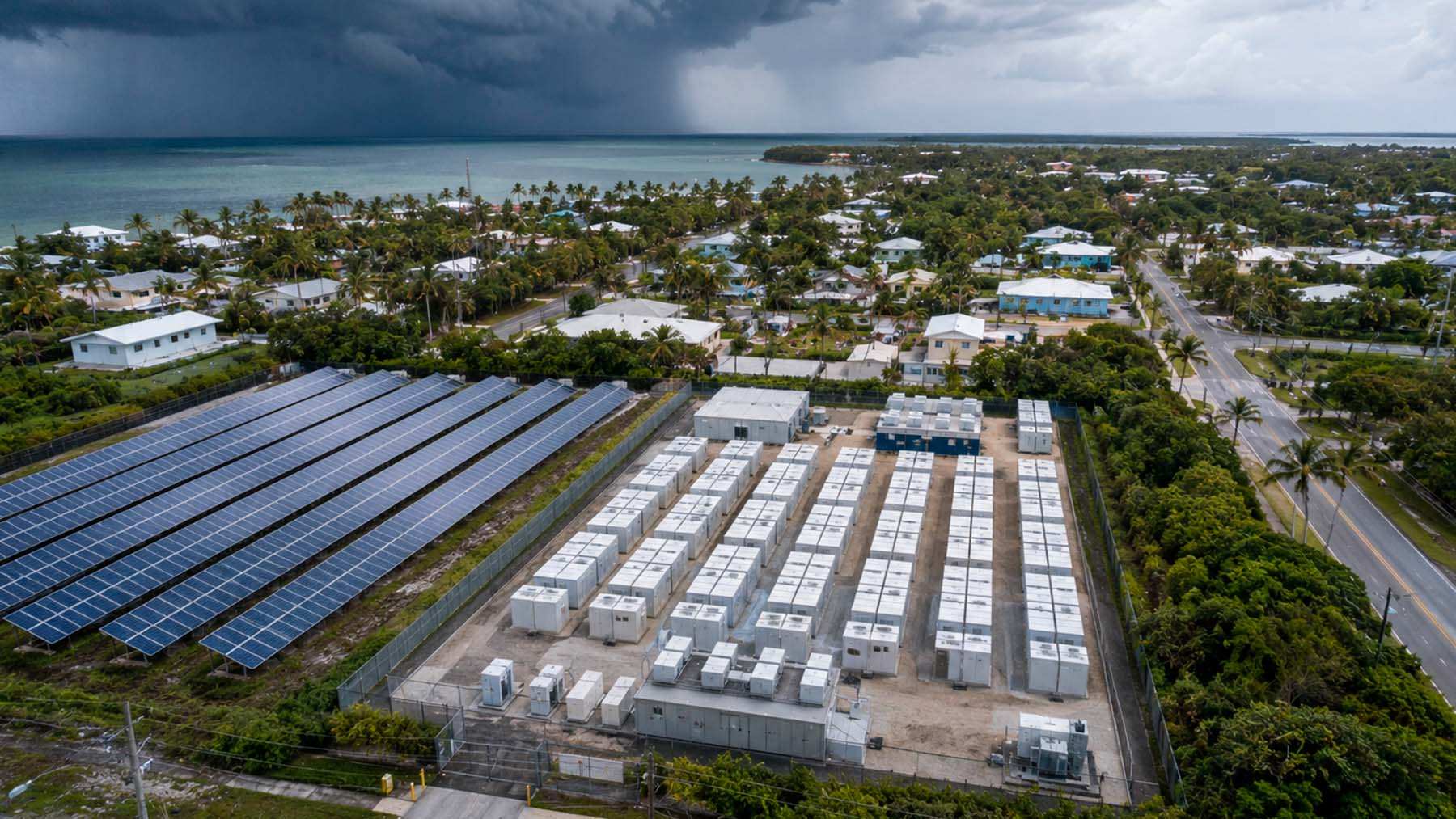
Babcock Ranch is powered by a large-scale solar facility that contains approximately 687,000 individual solar panels. In addition to solar generation, Babcock Ranch uses large-capacity battery storage units.
It also relies on modern grid technologies that improve reliability during extreme weather events.
Babcock Ranch’s underground electrical distribution system provides another layer of protection. It limits exposure to wind-related failures caused by debris and fallen tree branches.
Babcock Ranch utilizes solar generation, battery storage, and underground utilities.
It also incorporates flood-control measures and hurricane-resistant construction methods.
No single component explains Babcock Ranch’s performance during extreme weather.
Instead, every aspect of the community was designed with future hurricanes in mind. Similar questions are now being asked by communities preparing for the next major storm.
Read the whole thing?
Get the week's signal, not the noise
Our sharpest reporting on energy, climate and nature — free, once a week.