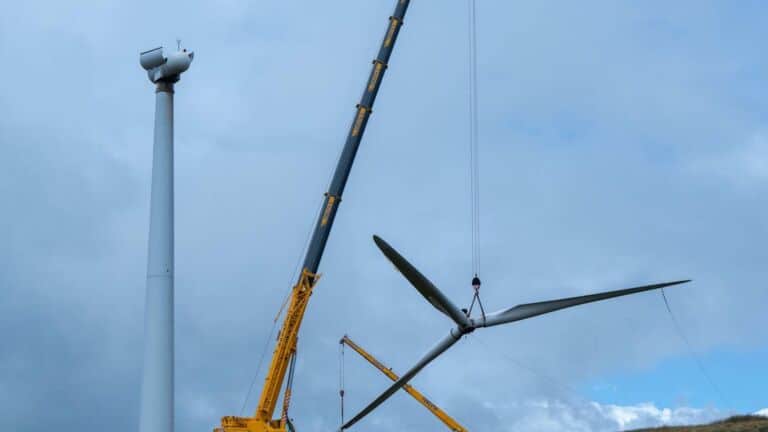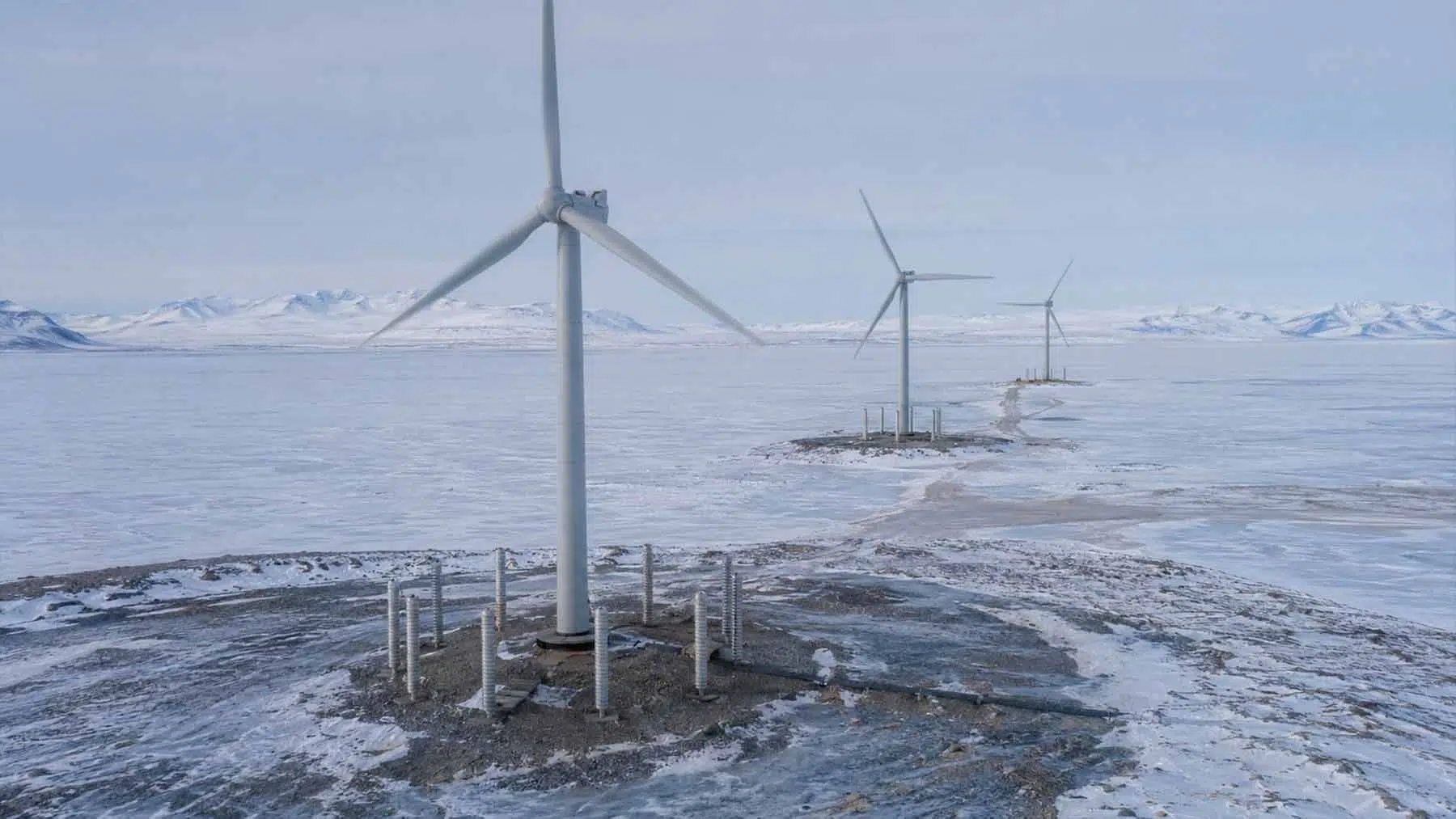
The Alaskan terrain appeared as if it were immobile, with snow layered across the ground and ice extending into the distance.
It seemed like a good idea to install wind turbines here. To a lot of folks, that would seem reasonable.
However, the engineers knew otherwise. Underneath the ice and snow was permanently frozen land that had remained untouched for thousands of years.
As soon as that frozen ground melts, the ground above it will start to shift.
Therefore, before these turbines could generate a single watt of electricity, another problem needed to be solved underground.
Everything looked right for the turbines
There is a remote area of Alaska with no reliable electricity, which is why the engineers wanted to locate the wind turbines there. This is also the strongest source of wind anywhere in the U.S.
The problem underneath the turbine site was different.
Nearly all of the area rests upon permafrost, a layer of frozen soil that can remain frozen for thousands of years.
Permanently frozen soil provides a base for roads, homes, oil pipes, and other important infrastructure throughout northern Alaska.
When the ground starts to melt, the soil loses strength and settles. Large structures become unstable when the soil they sit on starts to loosen up.
Just building the turbines was only half of the project.
Stabilizing the permafrost was also critical to maintaining the foundation’s stability for decades.
Beneath the surface, a different problem emerged
From the surface, the turbines appeared identical to any other turbines. Each tower extends high into the Arctic atmosphere.
Above, the blades capture energy from the massive winds sweeping across the open expanse.
No visual indication exists that there is something unique occurring below.
All of the engineering effort went on underneath the surface. Engineers spent years studying how heat moved through the ground.
Different foundation methods for building on frozen ground have also been explored, including approaches discussed by Helical Pile World.
An increase in temperature in the soil could potentially compromise the stability of the entire system.
Engineers knew they needed to protect the foundation from a problem that could take years to develop.
This innovative system was designed to protect the frozen ground beneath the structure, not to provide direct structural support. A number of years after installation, this unique solution would become one of the most interesting aspects of the project.
Hidden inside a simple design was the answer
Hidden beneath the foundations was technology that worked quietly year after year. It was designed to protect the frozen soil that supported the turbines above.
Unlike many engineering solutions, it required no mechanical components or electrical power.
Research by the USGS has examined how changing conditions affect permafrost and the landscapes built upon it.
One small device changed everything
At the center of the design was a thermosiphon, a sealed tube made up of two sections connected by a valve.
Its upper section is much longer than the lower section.
Buried beside each foundation, it resembles a long metal tube. Inside each tube is a specially developed fluid.
During Alaska’s extremely cold winter months, the surrounding air is typically cooler than the existing frozen ground.
Inside, the specially developed fluid absorbs heat from the underlying frozen soil.
It then vaporizes and moves upward toward the colder air above the ground. Upon reaching this cooler environment, the excess heat contained within the vaporized fluid is removed by the ambient cool air.
After releasing its heat, the vapor returns to a liquid state. It then moves downward into the surrounding frozen soil once again.
This natural process occurs continuously using only gravity and atmospheric pressure.
Each tube acts as a passive “heat sink,” removing heat from the permafrost whenever conditions allow.
Read the whole thing?
Get the week's signal, not the noise
Our sharpest reporting on energy, climate and nature — free, once a week.