Thirty-six owl chicks hatched beneath an Arizona solar power plant.
No one ever intended the site to become an owl nursery.
The facility was built to generate electricity across a vast stretch of desert outside Phoenix. Instead, it became the setting for an unusual burrowing owl experiment.
Workers even installed lights to attract insects at the site.
The project eventually produced an unexpected outcome. Why would a large solar farm become home to dozens of baby burrowing owls?
A species running out of places to live
The Burrowing Owl faces significant challenges throughout the American West. Most owls build nests above ground.
Burrowing owls use burrows originally created by other animals for nesting and shelter. These locations have been lost through urbanization, agricultural expansion, and habitat fragmentation.
The species has declined in the United States and is considered a conservation concern.
Arizona-based conservation organizations regularly move entire owl colonies to prevent loss due to urban development. In 2025, such action was taken when a housing development threatened a long-established owl colony.
There were nine owl pairs plus a lone male who required a new home.
Conservationists searching for alternative relocation sites encountered another challenge.
Agricultural lands previously used for relocations were either being developed or rapidly disappearing.
That’s when they found what initially appeared to be an unlikely solution: a solar farm.
An unusual experiment in the desert
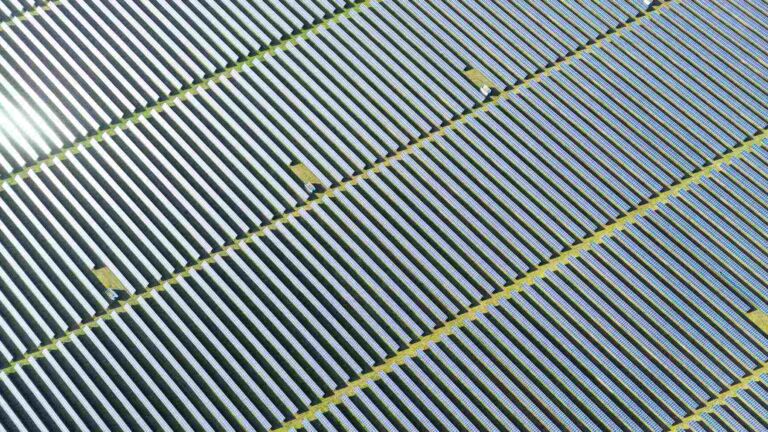
Sun Streams Solar Complex (Longroad Energy), located west of Phoenix, is composed of thousands of acres of desert terrain.
Wildlife surveys conducted during planning phases for the facility revealed the presence of burrowing owls within the area.
The facility stretches across a broad desert landscape suited to large-scale solar development. The discovery created an opportunity to test wildlife conservation alongside renewable energy production.
That discovery led to a partnership between Wild at Heart and Longroad Energy.
Would displaced burrowing owls be able to produce offspring while inhabiting massive-scale solar facilities?
Artificial underground burrows were installed across the property.
The relocated owls were then moved into these new burrows and monitored closely.
Cameras recorded the owls continuously. Thawed mice were provided by facility staff until the owls adapted to their new residence.
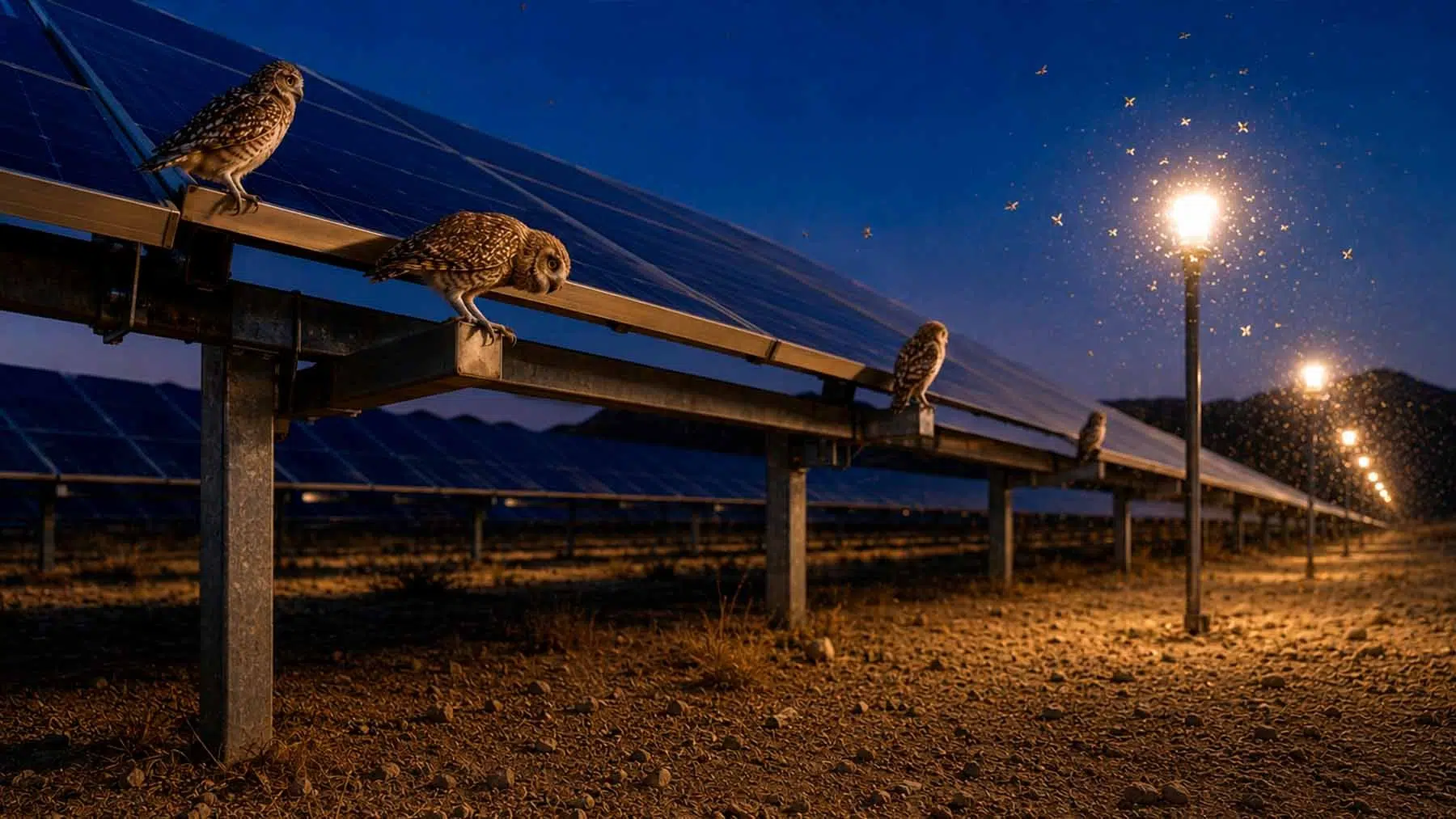
Lights were also installed to attract insects to the site. These insects served as additional possible prey for the owls.
The effort drew attention from conservation groups, including the National Audubon Society. Within weeks, evidence of the project’s success emerged.
The project begins to pay off
Success was achieved, but answers were not immediate.
Conservationists monitored the colony as the breeding season progressed.
Early indications were positive, with all females successfully producing eggs.
Why did the solar farm become an owl nursery?
The answer was not directly related to the solar panels themselves. The solar farm became an owl nursery because it provided replacement habitat for displaced burrowing owls.
Conservationists created artificial burrows, monitored the birds, supplied food, and supported their transition to the new site.
By late June, 36 chicks had hatched. Within roughly three months after hatching, 29 young owlets successfully fledged.
Once the young owls were strong enough, conservationists stopped feeding them and encouraged them to hunt on their own.
Researchers later found insect remains in the owls’ droppings, suggesting they were adapting to their new environment. Research continues today about how burrowing owls react to large-scale solar farms.
Some think the openness provides benefits through greater visibility and better hunting opportunities.
What began as a relocation effort became something much larger.
A solar farm designed to collect sunlight also generated a new generation of burrowing owls.
As development reshapes the desert, similar projects may show whether wildlife and renewable energy can coexist.
Read the whole thing?
Get the week's signal, not the noise
Our sharpest reporting on energy, climate and nature — free, once a week.