Wild foxes began slaughtering livestock at the Shoalhaven Community Solar Farm in New South Wales.
Two llamas were deployed as “livestock guardians.” It’s a practice backed by the 2024 NSW Department of Primary Industries.
At first, the sheep solved a simple problem.
Rapid grass growth creates a fire hazard for solar infrastructure.
Machines cost money and need constant maintenance.
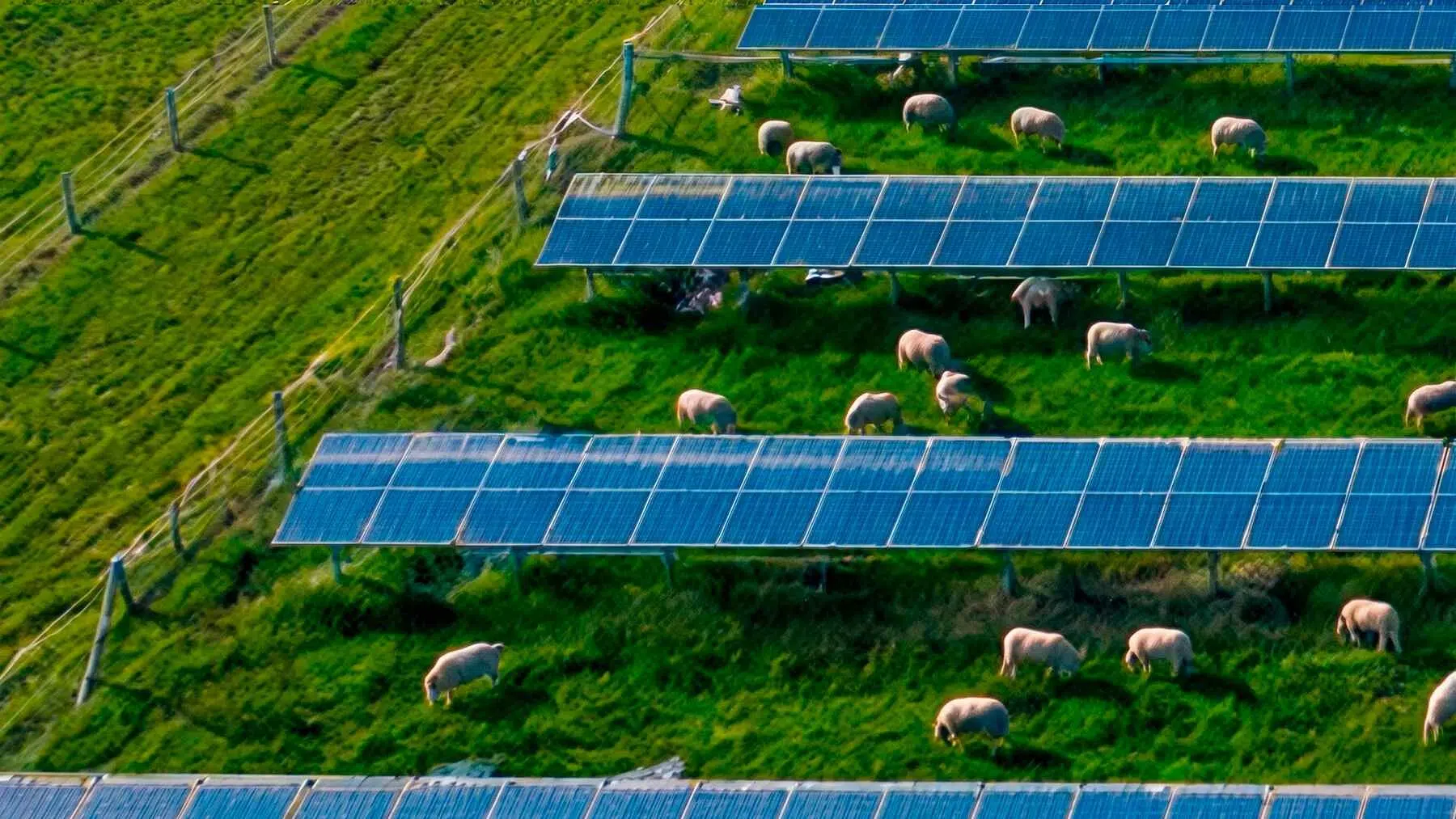
“Solar grazing” sheep reduced maintenance costs by 30% while cooling under the 3,000sqm of panels.
The animals grazed beneath the panels naturally.
The panels also protected them from Australia’s intense heat.
But another threat soon appeared.
Wild foxes began targeting the flock at night. The farm needed protection.
Invasive European foxes kill over 190 million birds and millions of livestock in Australia annually.
Operators searched for a solution that could live beside the sheep.
Their answer arrived with long necks and fearless instincts.
Llamas possess a 360-degree field of vision and an innate hatred for canids.
Could llamas really guard an entire solar farm flock?
How the solar farm changed completely
The Shoalhaven Community Solar Farm already operated differently from most energy projects.
The facility combined solar power with livestock grazing.
Thousands of panels stretched across the property.
The sheep controlled the vegetation naturally.
That reduced mowing costs around the panels.
The setup also kept the animals cooler during hot weather.
But foxes quickly discovered the grazing flock.
Fox attacks regularly threaten livestock across rural Australia.
The solar farm suddenly faced a new challenge.
Operators needed natural guardians, not more machinery.
The farm introduced “KillerWatt” and “TerrorWatt,” names referencing the site’s 3-megawatt capacity.
The names matched their job.
Guardian llamas reduce sheep predation by up to 100% in controlled Australian studies.
They naturally confront predators instead of fleeing.
The sheep reacted almost immediately after the llamas arrived.
The flock became noticeably calmer once that happened.
A new patrol squad to protect the livestock all night long
The llamas quickly became more than attractions.
They stayed close beside the sheep constantly.
They monitored fences and watched the open ground carefully.
The patrols became nonstop.
Unlike sheep, llamas rarely panic during danger.
They often challenge smaller predators aggressively.
That behavior mattered at the solar farm.
The site contains long shaded rows beneath the panels.
Those areas could easily hide predators moving unseen.
Sheep lack defense. Foxes utilized the solar array’s 800kW infrastructure for cover. They almost turned the solar site into their natural habitat.
The llamas changed that balance almost immediately.
According to Repower Shoalhaven, the pair protected grazing sheep daily.
The llamas used “stotting”—a high-footed jump—and piercing alarm screams to alert the flock.
They positioned themselves between threats and the flock.
They also reacted quickly to unfamiliar animals.
That instinct explains their growing popularity on farms worldwide.
The solar farm bodyguards
“Agrivoltaics” is a global trend, optimizing land for both 1,000 homes’ worth of energy and protein.
What happened after the llamas arrived surprised many people.
KillerWatt and TerrorWatt behaved exactly like livestock bodyguards.
They patrolled near the sheep constantly.
They guarded the flock aggressively.
When threats approached, the llamas became defensive immediately.
They chased predators away from grazing areas.
That behavior helped calm the sheep significantly.
It also discouraged foxes from approaching the property.
Unlike sheep, llamas stay composed during confrontations.
They often charge directly toward danger.
The foxes faced a new type of resistance nobody would have expected
The setup also revealed something bigger happening in renewable energy.
Dual-use solar farms increase land productivity by over 60%.
Many solar farms now support agriculture and wildlife alongside electricity production.
Some sites include grazing, restoration projects, and wildlife programs simultaneously.
An industry working to bring the benefits of evolving energy production to the world.
The Shoalhaven project powers more than 1,000 Australian homes.
But the llamas became the project’s unexpected stars.
Visitors began treating them like local celebrities.
Online reactions ranged from surprise to outright disbelief.
Still, for the sheep beneath those panels, the arrangement works.
These guardians deploy 15-meter projectile spit and 660-pound charges to deter intruders.
Proving that even energy projects need some protection.
Read the whole thing?
Get the week's signal, not the noise
Our sharpest reporting on energy, climate and nature — free, once a week.