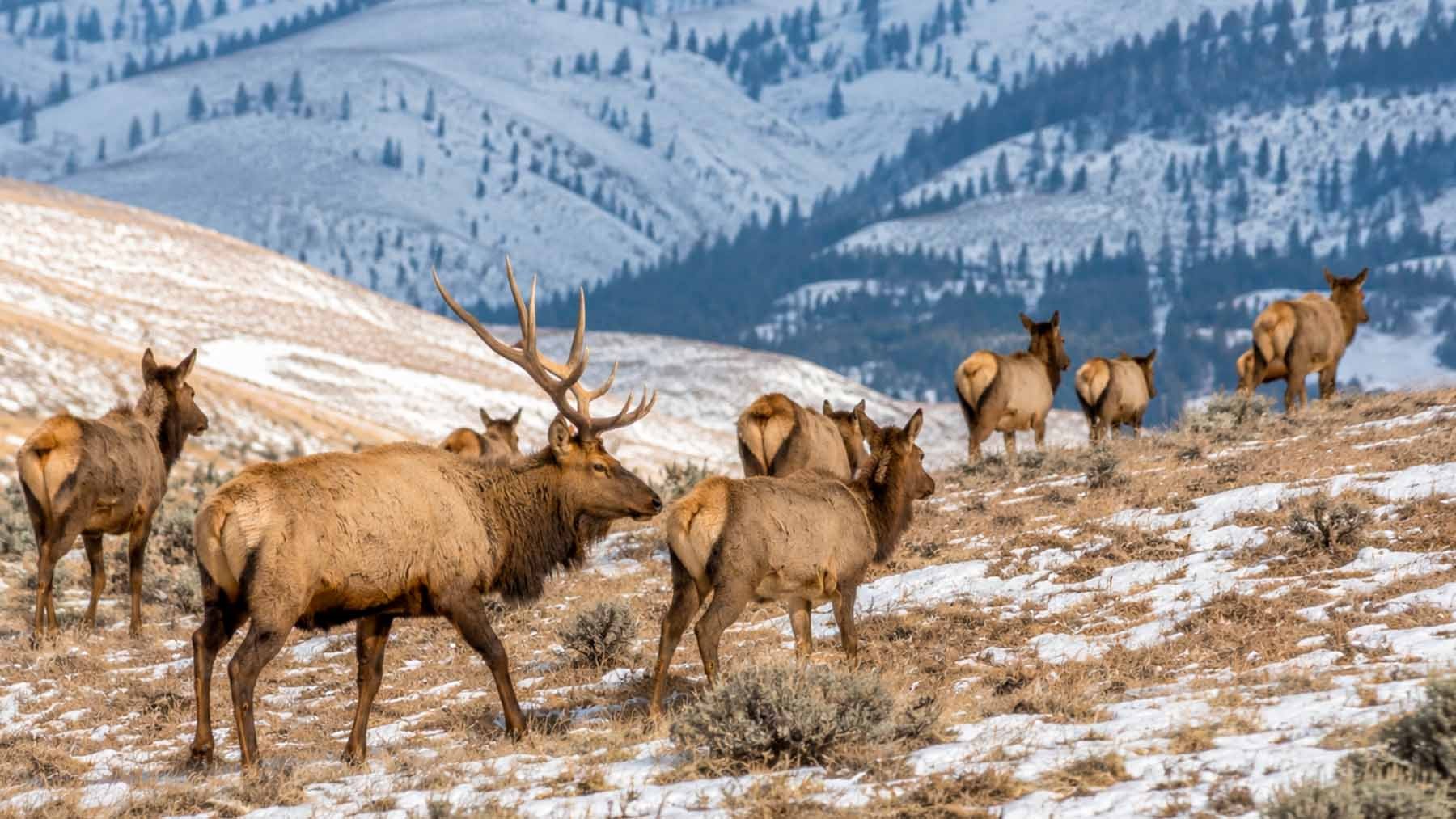
Throughout Northwestern Wyoming, winter usually keeps thousands of elk in the same place for months. However, this past year was significantly different. By mid-January, large groups of elk had begun leaving the National Elk Refuge near Jackson, WY.
One of North America’s largest migratory elk populations spends the winter there.
Wildlife managers witnessed the beginning of the mass exodus weeks earlier than in previous years.
The sudden and unexplained departure raised questions about why the elk had begun migrating so early in the season.
Why the elk normally wait until spring
Each year, thousands of elk congregate at the National Elk Refuge in order to take advantage of the protected winter habitat provided.
Many of these elk will continue to reside in the National Elk Refuge throughout winter.
Once they sense that spring has arrived and conditions are suitable, they move into their summer habitats. These include Grand Teton National Park and Yellowstone National Park. Typically, deep snow prevents elk from accessing higher elevations and traveling within the range becomes extremely difficult.
That migration usually begins when temperatures rise and snow starts to melt. The timing of the dispersal is critical. If elk depart too early, they risk late-winter storms and limited forage.
Conversely, if elk depart too late, they run the risk of missing the initial flush of new growth resulting from snowmelt.
Due to these factors, elk typically follow seasonal conditions rather than relying on the calendar alone.
Signs of an unusual winter were appearing everywhere
Unlike most winters, the landscape began to change this past winter prematurely. Unusually low levels of snow fell within the Jackson Hole Valley during this past winter. Additionally, several large tracts of land that normally remain under snow cover throughout the duration of winter remained relatively free of snow.
Wildlife managers soon began noticing unusual movement patterns among the elk. Residents of the area surrounding Grand Teton National Park reported observing elk in various stages of migration much earlier than anticipated.
Wildlife managers also fitted approximately 120 cow elk with GPS collars.
The data collected from these collars will help biologists determine where different groups migrated after leaving the refuge.
Those migration patterns may help guide future decisions about hunting regulations and elk management.
At the time, however, exactly why so many elk had begun moving remained unclear.
The landscape was already behaving like spring
While many people assume the elk left because of the calendar date, the opposite is true; elk responded to changes in their environment.
Due to minimal snow cover on lower-elevation lands, many of their typical migration corridors became available.
In addition, elk found plenty of food beyond the refuge.
Rather than awaiting a typical April emergence time frame, numerous elk simply began migrating northward weeks before that timeframe.
Researchers suggest that this past winter was unusually warm and dry, creating conditions elk normally experience later in the year. In essence, the landscape looked more like early spring than midwinter.
What this unusual migration could reveal
Biologists acknowledge that an early migration is not automatically harmful.
All that remains to be seen is what happens next.
If extreme snowfall returns, migrating elk may experience adverse conditions after leaving the refuge. If mild weather continues, the elk may simply reach their summer range earlier than usual. An early migration gives researchers a chance to compare this year’s elk migration with future migrations.
These comparisons may reveal how changing winter conditions affect one of the West’s most recognizable wildlife migrations.
Across the American West, scientists are monitoring other species exhibiting altered long-term seasonal behaviors. Oregon-based researchers identified about 50 unusual fish that could guide an entire migration using only scent cues.
Read the whole thing?
Get the week's signal, not the noise
Our sharpest reporting on energy, climate and nature — free, once a week.