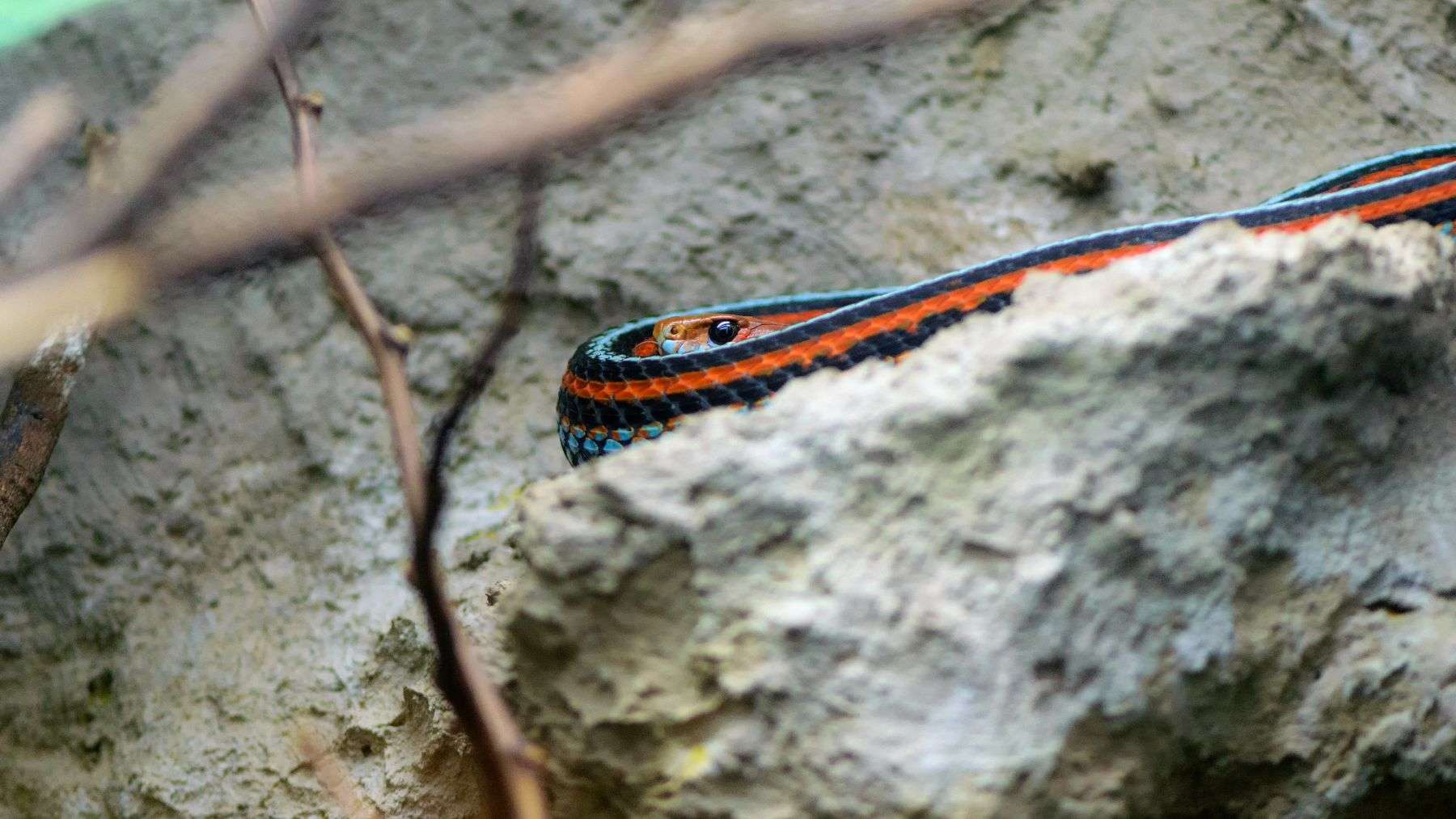
The San Francisco garter snake lives only in San Mateo County and a small part of Santa Cruz County. It is found nowhere else on Earth.
Only a few thousand individuals are estimated to live in the wild anymore.
This fall, in efforts to increase the wild population, zoo-raised garters were released.
Can these previously captive snakes change the wild population?
A species that has struggled to recover
The San Francisco garter snake was among the first species protected by the federal Endangered Species Act. It also appeared on the U.S. Fish and Wildlife Service’s first endangered species list in 1967.
Nearly 60 years later, the species is still critically endangered. This is largely due to its habitats that have become increasingly rare and fragmented.
The species’ recovery has been difficult, plagued by drought, disease, low genetic diversity, and minimal prey populations. Further threats include invasive species, vehicle collisions, and illegal poaching.
Several park agencies are working on habitat restoration. They aim to improve wild living conditions for the snakes, and also for the prey they survive off of.
Raising snakes in captivity, only to let them go
This release is the first of many in a new conservation program for the species. The program uses the head-starting technique, where young animals are raised in captivity during the part of life when they are most vulnerable.
In this case, 62 San Francisco garter snakes were raised at the San Francisco Zoo, allowing them to survive through these critical years.
By providing basic needs and a safe place to grow, this technique can increase their chances of reaching breeding age.
In 2025, biologists collected pregnant female snakes from a healthy population and transferred them to the San Francisco Zoo.
After the snakes gave live birth, the mothers were returned to the wild. The zoo’s conservation team raised the offspring until they were large enough to better survive predation and competition for prey.
The program is a partnership with the zoo, Midpen, the U.S. Geological Survey, the National Park Service, the U.S. Fish and Wildlife Service, and the California Department of Fish and Wildlife.
The importance of where to release the snakes
According to San Francisco Zoo & Gardens, before release, every snake born at the zoo underwent genetic testing. The results were used to choose the best release location for each one, in order to increase genetic diversity.
About one-third of the snakes were returned to the area where their mothers originated. This was meant to reduce the impact on the host population.
The remaining two-thirds were released among various other populations. Those populations needed both additional individuals and greater genetic diversity.
Certain release sites in San Mateo County are not being disclosed to protect the snakes from illegal collection.
The scientists behind this conservation effort are doing everything they can to help this species.
In 2026, more than 130 additional baby snakes were born at the zoo. They are being raised for another round of releases planned for 2027.
What comes next
Monitoring after these releases is very important. Biologists need to understand how these two rounds of releases improved snake populations at the sites. From there, relevant improvements can be made.
A National Park Service biologist, Rachel Townsend, called the release “one step of many in a much larger recovery effort.”
The snakes aren’t the only animals surviving. The garters’ prey are surviving in this interesting location, where scientists thought they wouldn’t.
So, although these sixty-two young snakes cannot restore a species on their own, they are a crucial first step in the program. Endangered animals like this could be wiped out without conservation efforts. Another animal species is also struggling in San Francisco, and these ones are a bit harder to assist.
Read the whole thing?
Get the week's signal, not the noise
Our sharpest reporting on energy, climate and nature — free, once a week.