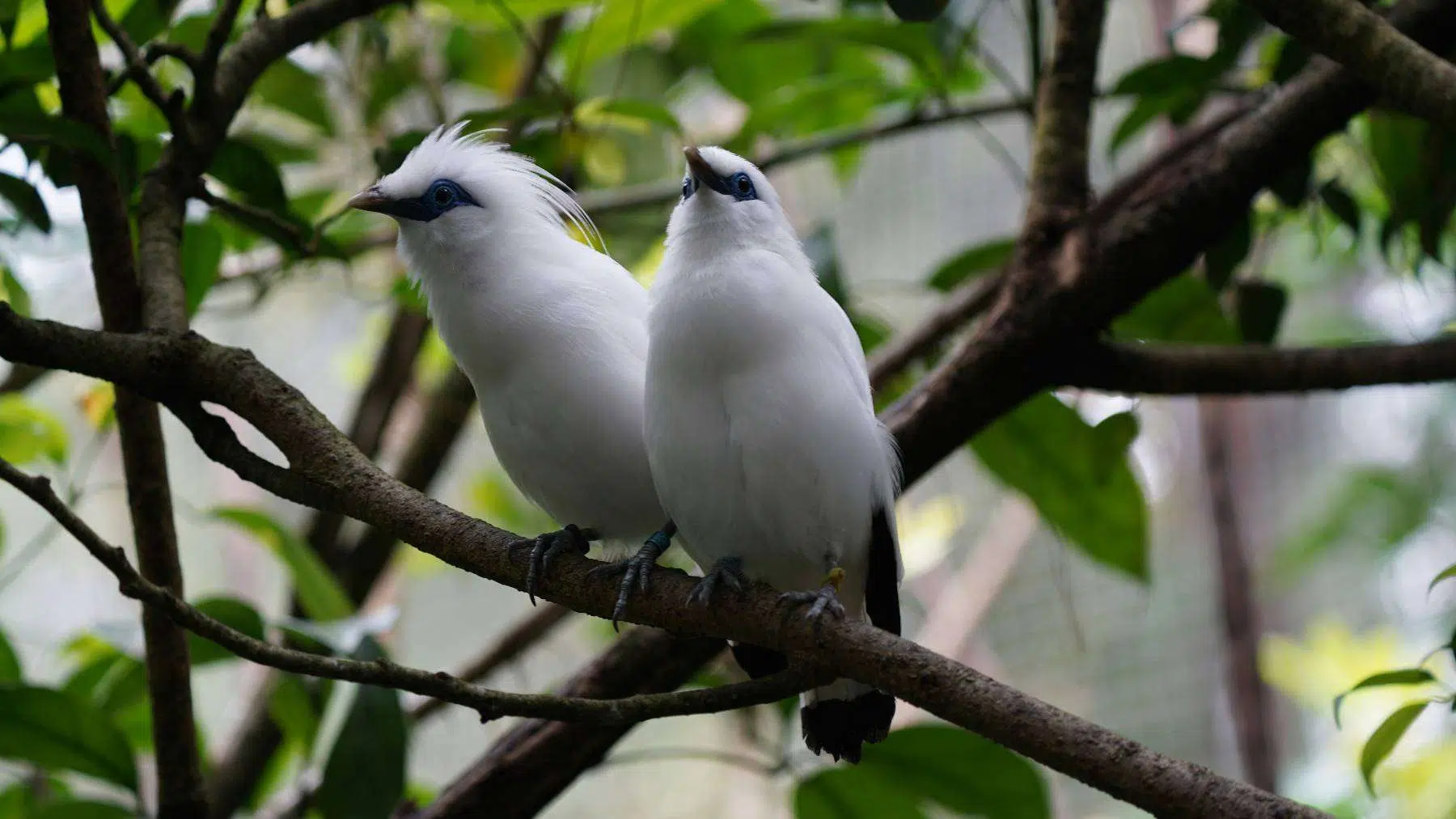
One hundred and six students put on noise-canceling headphones and sat outside — some beneath a canopied urban forest, others on a paved plaza facing traffic. The setup was deliberately stark. Researchers at North Carolina State University wanted to know exactly what a natural setting does to stress, and exactly what birdsong does, independently and together.
What they measured when they combined the two surprised even outside experts brought in to review the results.
A carefully controlled experiment in an unlikely place
The study, published in Environmental Conservation, assigned 106 NC State students to two campus locations: a restored riparian forest and a paved plaza near a road intersection. Neither site was chosen for atmosphere — researchers wanted contrast, one visually and acoustically natural, one emphatically not.
At each location, participants wore noise-canceling headphones and listened to two soundtracks in random order: 10 minutes of birdsong and 10 minutes of traffic noise. Every student experienced all four combinations across two visits. That crossover design was the study’s key methodological strength, allowing researchers to isolate each variable’s contribution rather than conflating them.
After each session, participants rated stress on an 11-point scale, reported positive and negative emotions, and assessed how mentally restored they felt.
The numbers: what forest plus birdsong actually did
The results weren’t subtle. Participants sitting in the forest while hearing birdsong reported an average stress score of 3.2 on the 11-point scale. Those on the plaza listening to traffic scored 6.4 — roughly double. That gap held across the other measures: positive emotions rose, negative emotions fell, and the sense of mental restoration peaked in the forest-with-birdsong condition.
The two mismatched pairings — forest with traffic noise, plaza with birdsong — both landed in between. Better than the worst combination, but clearly short of the best. That middle ground confirmed that place and sound each contribute something real, and that their benefits stack when aligned.
Lead author Nils Peterson, a professor in NC State’s College of Natural Resources, summarized the pattern directly: “Positive emotions went up, negative emotions went down, stress went down, and perceptions of feeling restored went up more than any other combination.”
Sound vs. setting: which one does the heavier lifting?
The two variables didn’t contribute equally across all outcomes. For mental restoration specifically, the physical setting — the forest itself — carried more weight than the soundtrack. Birdsong helped, but the environment did more of the work.
For stress levels and for positive and negative emotion, sound and setting contributed roughly equally. Researchers suggest the difference may partly reflect the measurement tool used for restoration, which leans on how people perceive a place and may orient them toward visual features rather than auditory ones.
Cindy Frantz, an environmental psychologist who chairs the psychology department at Oberlin College and wasn’t involved in the research, noted that the effects were large enough to matter beyond a lab setting. “The impact of natural environments and birdsong are not tiny ‘around the margins’ results,” she told Mongabay. “Effect sizes this large suggest that the impacts they observed are likely to make a difference in people’s lived experiences.” She also cautioned that a single study can’t show how long the effects last, whether people adapt over time, or whether everyone benefits equally.
Why birdsong calms: two competing theories
Researchers offer two main explanations for why natural soundscapes — birdsong especially — reduce stress. The first centers on safety: birdsong signals that an environment is alive and non-threatening. A silent landscape doesn’t provide that reassurance. Traffic noise actively contradicts it.
The second explanation focuses on attention. Urban environments demand effortful focus — tuning out constant noise consumes cognitive resources. Natural soundscapes may allow that capacity to recover, giving the mind something like a rest. Both theories find support in prior research.
Eleanor Ratcliffe, an environmental psychologist at the University of Surrey whose work the NC State team cites, has found that bird sounds can restore attention and ease stress — but not uniformly. Quiet, melodic, complex songs tend to soothe. Loud or harsh calls can have the opposite effect. Her work also suggests outcomes depend partly on personal associations: what you connect with birdsong shapes whether it helps at all, meaning any therapeutic application would need to be tailored rather than applied as a blanket intervention.
City parks as mental-health infrastructure
Perhaps the most practically significant detail in the study is what the forest actually was. The riparian strip used in the experiment isn’t old-growth woodland. It’s a human-made restoration completed in 2006, rebuilt from a degraded urban creek, and it now has over 70% canopy cover on an active college campus.
That a relatively young, engineered patch of urban greenery produced the full effect matters enormously for how cities think about public health. Remote wilderness isn’t required. Strategic design is — seating positioned where the canopy and bird communities do their work.
Frantz put it plainly: “Designing outdoor spaces with birds in mind is not just a ‘tree-hugger’ priority, but also sensible public health policy.”
As urban planners increasingly treat mental health as a design problem, studies like this one offer something concrete to act on. The next question isn’t whether restored urban forests help — it’s how many cities will build them with that purpose in mind.
The full study is available here: Peterson N, Larson LR, Ford T, et al. Both restored forest and birdsong promote psychological well-being. Environmental Conservation. Published online 2026:1-9. doi:10.1017/S0376892926100484
Read the whole thing?
Get the week's signal, not the noise
Our sharpest reporting on energy, climate and nature — free, once a week.