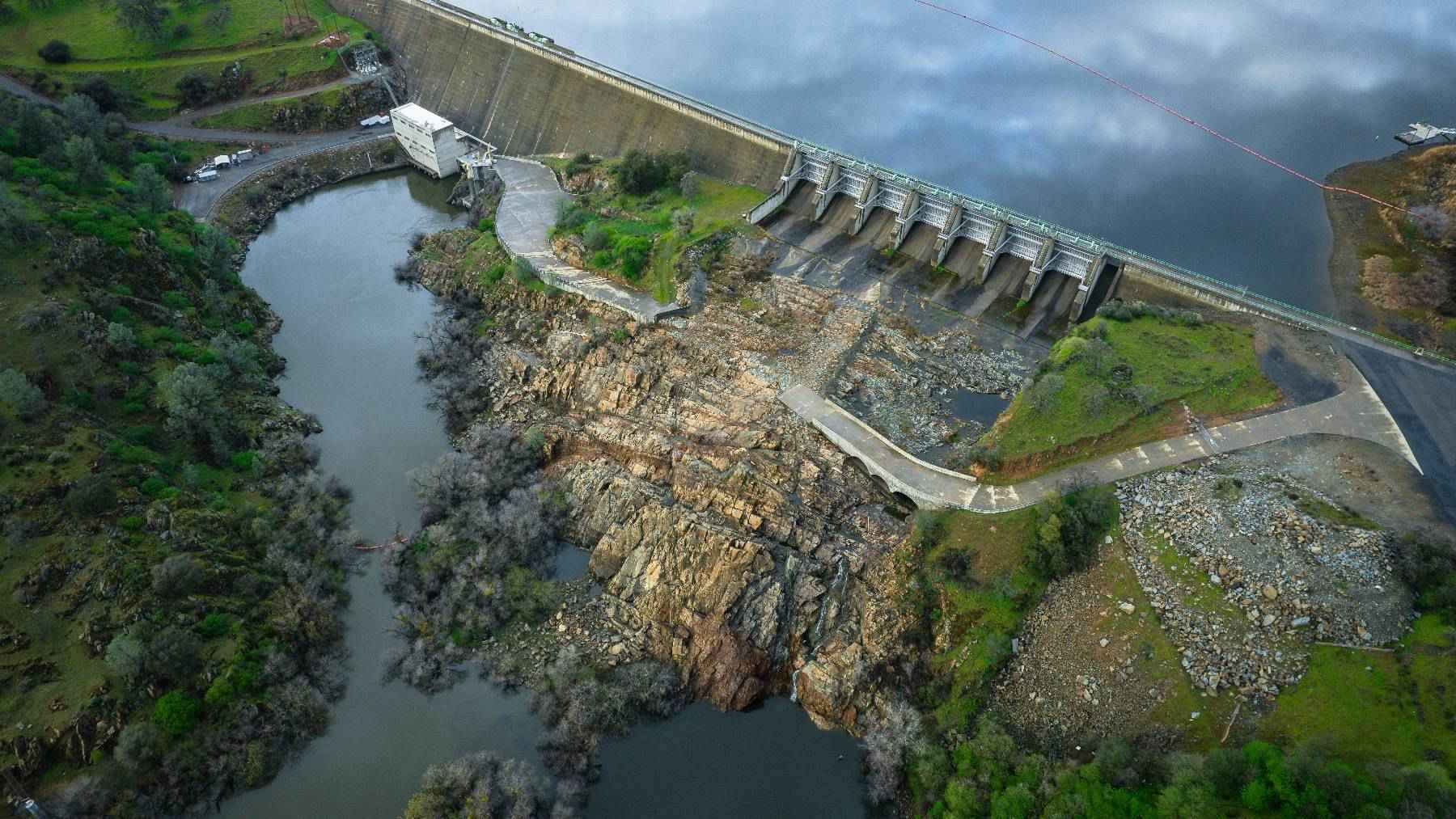
In North Carolina, a concrete hydroelectric dam generates clean energy while migratory fish go about their lives in the water downstream.
For decades, the reduced water flow due to the diversion left a section of the river’s wildlife threatened.
A multi-year study was consolidated into data on how different water releases from the dam impact aquatic life. What is the one specific balance that protects wildlife without losing power output?
How the health of the habitat below the spillway was evaluated
The Roanoke Rapids Dam incorporates an engineered channel that receives redirected river water and draws the energy for hydroelectric power. The installation of this setup meant altering the bypass reach of the natural riverbed.
Several species of aquatic life rely on the movement of the water to navigate and spawn, like American shad, American eels, and freshwater mussels. Survival depends on enough water flow to fulfill these functions.
In 2004, federal licensing introduced a stipulation requiring dam operators to carry out 20-year research. Three different flow regimes had to be tested, which were set at low, medium, and high volumes. Then the aquatic response had to be monitored downstream and the data forwarded to scientists.
The lower settings were best for maximum power generation, as more energy built up behind the dam to be collected by the turbines. But biologists had different priorities. Their focus was measuring how the reduced water volume affected sensitive river species during critical stages of their lifecycles.
To what extent is ecology affected by flow levels?
The first metric that researchers considered was population numbers, which they tracked across the three flow levels to establish where the trends lay.
Trends started to become clear immediately during the low-flow testing, with habitat availability becoming limited. Fish movement was restricted, and the health of the mussels in the bypassed reach declined.
However, when operators increased their water releases to the medium and high flow rates, the monitoring process recorded a clear recovery in the ecology of the waters downstream. Native species populations grew under both higher flow levels compared to the initial low rate.
Increasing the dam releases from medium to high volume had almost identical ecological benefits for shad, eels, and mussels, as reported by NOAA Fisheries. High flows provided no measurable advantage over the medium setting, yet they reduced the amount of water available for power generation.
A happy medium to balance energy and habitat
The ideal flow target proved to be the medium setting, which supplies sufficient water depth and velocity for migratory species to thrive while reserving maximum flow for electricity generation.
By establishing that high flow releases offer no extra benefit to wildlife, engineers identified the exact operational threshold required downstream. Pushing water past that mark did not improve habitat conditions for shad, eels, or mussels. It simply diverted water that could have been generating electricity.
Maximizing power during peak output
Dam operators will maintain this medium release pattern for the remaining 18 years of the facility’s FERC license. The decision allows the utility to maximize power production during periods of peak grid demand while guaranteeing stable water levels for river species during vulnerable breeding and migration windows.
Monitoring will continue across the season, but the baseline data provides long-term clarity for regional operators. Field observations confirm that targeted volume adjustments protect native species without reducing overall plant capacity.
The outcome grounds decades of river management in concrete field data rather than guesswork. What began as a conflict over diverted water ends as a practical baseline for the Roanoke, proving that power generation and river life can share the same channel when water releases mirror actual biological needs.
Read the whole thing?
Get the week's signal, not the noise
Our sharpest reporting on energy, climate and nature — free, once a week.