For many years, the New Haven landfill served a single purpose. Trucks brought waste; it would fill; and after that, the site would be capped and closed.
Few closed disposal sites ever find a new purpose. Once they stop accepting garbage, they often sit unused because building on them can be difficult.
However, today the former disposal site generates electricity rather than receiving trash.
The site now generates enough electricity for about 200 homes each year while also bringing in new revenue for the city of New Haven.
Taken together, these transformations raise an obvious question about the site’s future.
The city needed a new use for the site
The New Haven landfill ceased accepting garbage over twenty-two years ago. As a result, all that remains is a capped site that can no longer fulfill its original purpose. Developing productive purposes for former landfills is usually difficult.
Construction opportunities may be restricted, and cities must work around conditions created by decades of waste disposal. Eventually, New Haven municipal officials began looking for a practical purpose for the property. The city partnered with Greenskies Clean Energy to see if the site could be used again.
The partnership provided benefits beyond the solar project itself. Under a 20-year lease agreement, Greenskies agreed to pay the City of New Haven $72,000 annually to use the site.
This amounts to approximately $6,000 per month, paid by Greenskies to the city, for land that is no longer permitted to accept waste.
The lease also provided a significant long-term financial benefit for the city.
The site was no longer generating value after it closed.
Instead of being abandoned and idled, the capped landfill is now generating both revenue and fulfilling a new function.
The landfill project was not the only one
The landfill project was only one part of a broader effort across the city. It became part of New Haven’s push to expand local renewable-energy projects. The city worked with Greenskies Clean Energy on several renewable-energy projects before this project was completed.
Similar efforts were already being planned elsewhere in the city. The initiative fit into a broader citywide renewable-energy strategy.
They believed that more solar power would make future energy costs more predictable while helping the city reduce carbon emissions.
Rather than allowing the capped property to sit unused, the city found a way to put the site back to use.
The approach also demonstrated another use for previously closed disposal sites.
More than 1,900 solar panels now cover the site
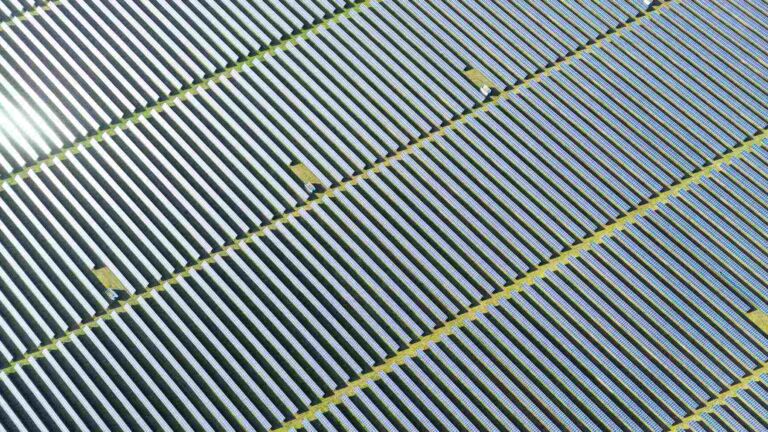
The landfill now produces electricity from more than 1,900 solar panels installed on the site. Following completion of the solar installation, the facility began operation on July 9, 2026. Electricity generated there is now entering the local power supply.
According to city officials, the installation will generate enough electricity to supply approximately 200 homes for a full calendar year. Greenskies operates the array and sells the electricity to United Illuminating, which manages the city’s power system.
The installation was completed during what was described as “a tough winter.”
Construction continued despite challenging conditions.
Turning the former landfill into a source of electricity took less than one year.
What could happen to other closed landfills?
The landfill remains permanently closed even though it now serves a new purpose.
What changed was how the site could be used.
The project may also influence what happens at similar closed landfill sites in the future. Municipal officials are currently exploring renewable-energy projects at the former disposal site. Another cluster of solar panels is being considered for installation at the landfill.
Questions have arisen regarding how many other disposal sites could be converted into renewable-energy projects.
Read the whole thing?
Get the week's signal, not the noise
Our sharpest reporting on energy, climate and nature — free, once a week.