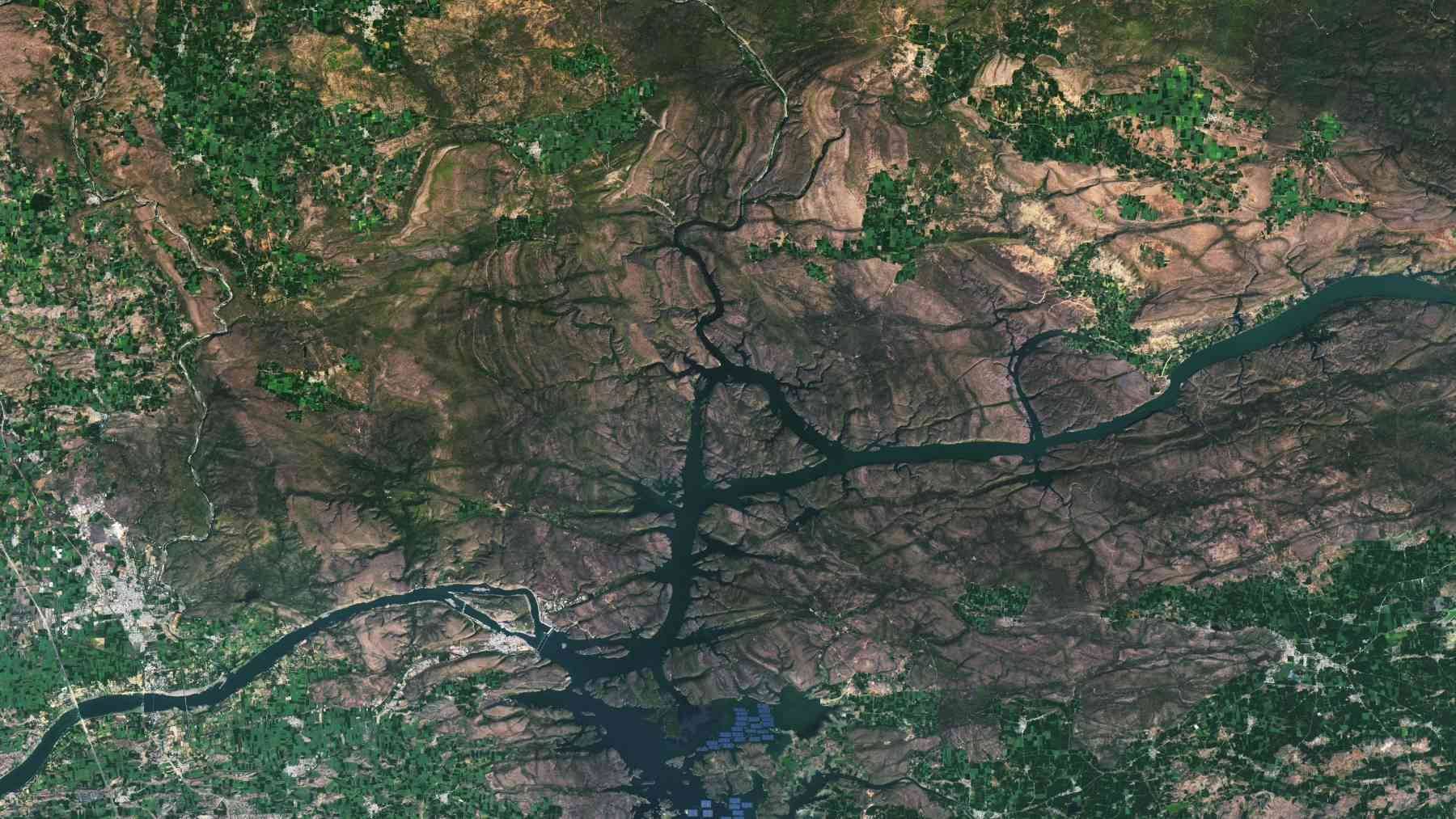
Black islands on a reservoir appeared in satellite images taken years apart in central India.
There were some new things that showed up on the top of the water between those photographs. When viewed from space, they looked like two big islands made of dark material floating on the water.
These were not natural. They had not appeared in the earlier photograph.
The structures are located on a lake in Madhya Pradesh, a state in central India.
It was not immediately clear what these island-looking structures were.
What looked like two black islands on the water
These “island” looking structures appeared on the Omkareshwar Lake in Madhya Pradesh. Omkareshwar is home to one of the largest renewable energy projects in India.
As per Tata Power, the project has a total installed capacity of 125.84MWp DC. The array contains 213,460 modules.
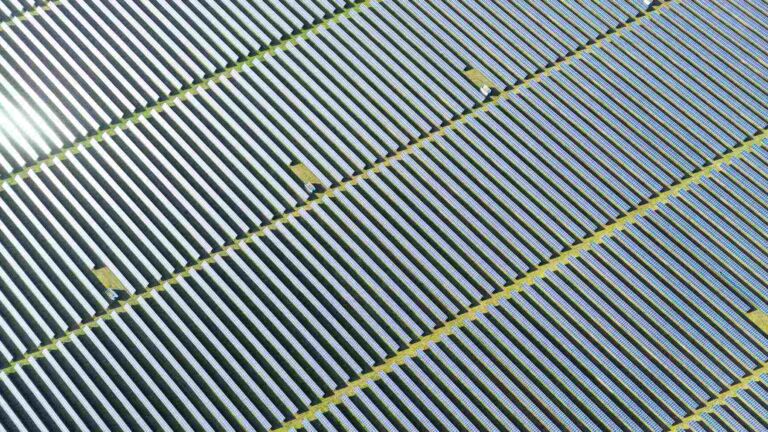
Unlike many large energy projects, this project takes advantage of the space available on the lake. From above, it appears as if you are seeing several small, separate “islands” floating on water.
This array was constructed in Khandwa District in Madhya Pradesh and feeds electricity into Madhya Pradesh’s electrical grid.
Satellite imagery from NASA and the USGS clearly shows the structures covering part of the surface of the lake.
Building a power plant on a lake was not simple
Building such a large structure on a lake created problems that would not normally occur for land-based solar projects. Anchoring and mooring systems were used to keep the floating platform stable under changing water conditions and fluctuating water levels, according to Tata Power Solar.
According to NASA, floating solar installations can present challenges that require special solutions during construction.
Tata Power Solar explained that logistics issues existed for moving over 210,000 solar modules and other materials to the project location.
The engineers designing this project used systems to manage waves and floating platforms to help reduce problems caused by reservoir conditions. They were designed to operate under different environmental conditions. Water levels at the reservoir fluctuated during the project.
Therefore, the floating systems had to function under changing conditions.
However, it left many people wondering why they chose to build this massive solar installation on the water.
Why put thousands of solar panels on water?
Floating solar panels that appear as two black islands from satellite images are floating solar arrays on the surface of a lake.
In this case, rather than taking up a lot of land space, the solar panels are attached to floating structures that are anchored down onto the water.
One of the project’s goals was to generate electricity while using as little land as possible.
Using water instead of land
Many large-scale solar projects take up large amounts of space. Using a floating design allows this project to utilize surface space on a lake rather than needing acres and acres of land. Once completed, this will contain 213,460 modules and will have a generating capacity of 125.84MWp DC.
According to Tata Power, this will reduce CO2 emissions by approximately 173,893 tons each year.
What appears to be two unexplained black islands from afar turned out to be a major floating solar facility. Electricity is generated using solar panels mounted on top of a reservoir. The dark shapes are not islands at all, despite appearing that way from above.
They are floating solar panels utilizing space on a reservoir to generate power and minimize land usage for future land based solar developments.
Future projects may draw on lessons learned from Omkareshwar as floating solar technology continues to expand.
Similar ideas are revealing the benefits of floating solar panels on reservoirs.
Read the whole thing?
Get the week's signal, not the noise
Our sharpest reporting on energy, climate and nature — free, once a week.