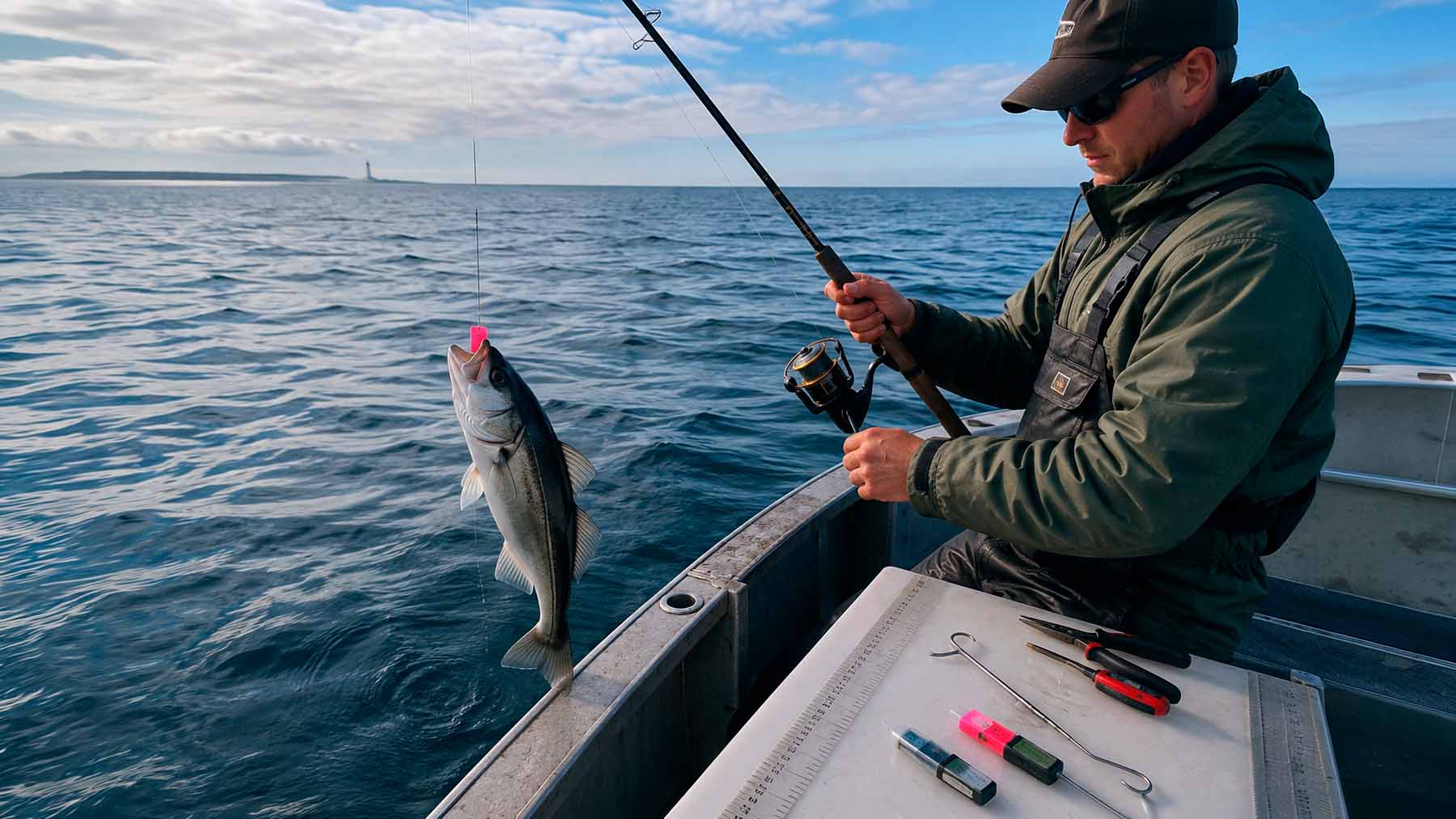
Researchers aboard a commercial tuna vessel offshore in the Gulf of Maine are dropping fishing lines into the water, but it is not a commercial endeavor.
Instead of harvesting Atlantic bluefin tuna or other food species, they haul the fish only as far as the hull, insert electronic tracking tags, and put them back.
The point of the survey is to collect baseline movement data across the Maine Research Array, an offshore area that will host the U.S.’s first floating wind turbines.
How to set a baseline before the turbines arrive
The Maine Department of Marine Resources and regional marine scientists ran the summer tagging project between July and September 2026.
Floating wind technology relies on deep-water mooring cables and tethered platforms, not bases drilled into the seafloor. The nature of the design means marine biologists do not know much about how these systems will affect different ocean predators.
Biologists are catching highly migratory fish using standard commercial fishing gear ahead of construction.
Tuna and sharks get fitted with acoustic markers, mark-and-recapture tags, or satellite transmitters before being released back into the ocean.
At the same time, survey boats drop acoustic receivers to the ocean floor across the research area. These instruments log the signature of any tagged fish swimming past.
State fisheries groups requested the pre-construction surveys to map how tuna and sharks use this part of the ocean before the installation of any industrial structures.
Tracking movement through hunting grounds
Atlantic bluefin tuna and pelagic sharks travel thousands of miles through open ocean corridors every year. In the Gulf of Maine, the predators follow schools of baitfish across their feeding grounds through the seasons.
Anchoring floating turbines in these waters introduces several new variables. Submerged high-voltage cables emit localized electromagnetic fields along the seafloor. Floating platforms create large underwater structures that could attract fish or cause them to avoid the area.
Meanwhile, low-frequency operational noise from the turbines will travel through the surrounding water.
Without detailed records of normal fish behavior before construction, regulators cannot determine whether future shifts in fish numbers stem from wind array operations or natural ocean trends.
Documenting seasonal routes, swimming depths, and residency times today gives scientists an empirical reference point to evaluate once the floating platforms power up.
How baseline records help protect ocean species
The tagging program helps migratory fish by creating an objective baseline that prevents habitat disruption that goes unmonitored.
The Marine Offshore Wind Initiative says that by pairing telemetry tags with seafloor receivers, researchers can map how bluefin tuna and sharks navigate the site in its natural state.
If the fish alter their routes after floating turbines arrive, comparing future tracking data against this baseline will reveal the impacts. Scientists can determine whether electromagnetic fields disrupt navigation, turbine noise drives fish away, or mooring lines displace hunting activity.
Empirical reasoning behind planning adjustments
If post-construction tracking shows significant displacement, the baseline data gives regulators empirical grounds to insist on using cable shielding, adjust operational speeds, or change rules for future offshore leases, according to the Maine Department of Marine Resources.
However, researchers acknowledge limits to this approach. Field crews can only tag a small fraction of the regional fish population, and satellite tags frequently detach early.
Furthermore, pre-construction records cannot show whether fish will eventually adapt to turbine noise or how broader ocean shifts might alter their food supply.
As the survey vessel crew tags the last tuna of the season, the receivers continue to record, logging signals to document migration paths that need to be protected. This is a vital endeavor as the world embraces the expansion of green energy.
Read the whole thing?
Get the week's signal, not the noise
Our sharpest reporting on energy, climate and nature — free, once a week.