The stain on the wall is the same shape it was last winter.
It could be water pushing in from outside, or room air condensing on a cold surface.
The two look identical and cost wildly different amounts to fix.
One needs drainage or a pipe, the other just needs a fan.
There is a way to tell them apart that costs nothing and comes off a roll in the kitchen drawer.
So how can a scrap of kitchen foil tell which one is soaking your wall?
Why the water can only come from one side
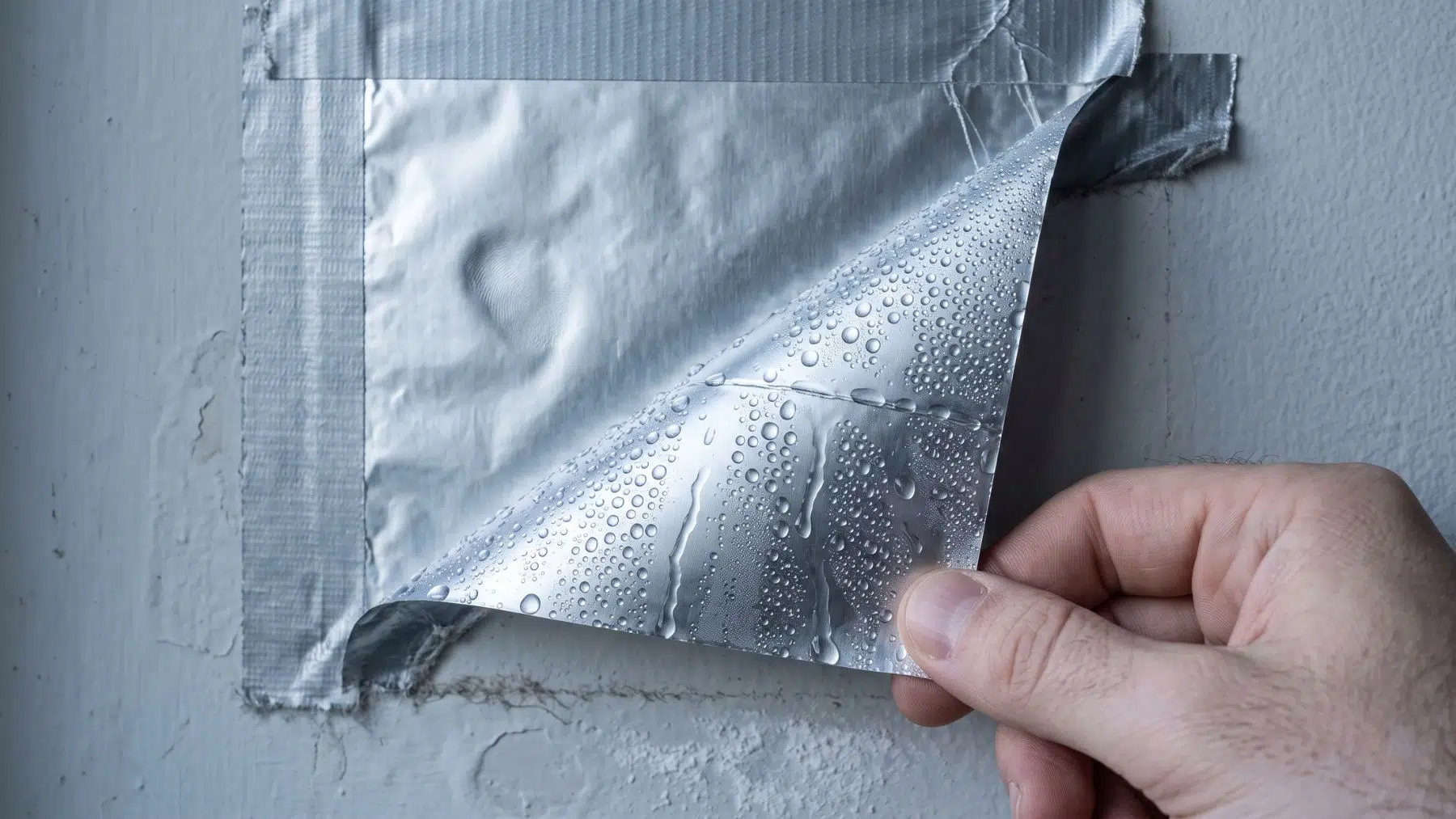
Tape that foil down on all four edges and the patch of wall beneath it is cut off from the room. Any water that shows up on the foil had exactly one way in, and the face it lands on records which way that was.
That is the whole trick.
It works because aluminum foil is a Class I vapor retarder, a skin almost nothing passes through. The damp cannot wick in from the face you are not watching, so it has to pick one direction.
Without the foil, a damp wall is in constant traffic with the room, drying out while the heating runs and wetting again once it stops, which is why staring at a stain tells you nothing. A phone photo of each face beats any description you could write.
Which side is wet
The rule itself is short. Moisture on the face that was pressed against the wall means water is coming through the wall.
That is the expensive answer. It points at groundwater, a failed seal outside or a pipe running inside the cavity, and no amount of ventilation will touch any of those.
Moisture on the face that was turned toward the room means plain condensation. Warm damp indoor air met a cold surface and gave up its water, which is a heating, venting and humidity problem rather than a building one.
And if both faces come back wet, you have both at once. Stop the water coming in first, because a fan never wins against a leak.
How to run it
Dry the wall first. Wipe the patch and give it long enough to feel dry to the hand, because a damp starting surface makes the whole result meaningless. Then cut a piece of foil roughly a foot across.
Press it flat over the stain and tape all four edges. The seal matters far more than the size, because the entire point is to shut that patch of wall off from the air in the room.
Duct tape grips better than masking tape on a cool surface, and aluminum tape is better still.
Then leave it alone for at least a day, two if you can stand looking at it. Peel it off slowly and check both faces before the drops have a chance to run together.
The professional version, and why it is not the gold standard
A formal version exists, older than most of the houses it gets used on. The published method has a technician tape an 18 inch square of polyethylene film to a concrete slab, seal the edges, and come back no sooner than 16 hours later to look at the underside.
Same principle, different material, different question. It is asking whether a slab is dry enough to take flooring.
It is also, by the flooring industry’s own account, not very good. It reads the surface rather than the slab, it can come back dry over concrete that is soaking a few inches down, and the answer shifts with the dew point that day. Humidity probes drilled into the slab took over for anything expensive.
For a wall inside a house, though, the foil version is still what the waterproofing trade tells homeowners to try first, much as a plastic lawn gives away nothing about the ground beneath it.
What the wall has already told you
Before any tape goes up, look along the masonry for a white powdery crust. That is efflorescence, salt left behind when water travels through the material and evaporates at the face, and it only forms if water has actually been moving.
So its presence tilts the answer toward the wall before you test anything. A cheap hygrometer near the patch settles the other half, by saying whether the room air is humid enough to condense at all, much as the soil underneath tells a different story than the surface does.
None of it replaces a professional once mold is in the picture. Federal guidance puts the line at about 10 square feet, below which most homeowners can handle the cleanup themselves.
Above that, or if it keeps coming back, call someone. Either way, fix the water before touching the mold, because material dried within 24 to 48 hours of getting wet usually never grows any.
That is what a foot of foil buys you. Two days, no money, and a straight answer about which of the two problems is actually yours.
Read the whole thing?
Get the week's signal, not the noise
Our sharpest reporting on energy, climate and nature — free, once a week.