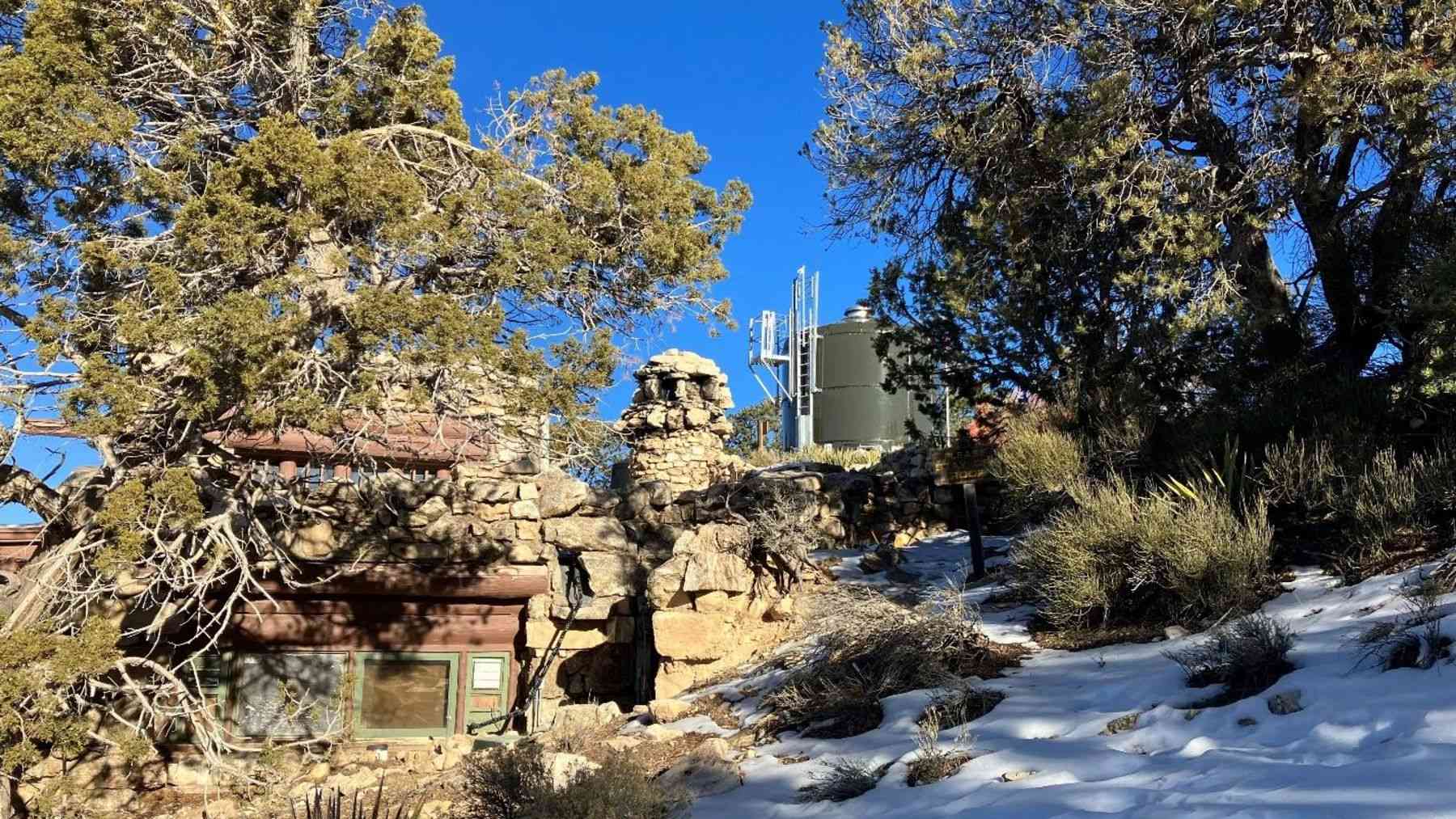
Hermits Rest has anchored the western rim of the Grand Canyon for over a century — a stone-and-timber shelter so carefully woven into its surroundings that it earned National Historic Landmark status. When the site’s aging water tank needed replacing in 2022, the plan was straightforward: install a new one that looked just like the old one.
It didn’t go that way. New state safety requirements triggered the addition of a ladder, a platform, and a cap — modern hardware now visibly out of place against the landmark’s historic fabric. What was meant to be invisible became, in the words of preservationists, a modern scar on a beloved landscape.
A landmark with a long history — and a new problem
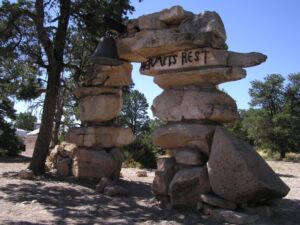
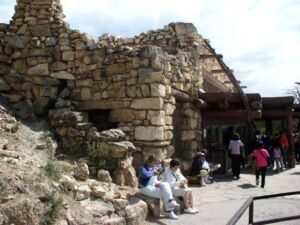
Hermits Rest was designed by architect Mary Colter and completed in 1914, built to look ancient — rough stone walls, low rooflines, a fireplace arch that seems to have grown from the canyon itself. That deliberate rusticity earned it National Historic Landmark designation, meaning the federal government recognizes it as irreplaceable.
The water tank replacement was never supposed to test that status. NPS infrastructure planning identified the aging tank as a candidate for routine upgrade, and the replacement was designed to mirror the original: same visual profile, minimal footprint, no disruption to the site’s carefully preserved character. On paper, it was the kind of low-impact project that rarely draws attention.
When safety rules changed the plan
The design was approved. Consultation was completed. Then the Arizona Department of Environmental Quality stepped in with new safety requirements that hadn’t been part of the original plan.
Those requirements mandated a ladder, a platform, and a cap on the tank. Each element served a legitimate safety purpose, but together they turned what was meant to be an unobtrusive replacement into something conspicuously modern — industrial hardware planted inside a landmark specifically valued for looking like nothing built after 1914.
That’s where the conflict sharpened. National Historic Landmark status carries real obligations, and federal agencies managing such sites are expected to protect their defining characteristics. At Hermits Rest, that means visual continuity between the built environment and the natural landscape. A ladder and platform may be standard equipment elsewhere. Here, they read as an intrusion.
The legal framework: Section 106 and historic preservation
Section 106 of the National Historic Preservation Act requires federal agencies to consider how their undertakings affect historic properties before moving forward. It’s a process built on consultation — not a veto, but a structured conversation between the agency, preservation officers, and the public.
The NPS completed its initial Section 106 consultation in 2021, before the tank was installed in 2022. That consultation was based on the original design — the one that was supposed to blend in. When the safety additions changed the tank’s appearance, a new round of consultation under the same law was triggered.
The Arizona State Historic Preservation Officer has been part of that follow-up process. Working together, the NPS and the SHPO developed a draft Memorandum of Agreement — the document now open for public review — as the formal mechanism for resolving the conflict the safety upgrade created.
What the proposed agreement would do
The draft Memorandum of Agreement focuses on one core goal: reducing the visual impact of the replacement tank and its safety hardware without compromising the compliance those features were added to achieve.
The proposed measures aim to minimize how prominently the modern equipment reads within the historic setting. The agreement doesn’t seek to undo the safety additions — requirements from the Arizona Department of Environmental Quality remain in force. It looks instead for ways to make the necessary hardware less visually disruptive, preserving the character that makes Hermits Rest worth protecting in the first place.
Worth noting, too, is what this project is not. The NPS has clarified that this effort is entirely separate from the broader water infrastructure recovery work currently underway at Grand Canyon National Park. The Hermits Rest tank is a discrete issue with its own consultation process, according to the National Park Service.
How the public can weigh in
The public comment window opened October 21, 2026, and runs through midnight on November 6, 2026 — a 15-day period. Comments can be submitted through the NPS Planning, Environment and Public Comment website, known as PEPC, and any individual or group is eligible to participate.
Public input in Section 106 consultations isn’t symbolic. It shapes how agencies document impacts and what mitigation measures end up in the final agreement. For a site as widely visited and historically significant as Hermits Rest, that input carries genuine weight — more than a formality.
Once the comment period closes, the NPS will review submissions and work toward finalizing the Memorandum of Agreement. What comes next depends partly on what the public says, which is exactly how the process is designed to work.
Read the whole thing?
Get the week's signal, not the noise
Our sharpest reporting on energy, climate and nature — free, once a week.