The seabed out there is sand.
Flat, shifting, poor in anything that will hold still long enough for a larva to glue itself down, which is the condition most of the southern North Sea floor is in.
Then somebody moored a power station on top of it.
The underside of that structure is hard and stable, sits in the brightest few feet of the water column, and has no natural equivalent for miles in any direction.
It did not stay empty long.
Within eight months of the first units going in, the wet side had a community on it dense enough to need a scraper and a frame to measure.
Why the shady side fills up first
Most of the animals here arrive as larvae, not adults.
They drift in the plankton for days or weeks, sampling surfaces chemically as they go, and they settle where the substrate is hard and the light is low.
An underside is both of those at once.
Blue mussels, barnacles and tube worms want shade and grip, and a float delivers the pair together in water where the natural bottom offers neither of them.
Then the structure feeds itself.
Mussels filter plankton out of the passing water and the amphipods build tubes in the gaps between the shells, so each layer of growth creates more surface for the next one to land on.
The thing being colonized
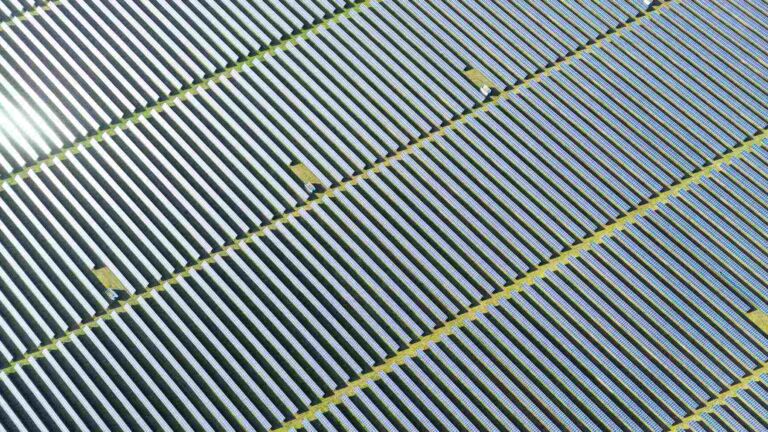
The site is 7.5 miles off The Hague, in water somewhere between 39 and 66 feet deep.
Twenty eight floats sit there, presenting a submerged area of roughly 115 by 56 feet to whatever swims past.
They did not all go in together.
One batch was moored in January and a second in June, which handed the researchers an accidental experiment in time submerged without anyone planning it.
Divers sampled them in early September.
Eighteen floats across three clusters, scraped inside a frame so that everything counted could be tied back to a known area.
What came up in the frames
Forty seven distinct taxa, of which only 28 could be pinned to species.
The rest stopped at genus or family, which is normal for fouling work and worth knowing before anyone repeats the figure as 47 species.
Arthropods won on headcount by a distance.
Tube building amphipods of the genus Jassa ran to 80,000 animals in a square yard on the older floats, against about 5,000 for every mollusc combined.
Molluscs won on weight.
Blue mussels dominated the biomass at roughly six ounces of dried tissue per square yard, which is what happens when a few thousand animals each carry a shell.
Where nearly half of them came from
Twelve of those 28 named species are not native to the North Sea.
That is 43 percent of everything the team could put a species name to, on a structure that had been in the water for less than a year.
The dominant animal is one of them.
Jassa marmorata came from the western Atlantic, and the list around it includes a Japanese skeleton shrimp, a Japanese tube worm, an Australasian barnacle and a marine insect from the Pacific.
This is the part that should worry a regulator.
Hard structures in a sandy sea work as stepping stones, letting introduced species hop across open water they could not otherwise cross, and every new float extends the chain.
Steel monopiles do the same thing, as divers found when they logged 86 species on turbines off Taiwan that had never been recorded there.
What the inventory gives is a baseline, taken once, on a small farm.
What the study does not say
It says nothing about engineering.
There is no load analysis in it, no discussion of what the growth weighs when the float is lifted, and no recommendation to any designer about carrying it.
The weight figure is also easy to misread.
Six ounces per square yard is ash free dry weight, meaning tissue with the shell and the water taken out, so the real hanging mass is a large multiple of it that nobody has published.
Scale it up and the gap matters.
The authors estimate a farm of about 69,000 square feet would carry on the order of 2,900 pounds of dried mussel tissue in its first year, which is a biology number rather than a design number.
The food chain is unproven as well.
A camera study at the same site found gulls and seals using the platforms and one mussel in one bird pellet, without ever confirming the birds were feeding on the farm itself.
North Sea wind farms show the same seals arriving once the mussels and barnacles are established.
So the honest reading is narrower than the headline.
One solar farm, sampled on a single September day, came back carrying a crowded and largely imported community that nobody has yet weighed properly.
Read the whole thing?
Get the week's signal, not the noise
Our sharpest reporting on energy, climate and nature — free, once a week.