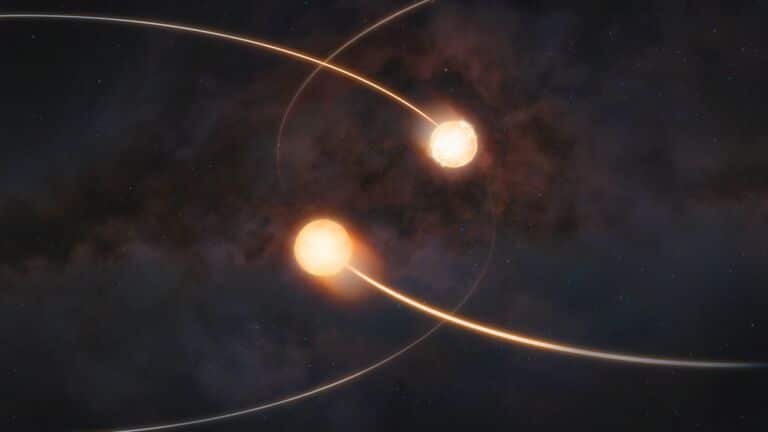
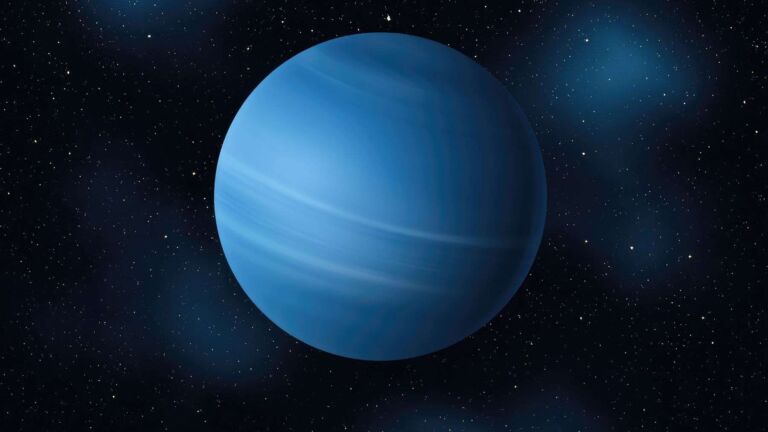
Beyond Neptune, in a region so remote that sunlight arrives as little more than a faint glimmer, tiny ancient objects drift in near-silence — remnants of the solar system’s earliest chapter.
They’re extraordinarily difficult to see. Astronomers describe spotting them as equivalent to detecting a swarm of fireflies on the Moon from Earth. So two of humanity’s most powerful space telescopes, Hubble and Webb, joined forces to look — and what they found is forcing scientists to question core assumptions about how the outer solar system actually works.
A survey at the edge of the known solar system
The survey that produced these 27 discoveries is the deepest look yet into the realm beyond Neptune. Hubble and the James Webb Space Telescope (JWST) combined their capabilities to hunt for objects that would otherwise be invisible — targets so faint they register between magnitudes 24.1 and 29.3 on the astronomical brightness scale. Detecting them pushed both observatories close to their operational limits.
All 27 newly found Trans-Neptunian Objects (TNOs) are smaller than 25 miles (40 km) across. The tiniest measures just 6 miles (10 km) in diameter — roughly the width of a mid-sized city. Spotting anything that small, at those distances, is a genuine technical achievement.
The work was led by two PhD candidates: Anastasia Morgan of Northern Arizona University and Marielle Eduardo of the University of Victoria. Their findings appeared as two separate papers in The Astronomical Journal on September 8 — an early-career accomplishment that’s remarkable in its own right.
Cold and hot: the two families of TNOs
Not all TNOs are alike. Astronomers sort them into two broad families based on orbital behavior, and the distinction matters enormously for interpreting the new data.
“Cold” TNOs are native to the Kuiper Belt. They travel in near-circular orbits close to the ecliptic — the flat plane where the planets move — and have barely shifted since the solar system formed.
“Hot” TNOs have a more turbulent history. Originally formed between Uranus and Neptune, these objects were flung outward by gravitational resonances before the growing planets could absorb them. They now populate a region called the Scattered Disk, following elongated, tilted orbits that bear little resemblance to where they started. Billions of years of orbital scrambling separate them from their origins.
Both populations appear among the 27 newly discovered objects — and that’s where things get interesting.
Surfaces frozen in time — against all predictions
Standard models of solar system evolution made a clear prediction: small TNOs should look different from large ones. Objects under roughly 25 miles across would have been struck repeatedly over billions of years, churning up surface material and altering the chemical composition — and therefore the color — of the outer layer.
The observations say otherwise. Both cold and hot tiny TNOs show surfaces that appear pristine, closely matching their larger counterparts. The expected signature of heavy bombardment simply isn’t there.
What makes this especially puzzling is that even the hot TNOs — gravitationally tossed across the outer solar system — still carry a chemical fingerprint of where they originally formed. David Trilling of Northern Arizona University noted that these dynamically hot objects “retain a signature of where they were born, even though they’ve been orbitally scrambled since then.” Morgan put it plainly: the smallest objects are somehow “remembering” and preserving the history of how they were made.
Two uncomfortable explanations — and neither fits neatly
Faced with surfaces that refuse to show their age, researchers are weighing two possibilities. Neither is fully satisfying.
One option: far fewer collisions are occurring in the outer solar system than population density models predict. If the region beyond Neptune is simply less crowded than thought, impacts would be rare enough to leave surfaces intact. The problem is that this contradicts current estimates of how many objects exist out there.
The other option: collisions do happen, but they don’t churn up surface material the way models assume. Something about the physics of small-body impacts in the outer solar system may work differently than expected — a mechanism that remains poorly understood. Researchers have been candid that neither explanation resolves the mystery cleanly. The anomaly stands, and the models need work.
What JWST’s infrared eye revealed about size
Eduardo’s contribution focused on something equally surprising: the size distribution of the newly found objects. Measuring size from visible light alone is tricky because brightness depends partly on how reflective a surface is. JWST’s infrared capability sidesteps that problem — at infrared wavelengths, brightness correlates more directly with physical size, allowing accurate diameter measurements independent of surface reflectivity.
The result: there appear to be fewer very small TNOs than formation models predict. Eduardo also found that cold and hot TNO populations share a similar size distribution — suggesting the planet-forming process produced comparable results regardless of where in the early disk it operated. “The process seems to be insensitive to disk conditions,” she noted.
These 27 small worlds have no atmospheres, no moons. They simply drift, cold and quiet, beyond Neptune. But their surfaces — unchanged across billions of years — suggest that our picture of how the solar system evolved may be missing something fundamental.
Read the whole thing?
Get the week's signal, not the noise
Our sharpest reporting on energy, climate and nature — free, once a week.