Land that had once been used for farming sat untouched, surrounded by miles of unbroken fields, northeast of Berlin.
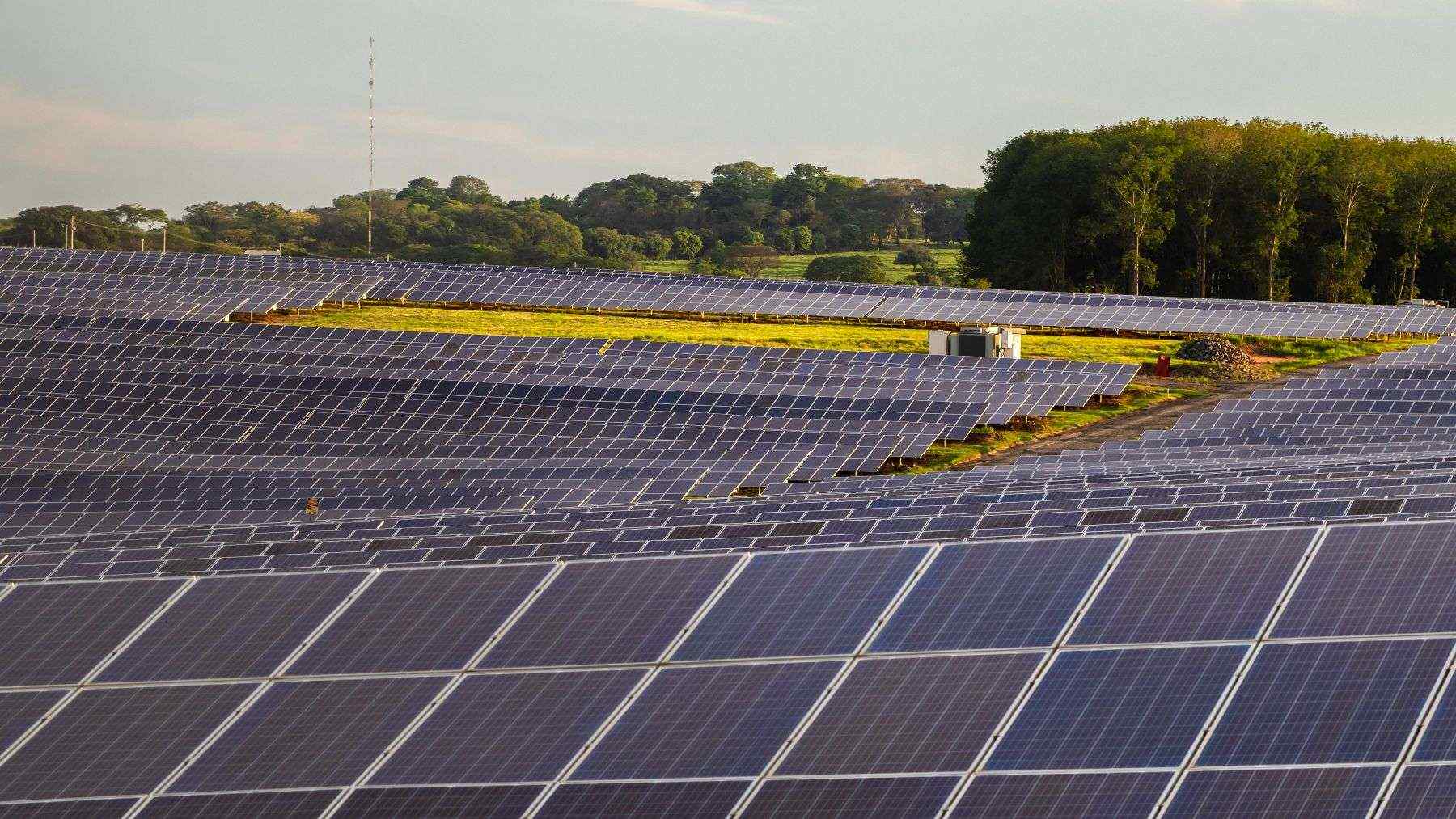
This changed dramatically when a large-scale solar park was completed here.
Construction did more than just create electricity. It was going to reshape the landscape around it.
The solar park would generate renewable electricity for the region. It would also introduce thousands of new shrubs, trees and wildlife habitats across the site.
Habitat creation became part of the project from the beginning.
465,000 solar modules transform former farmland
North-east of Berlin lies the town of Werneuchen. The solar park sits about 26 km outside of this town.
It took up almost all of the land (about 209 ha), with approximately 164 ha developed into the actual solar park.
The numbers only get larger from there.
About 465,000 individual solar modules were installed in total. This represents nearly 187 MW of installed capacity.
Electricity started flowing through the grid in November 2020. At the time, there was nothing quite like it.
It represented the largest open-field solar power plant in the country at the time and was constructed completely without support from the German Renewable Energy Act (EEG) subsidy program.
Generating electricity was merely half of the equation.
The project was designed to be more than a solar farm
When we talk about large solar parks, we typically refer to them in terms of their installed megawatt rating and energy production.
However, planners at EnBW looked past these aspects and asked what they could do between and around the rows of panels. And so, a different way of thinking evolved.
To help mitigate potential environmental impacts on native plants and animals, numerous measures were implemented to compensate for the effects of having a large solar park placed in the middle of agricultural land.
Public pathways run through parts of the overall project area.
A larger goal existed than simply placing solar modules on top of former farmland. Additional space within the project area was used for habitat features intended to support local biodiversity over the long term.
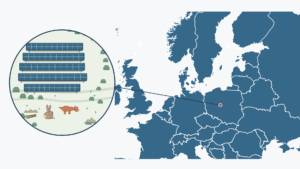
Twelve wildlife refuges were added across the site
Habitat preservation extended far beyond a simple planting or two around the perimeter of the development. It appeared throughout the landscape.
Approximately 18,000 native shrubs and 65 trees were planted during the course of implementing the environmental measures in and around the solar park.
Additionally, twelve “steppingstone” biotopes and several acres of open habitat were established.
Monitoring continued as part of the ongoing process. Effectiveness over time has continuously been assessed rather than viewed as a singular event as part of the final construction phase or a one-time regulatory requirement.
Weesow-Willmersdorf therefore created a piece of land that serves multiple purposes.
Wildlife cameras began recording new visitors
Creating habitat means little unless wildlife chooses to make use of it. Wildlife would decide that.
Photographs taken at Weesow-Willmersdorf provide an early look at how wildlife use habitat created alongside renewable energy infrastructure.
Foxes and rabbits were photographed visiting the area. EnBW refers to the area as becoming an increasingly attractive refuge for local fauna living around the solar park.
Those observations provide an early indication of how wildlife responds when renewable energy infrastructure and habitat features share the same site.
The lessons extend beyond a single site
Although Weesow-Willmersdorf was originally constructed as a renewable energy source, it also became a site for long-term habitat measures.
The work did not end when construction crews left the site. Monitoring continues across the landscape today.
This creates an opportunity to evaluate how those habitat features perform over time.
Lessons learned from Weesow-Willmersdorf may prove applicable to future renewable energy developments.
Read the whole thing?
Get the week's signal, not the noise
Our sharpest reporting on energy, climate and nature — free, once a week.