The water along the Victoria Barge Canal looks ordinary from the bank, flat and gray under a coastal sky.
Look closer at the waterline and the mud is speckled.
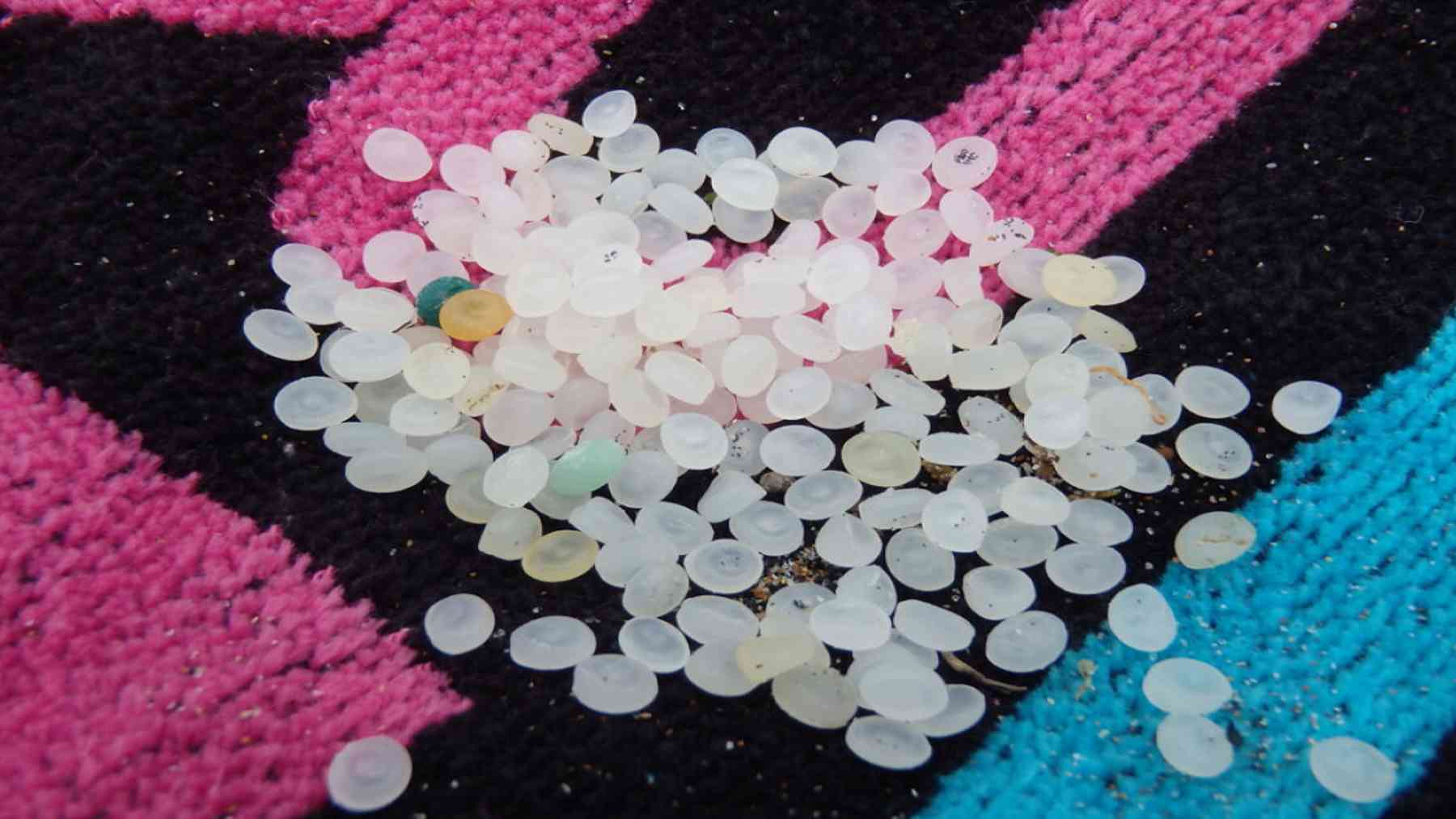
Thousands of tiny plastic beads, each one smaller than a pea, sit tangled in the grass roots.
They look almost like fish eggs.
They are not, and one Texas waterway turned up more of them than every other American site in a global volunteer count put together.
So how do beads this small end up loose in open water in the first place?
How do lentil sized beads end up loose in a canal
Nurdles are the pellets that plastic factories melt down into bottles, bags and car parts, and they travel by rail car and truck before they ever reach a mold. A single spilled container or a leaking loading chute can send thousands skittering across pavement, and from there rain does the rest of the work. Storm drains built to carry rainwater carry pellets just as easily, and they empty straight into canals and bays without passing through any treatment plant.
Because the pellets are lightweight and nearly waterproof, they do not sink and they do not dissolve. They ride the surface current, snag on marsh grass, and settle into the still water near docks and outfalls.
Pellet pollution tends to be most concentrated near places where pellets are manufactured, used or transported, which is why volunteers hunting nurdles went looking along the Victoria Barge Canal near a plastic production facility in Texas. A torn bag or an unscreened drain can seed a waterway long before anyone notices the pattern on the bank.
A canal that empties into a nursery bay
The Victoria Barge Canal flows into San Antonio, Mission and Guadalupe Bays, the estuary system fed by the Guadalupe and San Antonio rivers on the Texas Gulf Coast. Species including oysters, shrimp, blue crabs, redfish and flounder depend on estuarine nursery habitat there for early growth and survival, and the region’s commercial fisheries support shrimpers, crabbers and oyster fishers.
So a pellet that reaches the canal does not stay put. It drifts with tide and wind down the channel, out past the barge traffic, and into water where young fish are feeding among the grass.
Once there, the pellets behave like tiny sponges, picking up oily chemicals already present in the water and holding onto them the way a sponge holds grease. That is one reason researchers pay attention to animals that mistake a bead for an egg.
What volunteers actually pulled out of the water
The numbers come from a pellet count run through May 2026. More than 1,000 volunteers surveyed waterways at 249 sites across 31 states, the District of Columbia and six countries, working in standardized 10 minute intervals with all data logged to calculate totals. Together they documented 1,073,433 pellets worldwide.
Along the Victoria Barge Canal, more than one million pellets were found in and along the waterway, including a staggering 715,000 collected by one estuary watchdog group. That figure is an estimate rather than a bead by bead tally: the sample was so large that the group weighed it, subtracted the container weight and multiplied the net 32.5 pounds by an estimated 22,000 pellets per pound. US sites logged 1,066,542 pellets in all, and Texas accounted for 1,040,880 of them, leaving roughly 26,000 for the rest of the country.
The first edition of the count was far smaller. In April and May 2025, volunteers hand collected nearly 50,000 plastic pellets at 200 sites across 14 countries and 29 US states, and this year’s total ran almost 22 times that. Whether that jump reflects more pellets or more eyes on the bank is not something a volunteer count can settle.
What a count like this can and cannot see
A count is a snapshot. Volunteers can only sample where they can reach the bank, and a single rainstorm can wash a fresh batch downstream before anyone returns. Careful counting is often what turns something invisible into something documented, the same way a size mystery in North American crayfish came down to measuring.
A fresh spill in England shows how hard recovery is even when crews move quickly. After a July incident on the River Tyne, officials reported that of the 17.92 metric tons of nurdles estimated to have entered the marine environment, 4.78 metric tons in cleaned weight were confirmed recovered through self leveling and shoreline operations as of early September, with the running total reaching 5.14 metric tons later that month, about 11,300 pounds out of roughly 39,500.
Counting what was removed from damaged containers on board before those pellets fell into the water, officials said almost three quarters of the original cargo had been recovered overall.
Small beads, a bay that keeps score
None of this requires a dramatic accident to matter. A dock worker sweeping up a spill, a torn feed bag near a rail siding, or a drain grate that was never screened can each send a fresh wave of pellets toward the same bay where shrimp boats still work the water.
The fix, where it exists, is almost absurdly simple. Screens over drains, swept loading docks, and bags weighed before and after a truck is loaded can each cut a spill before it starts. None of it depends on new chemistry, just on catching a bead the size of a grain of rice before it reaches a curb.
For now the canal keeps its score written in mud and marsh grass, a tally of how far something this small travels once it finds moving water. Small trackers are doing similar work elsewhere, the way solar powered tags on monarch butterflies log movements that would otherwise go unrecorded, or the harbor machine that keeps hauling debris out of a river mouth one load at a time.
Whether next spring’s count climbs again or finally bends downward is the open question the volunteers will be back on the bank to answer.
Read the whole thing?
Get the week's signal, not the noise
Our sharpest reporting on energy, climate and nature — free, once a week.