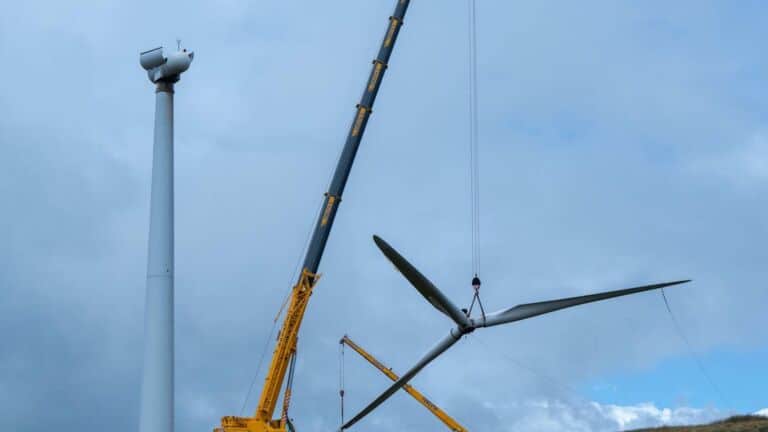
Off the Dutch coast, a wind farm built around birds and bats has started generating electricity.
Although generating electricity is an important part of the wind farm’s development, it is only half of its overall purpose.
The wind farm was developed around a secondary goal. That goal was to reduce risks to wildlife moving through the region.
At the same time, radar systems, cameras, microphones and artificial intelligence monitor and record wildlife activity throughout the wind farm.
Generating power was only the first objective
Ecowende’s offshore wind farm consists of 52 turbines off the Dutch coastline.
In total, the turbines provide 760 MW of installed capacity. Initial construction of the wind farm began in December 2025.
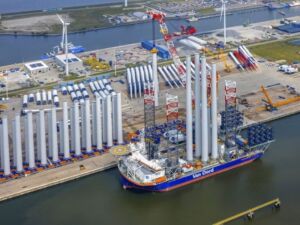
Recently, after connection to the TenneT Offshore Grid Network, the wind farm achieved its “first power” status. Commercial operations are planned to be completed before the end of 2026.
Once operational, the wind farm is anticipated to generate 3.3 TWh/year of renewable electricity. This represents approximately 3% of annual electricity consumption in the Netherlands.
However, electricity production was only one of the objectives of Ecowende. Another objective was to explore ways offshore wind farms could reduce risks to birds and bats.
Why bird movement shaped the wind farm’s design
There are numerous migratory routes across the North Sea providing a home for many different types of bird species.
Birds may strike against turbine blades. Some birds may entirely avoid those areas where turbines exist.
Other birds may expend more energy traveling longer distances around other offshore structures during their migrations.
These issues were key factors influencing the design of the wind farm. The design included wider spaced turbines, raised nacelle positions, and a designated bird passageway.
Seven turbines were equipped with a single blade painted red. This pilot program is assessing whether increased visual contrast could reduce collision risk.
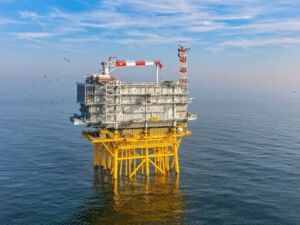
Radar, cameras and AI keep watch above the water
Providing space for wildlife is one issue. Determining how animals adapt to or utilize such spaces is another issue.
Working together with DHI, Ecowende utilized sensors, cameras, and AI to continuously track animal movements in and around the entire wind farm area.
Above water radar systems are able to detect moving objects over the North Sea in three dimensions.
When movement is detected, robot cameras will automatically focus on the object detected. Artificial Intelligence then assists in identifying the object that has entered the area.
Thermal cameras and Acoustic Microphones are used to monitor bat activity near turbines.
Individual turbines can respond when wildlife approaches
The intent behind the design of the monitoring system went far beyond collecting data.
For some turbines equipped with deterrent systems, certain deterrent methods were employed using cameras and speakers to prevent birds from approaching.
Not every bird will alter its course based upon deterrent methods employed by these systems. If deterrence fails, these systems can alert specific turbines to slow temporarily due to the presence of wildlife.
Collision detection systems utilizing both sensors attached to blades along with cameras monitoring the rotor swept area were implemented to further assess collisions resulting from animals flying into turbines.
The lessons learned here could extend far beyond this wind farm
The technology used at Ecowende is meant to accomplish much more than protect wildlife surrounding a single facility. It is also creating knowledge about which methods and technologies work best under actual operating conditions.
DHI and Waardenburg Ecology analyze data collected from birds and bats passing through the wind farm.
Researchers hope the data will help identify which combinations of monitoring techniques, deterrents, and turbine responses are most effective. Developers planning future offshore wind farms may employ these results when designing the spatial arrangement of wind farms.
Results may also influence decision-making relative to monitoring systems and responses made by turbines.
Read the whole thing?
Get the week's signal, not the noise
Our sharpest reporting on energy, climate and nature — free, once a week.