Most people would see more than a hundred fish species as a sign of a healthy ecosystem.
Researchers identified 113 fish species along the length of the Jialing River in China. Yet another pattern emerged from the data.
There were still plenty of fish in the river.
But some sections were becoming less distinct from one another.
A once connected river began following a different path
Historically, the Jialing River was the largest tributary of the upper Yangtze River.
It was home to at least 170 fish species and represented one of the key freshwater ecosystems in the area.
In recent decades, the river was fragmented into twenty separate reservoirs when nineteen dams were built across it.
Dam construction created barriers to water flow and habitat connectivity.
What was once a single connected river now functions more like a chain of reservoirs.
Healthy numbers can still hide important change
Researchers identified 113 fish species along the length of the Jialing River in China.
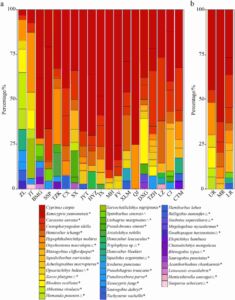
Many of the species detected were listed as endangered or native to the region. Some non-native species were also present.
At face value, the results indicated a positive trend.
The overall diversity in fish populations within the different sections of the river was very similar.
Support for this comes from the large number of fish species found.
But something else was occurring below the surface
Species numbers can provide a measure of the health of an aquatic community.
They do not necessarily reflect the degree to which fish populations vary from one location to another.
Writing in Global Ecology and Conservation, the researchers noted that a very different pattern emerged when they compared fish communities across the river rather than simply counting species.
The greatest similarity between fish populations was seen in the central portion of the river where fourteen dams were located.
Fish populations outside of that area were more diverse than those inside it.
Increasing similarities in fish communities were observed across the dammed sections of the river. They referred to this process as “biological homogenization”.
Reservoir conditions keep rewarding the same survivors
Certain characteristics appeared repeatedly among fish detected across dammed sections.
These species tended to prefer slowly moving water, live near the bottom, and feed on a broad range of foods.
Those of small body size were found more commonly than those of longer body length.
Fish capable of migrating over long distances were found less commonly.
These patterns follow logically since dams slow down rivers, create altered habitats, and isolate them physically through barrier effects.
Over time, such conditions favor species better adapted to existing reservoir environments.
Ecological change can arrive long before collapse
An aquatic ecosystem does not require loss of most or even half of its original species richness to experience major ecological change.
Therefore, it can maintain high diversity while simultaneously losing much of its unique character.
Changes like this are often overlooked because species numbers remain high even as individual sections become more alike.
Preserving what remains different may matter most
Several approaches could help preserve biodiversity across the Jialing River watershed.
These included protecting tributaries, restoring habitat, and improving passage for fish between sections.
The goal is not simply to protect fish numbers, but also to preserve the differences that still exist between sections of the river.
In many cases, those two goals do not necessarily produce the same outcome.
An aquatic ecosystem may support numerous species for years after damming begins, but if every section becomes functionally identical, part of that ecosystem has already been lost.
Read the whole thing?
Get the week's signal, not the noise
Our sharpest reporting on energy, climate and nature — free, once a week.