The light in a sinkhole fades long before the water runs out.
A diver drops through that darkness, fins first, past rock walls that never see daylight.
Somewhere far above her, a support team watches a line slowly pay out.
She is heading for a depth almost no human body has reached on open circuit scuba.
Getting there took minutes.
Getting back took the rest of the day.
Three gases had to carry her blood home instead of one
At 808 feet, ordinary compressed air would have left the diver dangerously confused and could have poisoned her with oxygen, so she breathed a blend of oxygen, nitrogen and helium called trimix instead. Replacing most of the nitrogen with helium kept her thinking clearly enough to work the reel and read her gauges at a pressure her body was never built to handle.
That swap solves one problem and creates another. Helium cycles through body tissue fast, which sounds like an advantage until the ascent begins. Gas driven into her blood and fat on the way down then had to leave slowly enough that it never turned into bubbles.
Dissolved gas escaping too fast is what causes decompression sickness, the bends, so her whole return became an exercise in patience measured in feet per minute. The real work of the dive was not the descent. It was everything that came after, breathing one mixture after another while her tissues quietly let go of what they had absorbed.
Fourteen minutes down turned into nearly eight hours back up
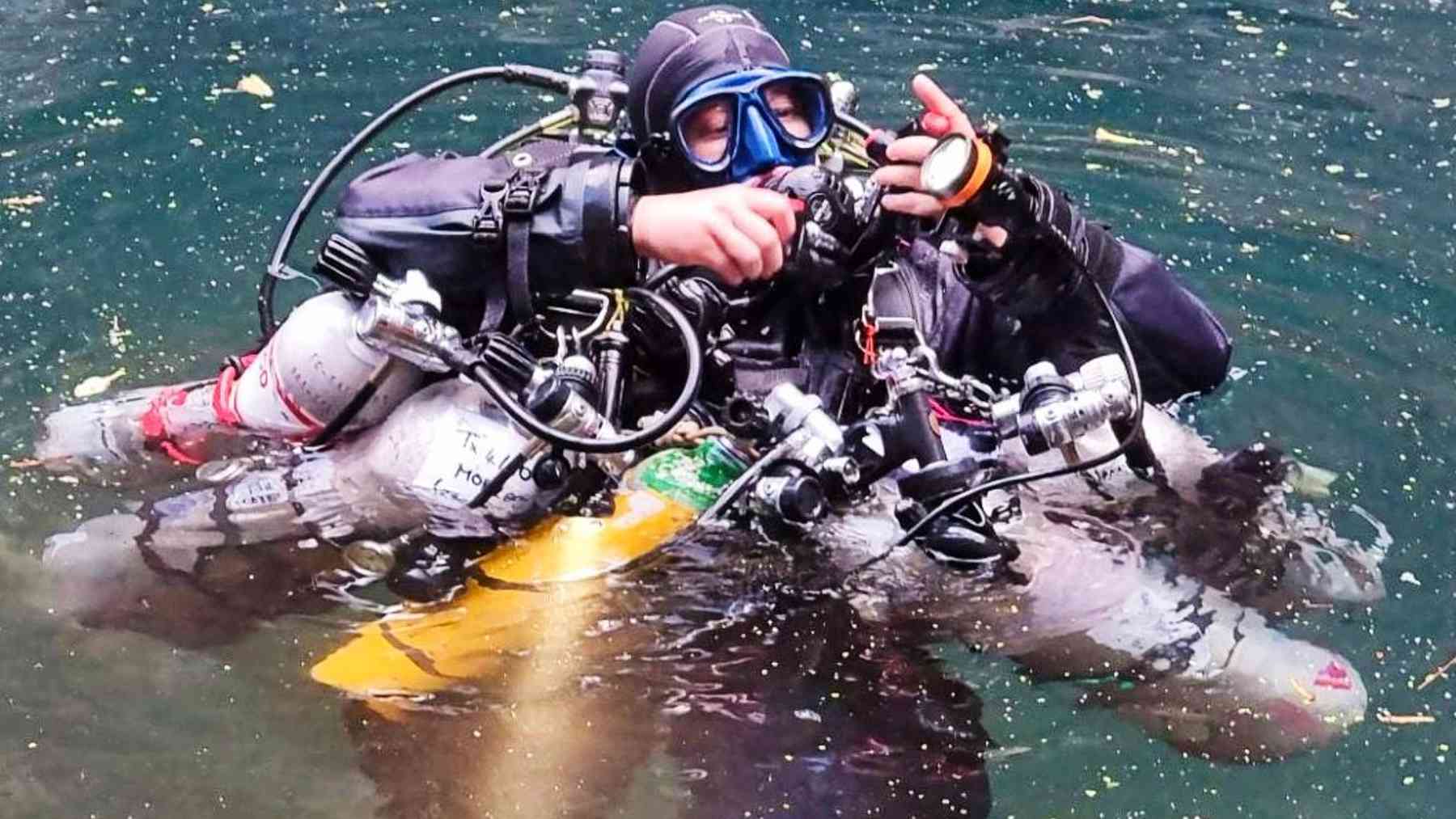
The dive happened in Boesmansgat, a flooded cave in South Africa’s Northern Cape province known in English as Bushman’s Hole, one of the deepest freshwater sinkholes on the planet. The diver, a South African technical and cave diving instructor, went down on open circuit scuba, carrying a bottom mix of trimix and switching between staged cylinders of different blends on the way back toward the surface.
Fourteen minutes down, then close to eight hours back up, pausing at fixed depths while her body offgassed in stages. Cold and darkness are hard enough on their own. Hanging nearly motionless in a cave for that long tests the mind just as much as the body.
Even the cave complicated the math. Boesmansgat sits roughly 5,000 feet above sea level, and thinner air at altitude changes the way decompression schedules have to be calculated. Her team therefore planned the ascent as though she had gone far deeper at the coast, a dive reckoned as equivalent to something near 3,182 feet of seawater, and that single adjustment reshaped every stop on the way up.
The record now stands at 808 feet
Guinness World Records confirmed the dive by Karen van den Oever at 808 feet, set in Boesmansgat on 27 October 2022. The dive lasted 8 hours and 11 minutes, of which 14 minutes and 50 seconds were spent descending, which means nearly everything else was the slow climb home. The verified figure is published on the Guinness record page for the deepest scuba dive by a woman.
It was not her first attempt at the mark. She had already claimed the women’s record the year before, at about 774 feet, then returned to beat her own number by roughly 33 feet, a pattern familiar to anyone who has watched extreme endurance marks creep forward one determined attempt at a time.
Her support team tracked her gas switches and timing while she worked in the cave below. Years of training went into those eight hours, most of it invisible to anyone watching from above the waterline.
A seventeen year old record had already given way
The mark she first broke had belonged to a fellow South African, Verna van Schaik, who reached about 725 feet in the same cave and held the title for nearly seventeen years before that 2021 descent, as Divernet reported at the time. “This was a dive that I have been working towards for a long time,” van den Oever said afterward.
She had started diving in 2001 and set her sights on the depth record not long after. That kind of patience echoes other extreme physiology stories, including a physician who sealed himself inside a machine to test what a trained body could withstand under conditions nobody else would volunteer for.
In both cases, the headline number is really a stand in for years of unglamorous preparation. The eight hours underwater were only the visible part of a much longer story.
The slowest hours mattered more than the plunge
What the dive leaves open is how much further this can go. Depth records in sinkholes and caves depend on gas logistics and nerve as much as equipment, and nobody knows exactly where that combination runs out.
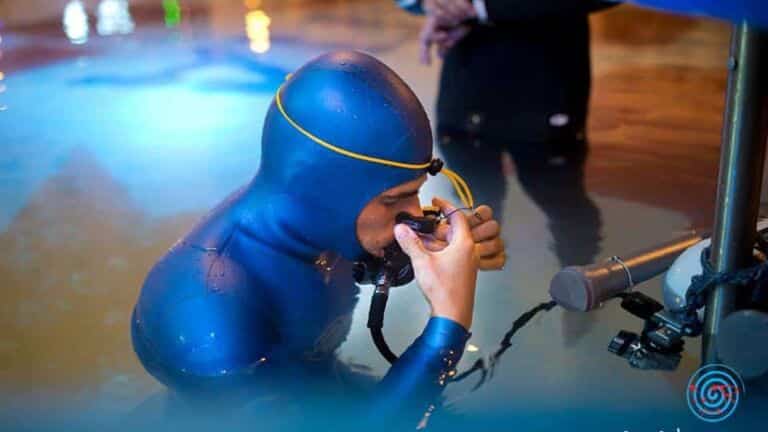
Anyone who followed a researcher’s work on how the body copes with extreme sensory conditions will recognize the pattern here too. Other divers have pushed their own limits in very different ways, including a freediver who lay motionless underwater for more than twenty minutes on a single breath.
For now the number stands at 808 feet, a reminder that the long wait on the way up mattered more than the plunge that got her there.
Read the whole thing?
Get the week's signal, not the noise
Our sharpest reporting on energy, climate and nature — free, once a week.