Solar panels can continue generating electricity even when underlying faults are present.
In some cases, performance may already have declined before operators realize there is an issue.
Thailand trialed an AI and big data solution to identify issues faster.
The system identified hundreds of solar panel issues. It also changed how cleaning and water usage decisions were made at sites.
Overall, rather than specific issues being fixed, a new way of managing solar farms was developed.
Problems can develop long before anyone notices
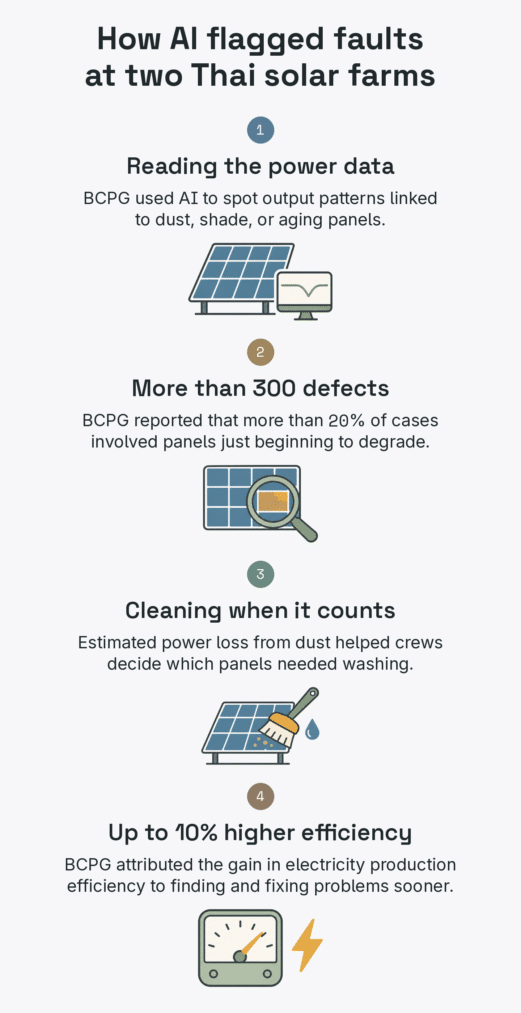
Using operational data, unusual trends were picked up by the system to allow identification of solar panel problems.
Identified issues included dirt buildup, shading effects, and degradation.
Even when these issues reduce electricity production, physical damage may not be easy to spot.
Trends within the data were identified to allow quick detection of issues even if panels appear to be functioning normally.
Early detection was important to prevent small faults developing into larger maintenance problems.
Solutions could be put in place before significant damage occurred because defects were picked up early.
Testing the system across two operating solar farms
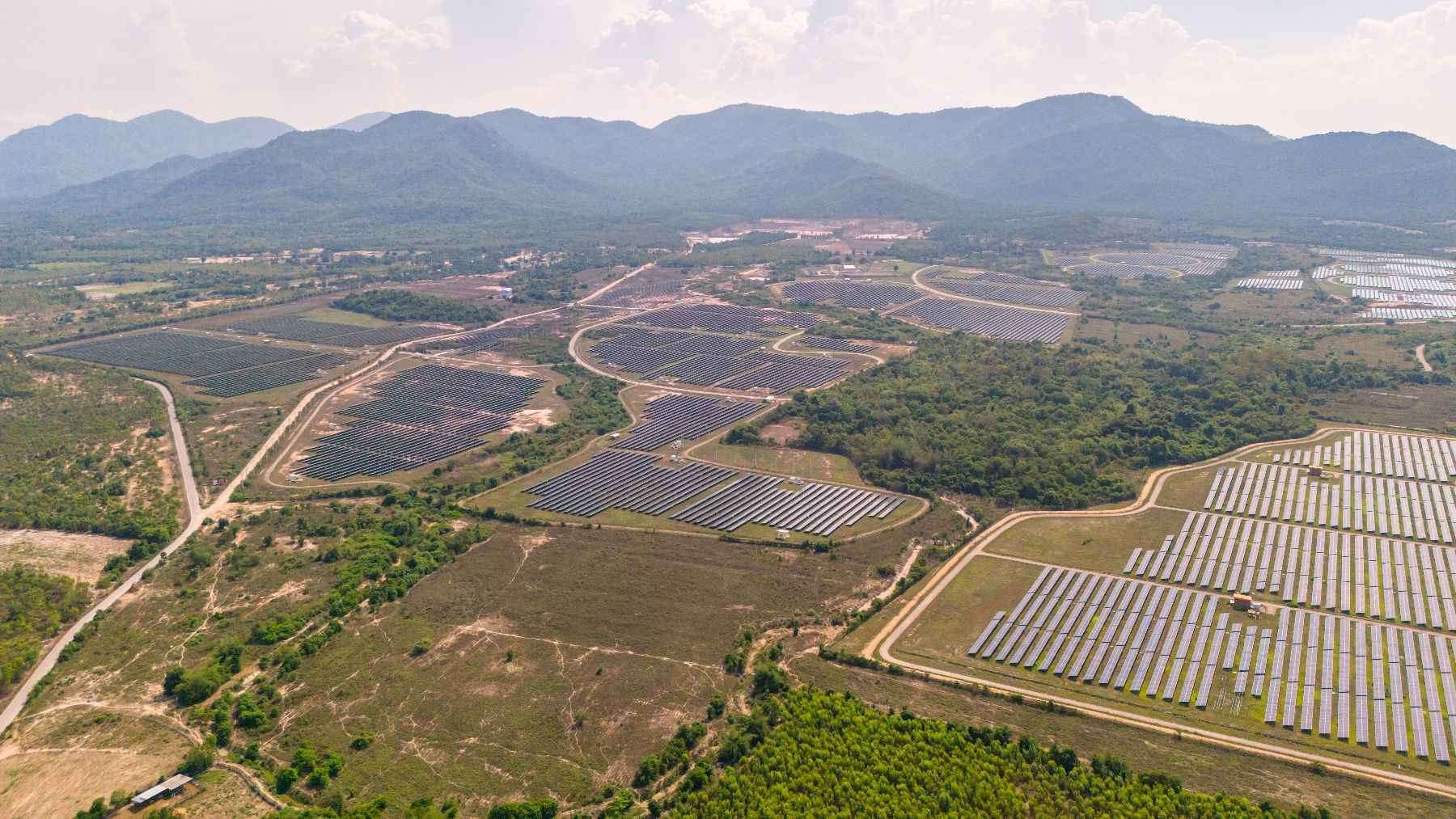
Two solar power generation sites in Thailand were used in this trial.
The trial helped determine whether the solution would be applicable in different situations.
Data from both solar power sites were used to allow AI to identify panel issues. That information helped prioritize maintenance work.
In addition, cleaning requirements within solar farms were considered alongside resource management and performance.
This project provided a way of improving resource management as well as overall site performance.
Early warnings changed maintenance priorities across the sites
More than 300 faults were identified in solar panels during this trial.
Over 20% of these faults were identified during the early stages of deterioration. Many faults could be identified before significant deterioration occurred.
Preventive maintenance was therefore carried out instead of waiting for repairs to become necessary.
BCPG reported improvements of approximately 10% in overall energy generation efficiency.
Improvements were achieved while also trying to minimize future damage and maintenance costs.
These results may not be possible in all solar installations because the project was conducted as a pilot scheme.
Cleaning schedules rarely match conditions on the ground
To clean at scheduled intervals assumes that conditions will remain fairly constant.
In reality, conditions will vary constantly in solar farms. The amount of dirt affecting performance, and therefore whether cleaning is required, will be dependent on several factors, including humidity, temperature, and weather conditions.
Frequent changes in these factors make it difficult to maintain an appropriate cleaning regime at fixed intervals.
Data analysis was therefore used to make operational decisions.
Water use became part of everyday decisions
Cleaning decisions were made based on the level of performance loss caused by dirt.
This meant decisions were made based on current operational conditions.
By reducing the frequency of cleaning, less water was used in these locations. This helped to reach wider water management goals in solar projects.
Environmental conditions became a major factor in operational decisions, and maintenance timing became almost as important as the maintenance itself.
Much depends on the quality of incoming data
Whether similar systems can be used to provide reliable decision making in changing conditions is a consideration for the future.
Results from the pilot project showed that operational data can support earlier intervention and different maintenance decisions.
Decisions on water usage, cleaning frequency and solar panel maintenance were all linked through this analysis. Future actions now depend on whether the data coming in provides accurate signals.
Patterns and anomalies can be identified using this technology.
It remains to be seen to what extent patterns can change the daily management of solar farms.
Read the whole thing?
Get the week's signal, not the noise
Our sharpest reporting on energy, climate and nature — free, once a week.