The hum starts before you see the boxes.
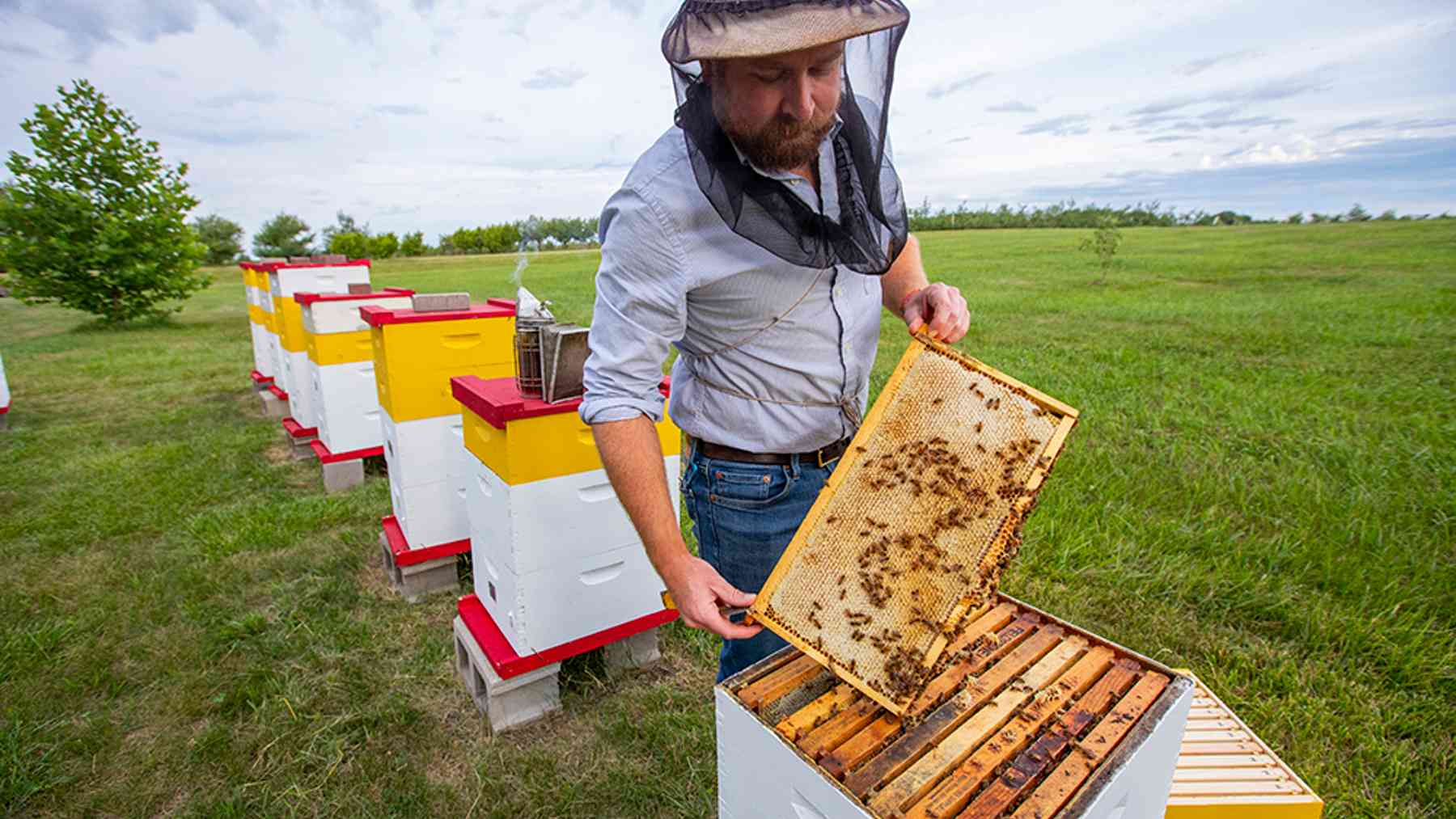
Between two rows of solar panels south of Ames, Iowa, a scatter of white hive stacks sits low in the grass.
Bees lift off in steady lines, cross the gravel, and vanish into blooms nobody would normally plant inside a power plant.
Vegetables grow in raised beds a few yards away, tucked under the same racking.
The honey coming out of those hives has told a very different story than the panels ever did.
So what actually changed for the bees living between the rows?
Flowers planted near the hives changed what the bees could reach
The mechanism is almost embarrassingly simple. Native, perennial flowering plants were added around the hives inside the ten acre solar array, instead of the mowed turf or bare gravel that covers most sites. That single swap is doing the heavy lifting behind the whole result.
Iowa State researchers say the change lifted honey production by 412 percent, roughly five times the earlier output, without interfering with energy generation or the farming underneath. More flowers within easy flight of the entrance means colonies spend less effort searching and more nectar ends up stored as honey.
That reading fits the result, though it has not been isolated by a controlled comparison. So it remains the researchers’ interpretation rather than a proven rule. Matthew O’Neal, the entomologist running the bee side of the project, put it bluntly to an Iowa newspaper, describing “a 400% increase” in honey from the bees kept at the site.
Ten acres south of Ames grows bees, berries and broccoli together
The site itself is modest by solar standards. The Alliant Energy Solar Farm at Iowa State University covers about 10 acres and can generate up to 1.35 megawatts, enough for roughly 200 homes at full output, which makes it a research plot more than a utility project.
Raspberries, strawberries, peppers, tomatoes and broccoli grow in beds between the panel rows. They were chosen partly because small fruit and vegetables suit a plot too cramped to make corn or soybeans pay. The beehives sit nearby, close enough that crops and wildflowers both draw from the same pollinator traffic moving through the site all summer.
That layout is what agrivoltaics researchers actually test. Whether land can generate electricity, grow food and support insects at once, without any one job crowding out the others.
A four year project reported the honey jump in its early seasons
The work runs as a four year study backed by a Department of Energy grant of roughly 1.8 million dollars, a partnership between the university and the utility that built and operates the array. The honey comparison covers the colonies kept at the site over two seasons, not the full run of the project.
So the number rests on a short record at a single apiary. It has been reported through interviews and engineering trade coverage rather than a published paper, and the early read also found no measurable cost to electricity generation or to the vegetable harvest.
O’Neal has also pointed to a wider problem the hives are meant to address. Hive survival from one year to the next is trending down, and honeybee productivity has slipped over the past three decades, pressures that make a reliable patch of flowering ground valuable regardless of what sits above it.
Wild bees over five seasons responded differently than managed hives did
Not every pollinator reacts the same way. Alongside the honeybee colonies, the team is also measuring wild, native bees drawn to the same flowering ground. Those insects do not store surplus the way a managed hive does, so their response shows up in counts and diversity rather than a single production number.
Even so, a separate five year federal field study at two southern Minnesota solar sites found total insect abundance tripled and native bees up roughly twentyfold after native grasses and wildflowers were planted on retired cropland. Pollinators from those sites also visited soybean flowers in neighboring fields.
The Iowa plot is smaller and younger, but it points at the same pattern. Change the plant list and the insects respond. The arrangement echoes a pattern seen even at odd altitudes, like the solar installation above Innsbruck built to do one narrow job that ended up serving several at once.
What still needs watching before the 412 percent holds up
The caveat is straightforward. One apiary, one site and a short run of seasons is a promising start, not a settled rule for every solar farm in the Midwest. Researchers are still gathering data before drawing broader conclusions about scale or location, and that distinction matters for anyone citing the figure elsewhere.
Even so, the direction is consistent with what other sites have found, and it costs very little to test, much like the turbine redesign aimed at one species that ended up changing outcomes for creatures nobody had centered the project on. A different seed mix, a few native plants near the hives, and patience.
For a region nervous about trading farmland for panels, more honey off the same ten acres is a small, sweet argument that the ground underneath does not have to sit idle while the panels work overhead.
Read the whole thing?
Get the week's signal, not the noise
Our sharpest reporting on energy, climate and nature — free, once a week.