
The water off the southern tip of New Zealand does not warm up for anybody.
It sits in the mid 50s Fahrenheit, in a strait where currents funnel between two islands.
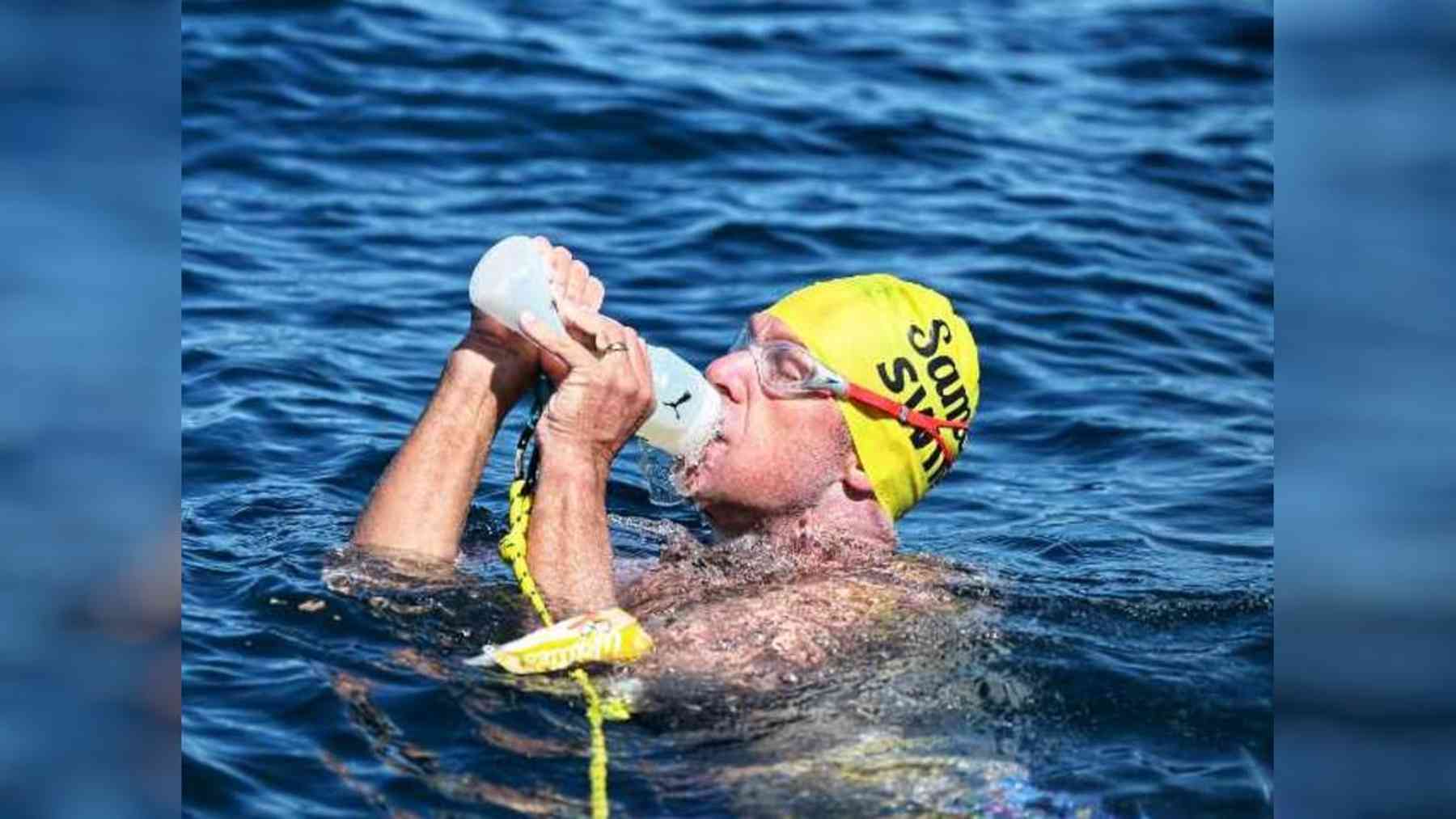
A swimmer waded in anyway, with nothing but a swimsuit, a cap and goggles.
Somewhere in his gut, he had already swallowed a tiny electronic pill.
It was logging his internal temperature, once a minute, for as long as he stayed in.
What that sensor recorded over the next ten hours raises one question: how did his body keep going?
Why a cooling body kept swimming anyway
Within fifty minutes in the water, his core temperature had already fallen under the clinical line doctors use for hypothermia, dropping from about 100.2 degrees Fahrenheit to below 95 degrees. It then settled instead of collapsing. The low point was close to 93 degrees Fahrenheit, reached at 2 hours 42 minutes, and he stayed below the hypothermia line for 369 minutes, more than six hours of continuous swimming in that state.
The explanation put forward is cold adaptation rather than anything exotic. It points to a dulled sensory response to cold alongside muscles that keep producing useful work. The swimmer did not knowingly shiver during the swim itself, only shortly after being taken out of the water.
That reading is an interpretation of a single swimmer, not a settled mechanism. Heat from continuous muscular effort is one proposed reason for the small upward blips recorded mid swim, and the authors frame it as something that might have contributed, rather than a demonstrated cause.
The strait itself is the reason this crossing is rarely attempted
Foveaux Strait separates New Zealand’s South Island from Stewart Island, and it is described as an infamously cold and turbulent open water swim, with water around 55 to 57 degrees Fahrenheit. That cold is compounded by movement, since currents push hard through the gap between the islands.
It is also one of the least documented swims of its kind. No core temperature dataset from a Foveaux Strait crossing had been published before this one.
That is why the swim is treated as fresh insight into the demands of what is regarded as one of New Zealand’s iconic open water challenges. So the attraction for physiologists is not the drama of the water but the fact that someone instrumented himself before going into it. Most of what is known about long cold immersion comes from accidents, not planned crossings with a sensor running the whole way.
Five months of daily cold plunges built the tolerance
None of this happened by raw toughness alone. The swimmer’s acclimatisation included five months of daily cold plunges, which is thought to have blunted his sensory response while preserving mechanical output. That preparation matters because the body’s first instinct in cold water is to gasp and seize up, a reflex that can be more dangerous than the cold itself.
The published case report records a man in his fifties with a body mass index of 27.9 and body fat of 18 percent. His weight was not reported, and body composition is logged in cases like this because fat slows the rate at which cold reaches the core.
The authors’ own conclusion is deliberately narrow. In a trained and cold adapted marathon swimmer, they write, prolonged cold water immersion can be tolerated at core temperatures traditionally classified as clinically hypothermic, without functional compromise or adverse outcomes. Trained and cold adapted is doing the heavy lifting in that sentence.
The crossing took 9 hours and 52 minutes
The swim started at 8 a.m. and reached the mainland at 5.52 p.m., a total of 9 hours, 52 minutes and 9 seconds, completed under standard marathon swimming rules with no wetsuit. The route itself, from Saddle Point on Stewart Island to Stirling Point at Bluff, is given as about 17 miles, while the distance actually swum is reported as roughly 23 miles. The gap is what the currents added to a straight line.
A climber reaching the summit of Everest without bottled oxygen survives on an arterial oxygen pressure that would knock most people unconscious, and this swim asks a similarly narrow question of the body, just through cold instead of thin air. Both cases show how far trained physiology can be pushed past the line doctors normally treat as the edge of safety.
One detail stands out at the end. The case showed no after drop, the secondary fall in core temperature usually seen once a swimmer exits, and the ten hour duration is the suggested reason, with tissue temperatures having already equilibrated with the core.
What still worries doctors about swims like this one
None of this means cold water has become safe to gamble with. Fatal hypothermia is generally expected after three to nine hours in water around 59 degrees Fahrenheit, which is warmer than the strait he crossed, and that expectation still applies to anyone without his preparation.
Ordinary cold water swimmers rarely sit in this territory at all. In one study of aspiring English Channel swimmers, a six hour swim left just one participant hypothermic, at about 95 degrees Fahrenheit.
Even so, the case adds a genuinely new data point to a thin literature built mostly from shipwrecks and accidents rather than planned, monitored swims. A Croatian freediver who lay motionless on the bottom of a hotel pool for 29 minutes without breathing shows a similar pattern, trained bodies shifting limits doctors had assumed were fixed.
A volunteer who spent 70 days tilted head down in a Texas research bed is another reminder that the body can be held for a long stretch in territory doctors call dangerous and still come out intact. What is left here is one carefully measured fact: a body held for hours below the clinical hypothermia line can, with the right preparation, keep swimming through it.
Read the whole thing?
Get the week's signal, not the noise
Our sharpest reporting on energy, climate and nature — free, once a week.


