One continent has a country known for its love of mint tea, even making it the country’s national drink. The other continent is also known for being extremely fond of tea, with estimates suggesting they drink over 100 million cups daily. We wonder if the love of tea led to these two continents linking up for a massive project, promising the biggest treasure of power under the ocean.
Two continents are linking up for a massive project
The African country, Morocco, linked up with the UK for a massive power project. Formally known as the Morocco-UK power project, combined a power station, power storage, and power transmission into one project. The UK-based energy startup, Xlinks, proposed the project and plans on focusing on providing cost-effective wind and solar power from Morocco to the UK. The Project will produce £19.3bn in socio-economic value for the UK over 25 years and a £5bn addition to the UK supply chain.
The Morocco-UK power project will be developed without funding from the UK Government and will connect the UK National Grid to power produced in Morocco via 4,000km of high-voltage direct current (HVDC) subsea cables. The project will benefit from solar luminosity in southern Morocco as well as the country’s convection desert winds.
The project aims to provide for the UK’s power demands when domestic renewable energy production is reduced due to climatic conditions such as slow winds. Xlinks signed an agreement with the National Grid for two 1.8GW connections at Alverdiscott in Devon, UK. The first system is expected to aid the UK’s electricity network by 2030.
The project promises the treasure of power
The combined solar and wind farm facility is being developed on an area of 1,500km² in the Guelmim Oued Noun region of Morocco and will produce 11.5 GW of power, of which 3.6 GW is planned to be conveyed to the UK to meet up to 8% of its electricity demand. The on-site storage facility will comprise a 22.5GWh/5GW battery to store and deliver power to the UK when necessary.
New converter stations will be constructed at the two ends of the Morocco-UK HVDC interconnector. The Moroccan converter station will convert the electricity produced from wind and solar energy from high-voltage alternating current (HVAC) to HVDC. The UK converter station will convert the exported electricity back from HVDC to HVAC before supplying it to the British transmission network.
Immense power isn’t cheap. TAQA, an international energy and water company based in the UAE, and Octopus Energy, a UK-based global energy and technology group, will be funding the project. TAQA invested $30m and Octopus invested $5m in the development phase. The German company, con|energy, also made a multimillion-pound investment in the Morocco-UK project.
Their treasure of power will be located under the ocean
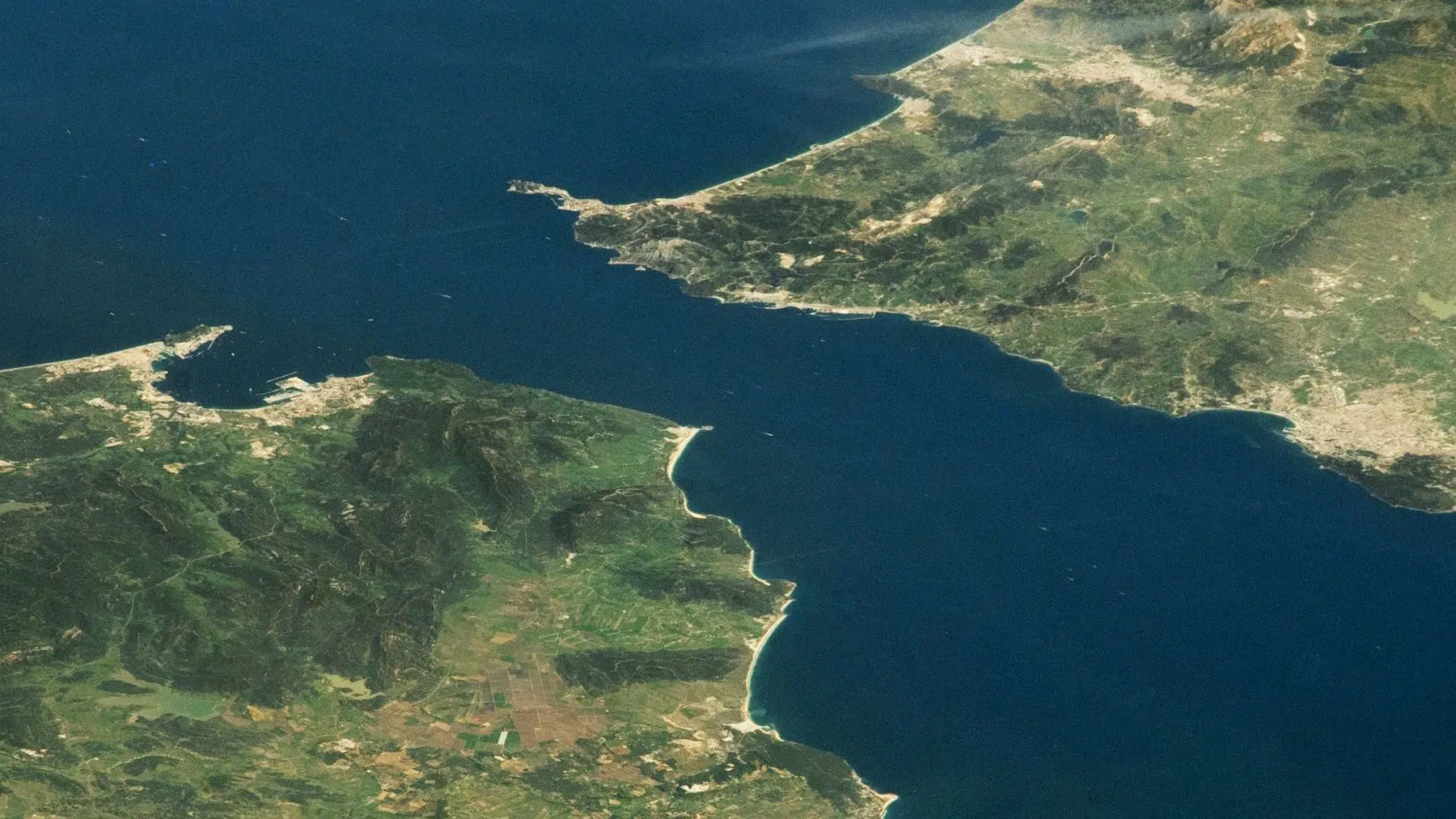
HVDC onshore and subsea cables will transmit the power between Morocco and the UK and will be the longest subsea power cables in the world after completion. A cable will consist of independent rigid bi-pole systems, each with a capacity of 1.8 GW and a length of 4,000km. The route will be from the northwest of Tantan, Morocco, up the Strait of Gibraltar, and along the coasts of Portugal, Spain, and France, before going around the Isles of Scilly off the coast of Cornwall, UK. It will go through the waters of the UK and make landfall in Devon.
The Morocco-UK power project has many other benefits, including:
- Generate nearly 10,000 jobs in Morocco during the construction phase, including 2,000 permanent jobs
- 1,350 permanent jobs in cable manufacturing facilities in the UK
- Zero-carbon electricity system by 2035 in the UK
These two continents are now linked by their love of tea and for being pro-zero-carbon, creating a significant impact in the global transition to renewable energy.
Read the whole thing?
Get the week's signal, not the noise
Our sharpest reporting on energy, climate and nature — free, once a week.