
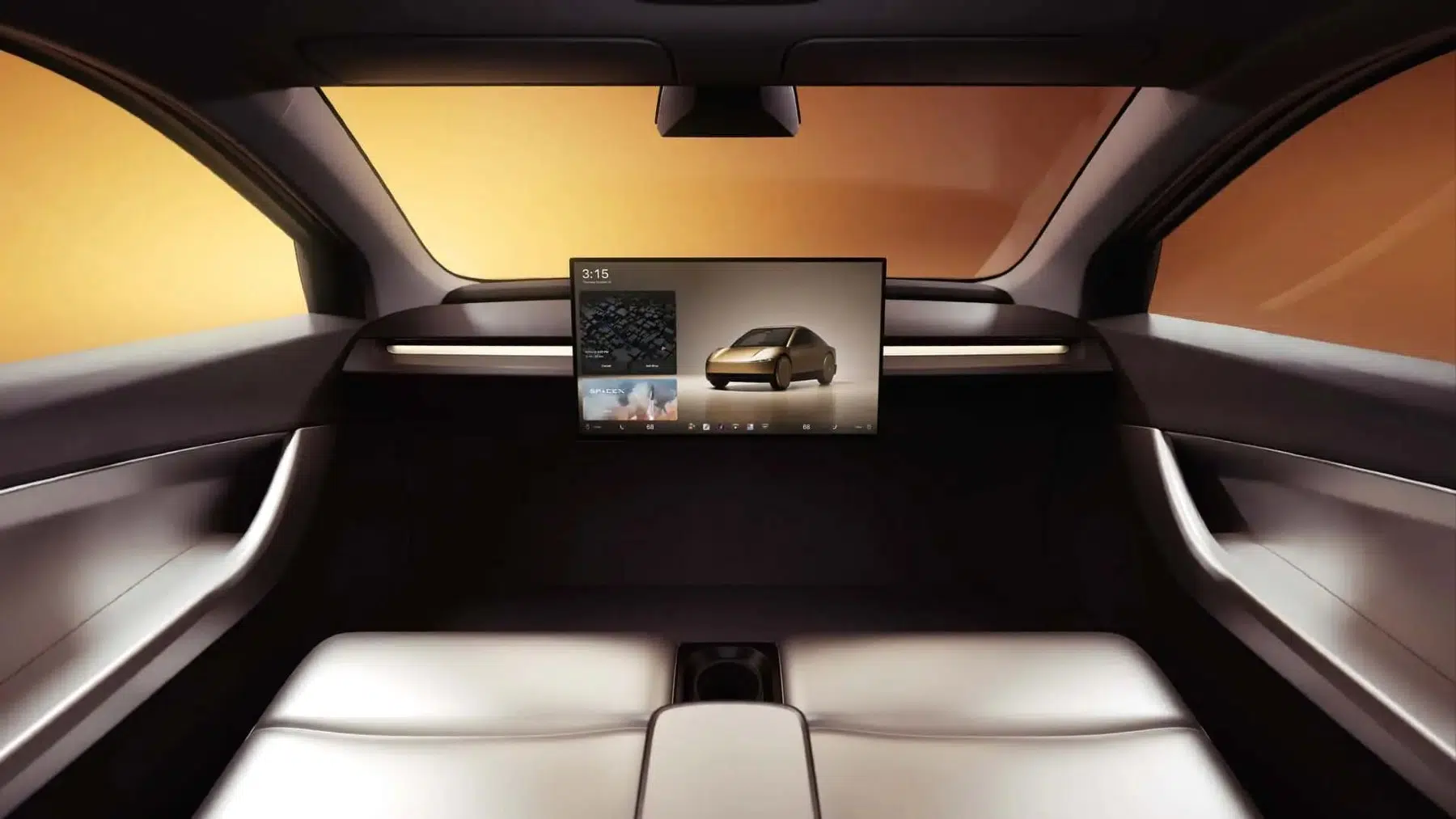
Will the next generation of taxi apps be driverless? Tesla has been working on this project for a while now, and Elon Musk’s electric vehicle company seems to have put the pieces together with the National Highway Traffic Safety Administration to ensure the well-being of future passengers. The car that will be used as a taxi had to address some inconveniences that led to the project being delayed by safety issues in the automation that can, eventually, put passengers’ lives in danger.
Tesla faced pushback on the autonomous driving project
The NHTSA added roadblocks for Elon Musk to launch the driverless cab in Austin, Texas, where the Tesla Gigafactory is located. The facility is currently overloaded with Cybertrucks, with the sales drop and the loss of control over the secondary market. Serving as the ground zero for the experimentation of the cars, along with San Francisco, the company used its own workers to test the new technology. This is a similar move to what Waymo has been doing, but its level of autonomy is at 4, while Tesla is currently at level 2.
The difference from one level to the other is the need for the presence of a driver. Level 2 has partial automation. The car has control over both steering and acceleration, as well as braking, but the driver should be paying attention to the driving environment at all times. At level 4, on the other hand, the vehicle can handle all driving tasks in specific areas or conditions, with no need for human intervention or supervision. The highest level of automation is number 5, where the car can drive anywhere under any conditions.
Even with all the required adjustments, Elon Musk’s company has to point out to NHTSA before the deadline to make the Robotaxi available. The founder confirmed that the company will have the driverless cab active in Austin by the end of June. In an interview with CNBC, Musk said he aims to take the Robotaxi to Los Angeles and San Francisco next.
Musk also revealed that 10 vehicles will be active in Austin, and if the launch goes well with no incidents, Tesla will rapidly expand to thousands of vehicles. The car used will be the Model Y equipped with the new version of Full Self-Driving (FSD) without a safety driver.
Model Y to compete with Waymo’s service
Tesla will now compete with Alphabet’s Waymo. The company already has a driverless cab service available in Phoenix, San Francisco, Los Angeles, and Austin. It will soon hit the streets of Atlanta in a partnership with Uber – Miami and Tokyo by the end of the year. Alphabet does not have a car manufacturing, so the car running the technology is a Jaguar I-Pace, and the Robotaxi makes over 250,000 trips per month in the U.S.
These two companies are the first to hit the ground running with a taxi that doesn’t require any driving assistance, but other big names in the industry are developing their own projects, including General Motors, Aurora, and Amazon.
Elon Musk’s new job might hurt the adoption of the Robotaxi
Politics can influence someone’s decision to opt for a driverless cab from Tesla, Waymo, or a regular cab. Elon Musk is constantly involved with the U.S. Government Administration, serving as a key advisor for President Donald Trump. After he got elected, the company had a decline in EV sales, with a 20% drop in automotive revenue in the first months of 2025. Other companies like BYD had major growth, and can leave the competition behind with new features. Musk also attributed the depreciation to the recent recalls of the Model Y and Cybertrucks.
Read the whole thing?
Get the week's signal, not the noise
Our sharpest reporting on energy, climate and nature — free, once a week.


