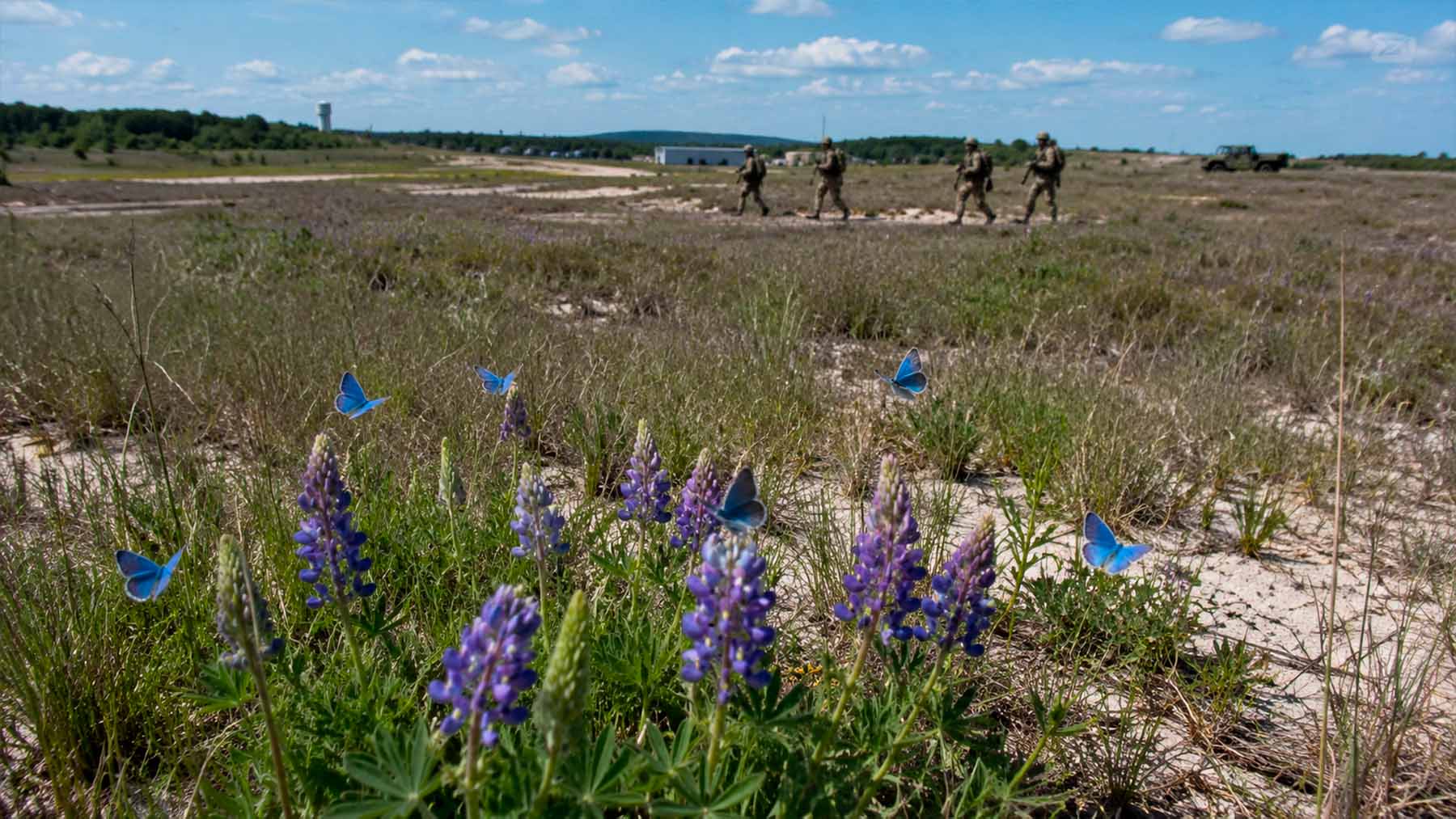
Military convoys are a common sight on the 7,500 acres that make up the Fort Custer Training Center in Michigan. The grounds incorporate mineral-rich wetlands called prairie fens.
In July 2026, conservation biologists entered the base and released around 300 captive-reared insects. This made Fort Custer the first U.S. military installation to return an endangered animal to land where it had previously been completely wiped out.
Which species has a new lease on life in Michigan?
How an insect refuge was established on military land
The groundwater that feeds Fort Custer’s prairie fens is cold after making its way up through underground deposits of limestone. The flow is constant, with a unique chemistry that makes the wetland rich in minerals but poor in nutrients. This environment is ideal for specialized native plants like aquatic sedges and wild grasses.
Development, agricultural drainage, and the filling of wetlands across the Midwest have destroyed the majority of these fens over the past century. As its habitat shrank, one rare insect disappeared from much of its historic range. Eventually, it vanished from Fort Custer completely.
However, military bases generally maintain large buffer zones of undeveloped land to be used for tactical maneuvers. This is why Fort Custer’s wetlands have been sheltered from commercial development.
State and federal agencies realized that the base’s marshes retained the exact soil makeup and hydrology that this endangered species needs. They started a wildlife reintroduction project in June that is scheduled to run over years after field teams transferred around 300 captive-reared insects into the protected habitat.
Incorporating conservation into a working military base
It took years of interagency planning and legal maneuvering to return a federally protected species to an active military base.
Researchers at the John Ball Zoo and Michigan State University came up with specialized protocols for captive breeding and rearing. Their efforts paid off, increasing the number of butterflies ready for reintroduction in Michigan by roughly 58 percent.
The U.S. Fish and Wildlife Service set important regulations after a biological opinion was commissioned. The formal agreement gives the Fort Custer butterflies “temporary reserve population” status. This designation allows the National Guard to continue with training exercises as usual without the risk of regulatory penalties. If the military needs to change the land use, the butterflies can be relocated so tactical training is not interrupted, according to Michigan’s Military and Veterans Affairs.
Identifying the species and monitoring survival
The endangered animal returned to Fort Custer is the Mitchell’s satyr butterfly (Neonympha mitchellii mitchellii), one of the rarest butterflies on the North American continent.
It is distinguished by small brown wings lined with yellow-ringed black eyespots. The Mitchell’s satyr flies in a low, slow flutter for just a few weeks each summer. Its survival depends on the flora, because the caterpillars will only eat fen sedges, while adults need native grasses to lay eggs.
However, as reported by the U.S. Fish and Wildlife Service, releasing 300 captive-reared butterflies does not guarantee a permanent recovery out in the real world. The initial release is enough to establish a temporary reserve population, but researchers have emphasized that this is only the first step.
Tracking is essential to ensure the butterflies’ long-term viability
The butterflies were raised in a controlled zoo setting, so biologists still need to determine if they will be able to survive severe weather, locate naturally-born mates, and lay viable eggs. to ensure future generations
The test of long-term survival will be ongoing as the National Guard continues with armored maneuvers around Fort Custer. The project may eventually be a galvanizing factor for other military bases to go to war against biodiversity loss.
Read the whole thing?
Get the week's signal, not the noise
Our sharpest reporting on energy, climate and nature — free, once a week.