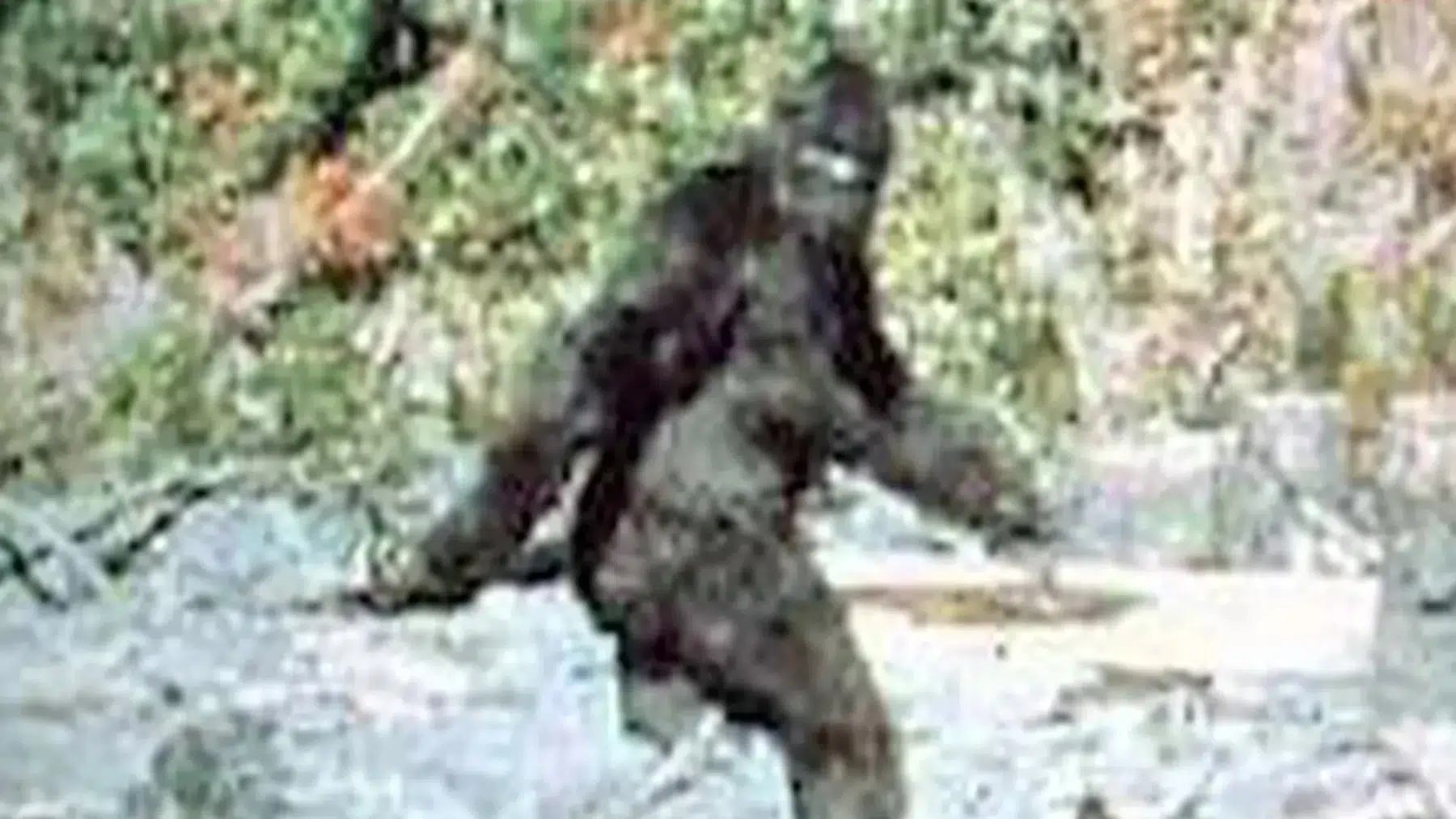
For decades, Bigfoot has loomed large in American folklore – part monster, part mystery, and entirely unresolved. From blurry trail cam footage to breathless wilderness sightings, the legend has stubbornly endured. Whether known as Sasquatch, the Yeti’s North American cousin, or the “Old Man of the Mountain,” the idea of a massive, hairy, ape-like creature roaming remote forests has fascinated believers and skeptics alike. On the other hand, this has been in the imagination of many sci-fi lovers, as it has been introduced in many movies and TV shows.
Bigfoot has been at the core of many conspiracy theories
Over the past century, this creature has been the subject of thousands of reported sightings, footprint casts, and even audio recordings. Despite numerous investigations, mainstream science has remained skeptical, largely due to a lack of conclusive physical evidence. Studies have often focused on analyzing hair, scat, and environmental DNA (eDNA) collected from alleged Sasquatch habitats.
But where anecdotes and footprints failed, science may have stepped in with a new perspective. Using statistical modeling, a researcher recently re-examined decades’ worth of Bigfoot sighting reports and compared them against bear population data. The result? A breakthrough that might not confirm the myth in the way cryptozoologists had hoped, but does bring long-overdue clarity to the question: What were people actually seeing?
The truth about Bigfoot is revealed
Data scientist Floe Foxon, with Pinney Associates, recently analyzed the likelihood that many Bigfoot sightings are actually misidentified black bears. In a preprint scientific paper, Foxon found a significant correlation between black bear populations and reported encounters across regions in the US and Canada.
Foxon’s analysis compared Bigfoot sighting reports with black bear numbers by state and province, adjusting for human population, forest cover, and the presence of other wildlife. His findings, published on the preprint server bioRxiv, suggest many supposed Sasquatch encounters can be explained as mistaken identifications of known animals, mainly bears. It is often described as a tall, hairy, bipedal creature ranging from six to 15 feet tall, with a human-like face and glowing eyes at night.
The name comes from footprints reportedly measuring up to eight inches wide and 24 inches long. Over the past five decades, more than 10,000 Sasquatch sightings have been reported in the US, with the Pacific Northwest accounting for about a third of these.
Is the myth only a normal animal misinterpreted?
However, experts widely agree that most sightings are of black bears standing upright. Robert Young, a professor of wildlife conservation at the University of Salford, told Newsweek that biologists typically use this example to teach students about misidentification. Bears are capable of standing and even walking short distances on two legs, and their appearance can sometimes resemble the descriptions of the creature.
Despite the popularity of the cryptid, there is no conclusive evidence that it exists. For a breeding population to be viable, multiple individuals would need to exist with enough genetic diversity, which increases the chances of discovering remains or fossils—none of which have ever been found.
Biological samples end the discussion
Biological samples like hair and feces associated with the animal have mostly been shown to belong to common animals or to be synthetic. A 2014 study testing 36 hair samples from alleged Bigfoot sources worldwide found most belonged to known species such as raccoons, horses, cows, deer, coyotes, and even humans. A few samples that did not match known species turned out to be rare brown bears rather than primates. Which means that nearly all photographs, videos, and footprints presented as proof of the creature have been exposed as hoaxes or misinterpretations.
Read the whole thing?
Get the week's signal, not the noise
Our sharpest reporting on energy, climate and nature — free, once a week.