Indonesia has announced plans for something no country has attempted before.
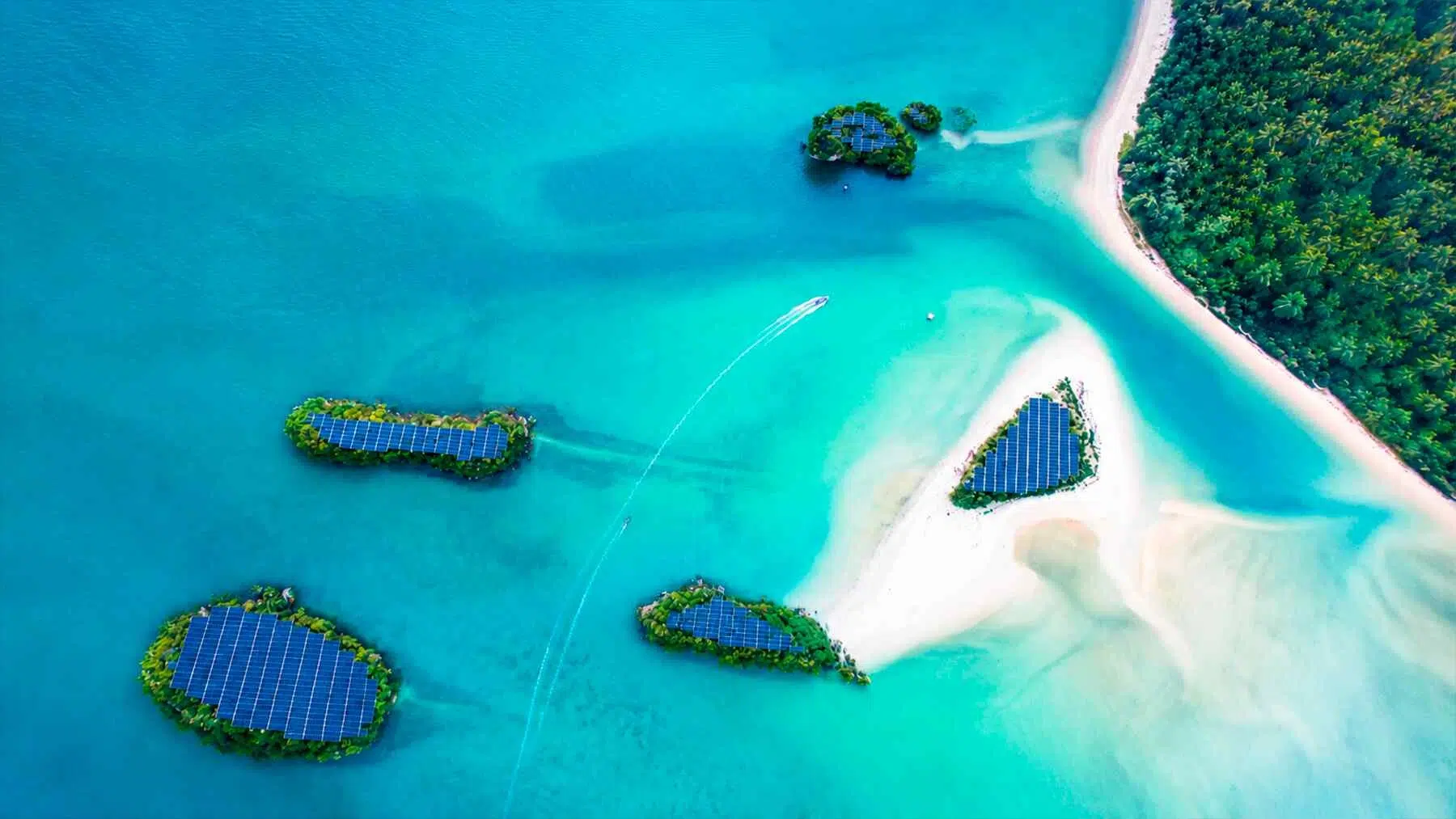
Not one giant solar farm, not one national battery system. Instead, officials want to spread renewable energy across a “solar archipelago”.
The scale sounds almost impossible at first.
Indonesia contains more than 17,000 islands, many separated by difficult stretches of water.
Some regions still struggle with unstable electricity. Others rely heavily on diesel generators shipped in by sea.
Now, energy planners believe sunlight could connect much of the archipelago together through one enormous distributed network.
So what exactly is this proposed “solar archipelago”?
Why Indonesia started looking toward island-based solar power
Electricity has always been difficult to manage across Indonesia.
The country stretches thousands of miles from west to east and many islands operate independently with separate local grids.
That fragmentation creates major logistical problems.
Fuel transportation costs remain high in remote regions.
Storms and rough seas can interrupt deliveries for smaller island communities.
Indonesia’s state-owned utility company, PT PLN, has now launched major plans to expand solar capacity nationwide.
Early proposals involve roughly 1.2 gigawatts of new solar generation projects.
But the broader idea extends far beyond isolated installations.
Energy planners want interconnected renewable systems spread throughout the archipelago itself.
Some islands would generate more electricity than they consume during sunny periods. Others could eventually receive imported power through subsea transmission infrastructure.
Battery systems are also expected to play a central role, because stored electricity would help stabilize supply after sunset or during storms.
The concept resembles a giant distributed energy web.
That is where the term “solar archipelago” started gaining attention.
How engineers expect the giant island network to function
The proposed system relies on decentralization. Instead of depending on a few massive power stations, solar arrays would operate across many separate islands simultaneously.
Larger islands may host utility-scale solar farms feeding regional grids. Smaller islands could rely on local solar generation combined with battery storage.
That matters because isolated communities often lose power when fuel deliveries fail.
Solar installations reduce dependence on imported diesel.
Some projects may eventually connect islands through underwater transmission cables carrying electricity between regions.
Battery systems will smooth fluctuations caused by cloud cover and nighttime demand.
The hidden flaw of solar generation may be a thing of the past.
Energy planners also see another advantage.
Indonesia sits near the equator. That provides relatively consistent solar exposure throughout much of the year.
The distributed setup could make the national system more resilient overall.
If one island experiences disruption, others may continue producing electricity normally.
The scale remains enormous, though.
Expanding renewable infrastructure across thousands of islands will be a challenge.
That complexity is one reason the proposal has drawn attention from the likes of Enerdata.
What the “solar archipelago” will actually be
The project is essentially a nationwide island-based renewable network built across Indonesia’s enormous chain of islands.
Instead of concentrating electricity production in one place, the system will operate across many separate islands simultaneously.
Some islands may eventually export electricity to neighboring regions through subsea cables.
Others will function independently using local renewable generation and storage.
Why the idea could reshape island energy systems worldwide
Most island nations still rely heavily on imported fuel. Indonesia’s proposal attempts something different.
A distributed renewable network designed specifically around geography rather than despite it.
Officials hope the system will eventually produce enough electricity to support millions of homes.
The proposal remains in expansion phases for now. But if everything works out, Indonesia could become the first country to operate a true large-scale “solar archipelago.”
A power network spread not across one continent, but across thousands of islands connected by sunlight, batteries, and undersea infrastructure.
A rethink of the entire potential of renewable energy may be upon us.
Read the whole thing?
Get the week's signal, not the noise
Our sharpest reporting on energy, climate and nature — free, once a week.