An interstellar visitor is getting the conspiracy theorists all hyped up.
The online spaces in general are buzzing about an object hurtling through our solar system that is simultaneously “normal” and utterly baffling.
Combining data from three premium observation sources is in some aspects getting us no closer to the truth about a strange metal it’s ejecting.
What is it about this perplexing space phenomenon that even NASA’s brain bank can’t figure out?
Eyes on the outsider: How humanity’s best tech is converging on one interstellar object
The third interstellar object ever detected in Earth’s solar system entered our consciousness in July of last year.
It comes from the direction of the Milky Way’s disk. This is the thin, flattened region of our galaxy where the vast majority of stars, gas, and dust are gathered.
Scientists say it was birthed in an icy environment more than 10 billion years ago—an unfathomable length of time to most of us.
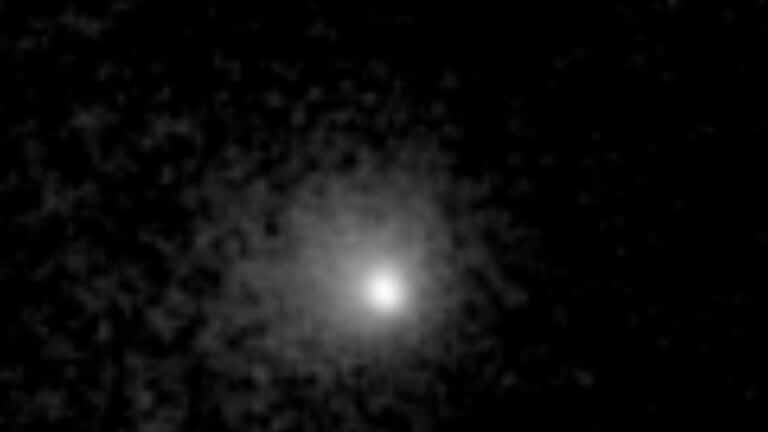
The ESA’s Juice spacecraft is to thank for the streams of data being gathered about the rarity.
And it’s by luck that it was able to be observed from such an ideal position at all.
Juice and its high-res camera JANUS just happened to be in the right place in the universe at the right time.
The body started being monitored just after its closest approach to the Sun. Immediately, it started looking familiar.
Even from 37 million miles away.
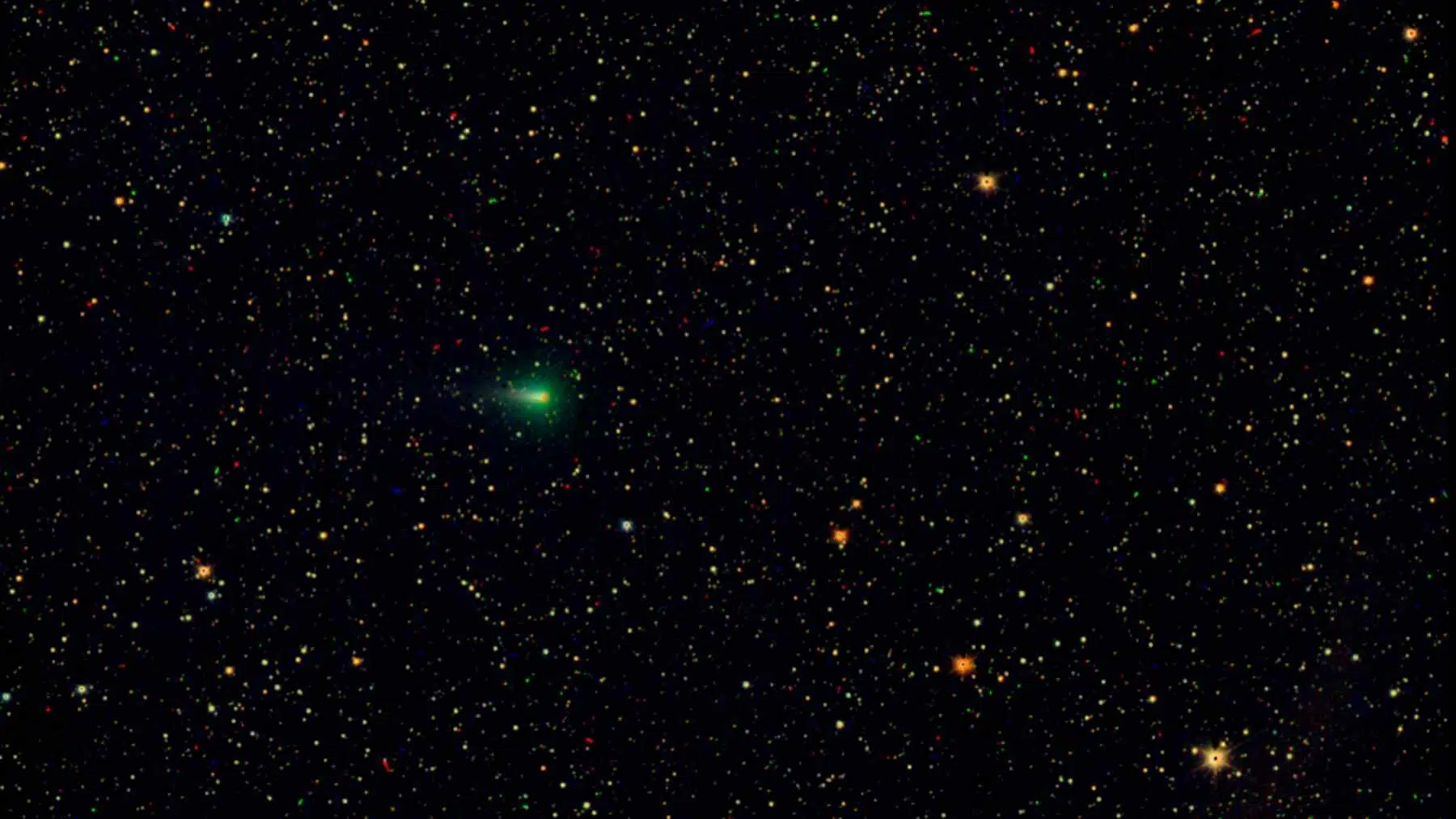
It has a standard coma and two distinct tails pointing in expected directions—but this is typical.
Some features and behavior, however, are not standard at all.
Strange maneuvers and industrial metals: Why 3I/ATLAS is keeping astronomers up at night
The visitor has been named 3I/ATLAS, and it’s the new online buzzword.
Apparently, its classification is “interstellar comet.” Different from a normal comet, but like close cousins from a solar system next door.
Already, fanatics are generating rumbles about strange maneuvers and an industrial chemical signature.
Apparently, these features are more than mere coincidences. Is it possible that the visitor’s origin is not natural?
While much of the comet’s behavior appeared standard, according to the European Space Agency, ground-based observations introduced a series of anomalies. Now, “extraterrestrial spacecraft” theories are flying around.
Two of the features catching attention are volatile activity and trajectory tracking.
As 3I/ATLAS neared the Sun, its activity spiked. The MAJIS spectrometer on Juice detected a massive release of water vapor—approximately 2,000 kilograms per second.

The “mysterious metal” and the alien debate
The most controversial finding involves the comet’s chemical composition.
Spectroscopic analysis revealed a “plume” containing nickel, but notably no trace of iron.
In every known comet in our solar system, nickel and iron are found together.
Even more puzzling was the detection of nickel tetracarbonyl ($Ni(CO)_4$).
On Earth, this specific chemical is not found in nature; it is a highly toxic, industrial byproduct used almost exclusively in the aerospace industry.
This chemical signature, combined with the comet’s dramatic “swiveling” jets, has led to a divide in the scientific community.
The interstellar imposter: Is 3I/ATLAS a natural wonder or ancient alien hardware?
Some, like Harvard’s Avi Loeb in the technosignature theory camp, interpreted these movements as as active deceleration maneuvers.
There’s also the industrial theory.
Proponents suggest the presence of $Ni(CO)_4$ is a technosignature, indicating the object could be an artificial probe or discarded interstellar hardware.
The natural theory sees mainstream astronomers arguing that while rare, these chemicals could occur naturally under extreme conditions.
As scientists continue to analyze the data, 3I/ATLAS remains a cosmic mystery—a “normal” looking comet that carries a chemical signature never before seen in the natural world.
Which theory makes the most sense to you?
Read the whole thing?
Get the week's signal, not the noise
Our sharpest reporting on energy, climate and nature — free, once a week.