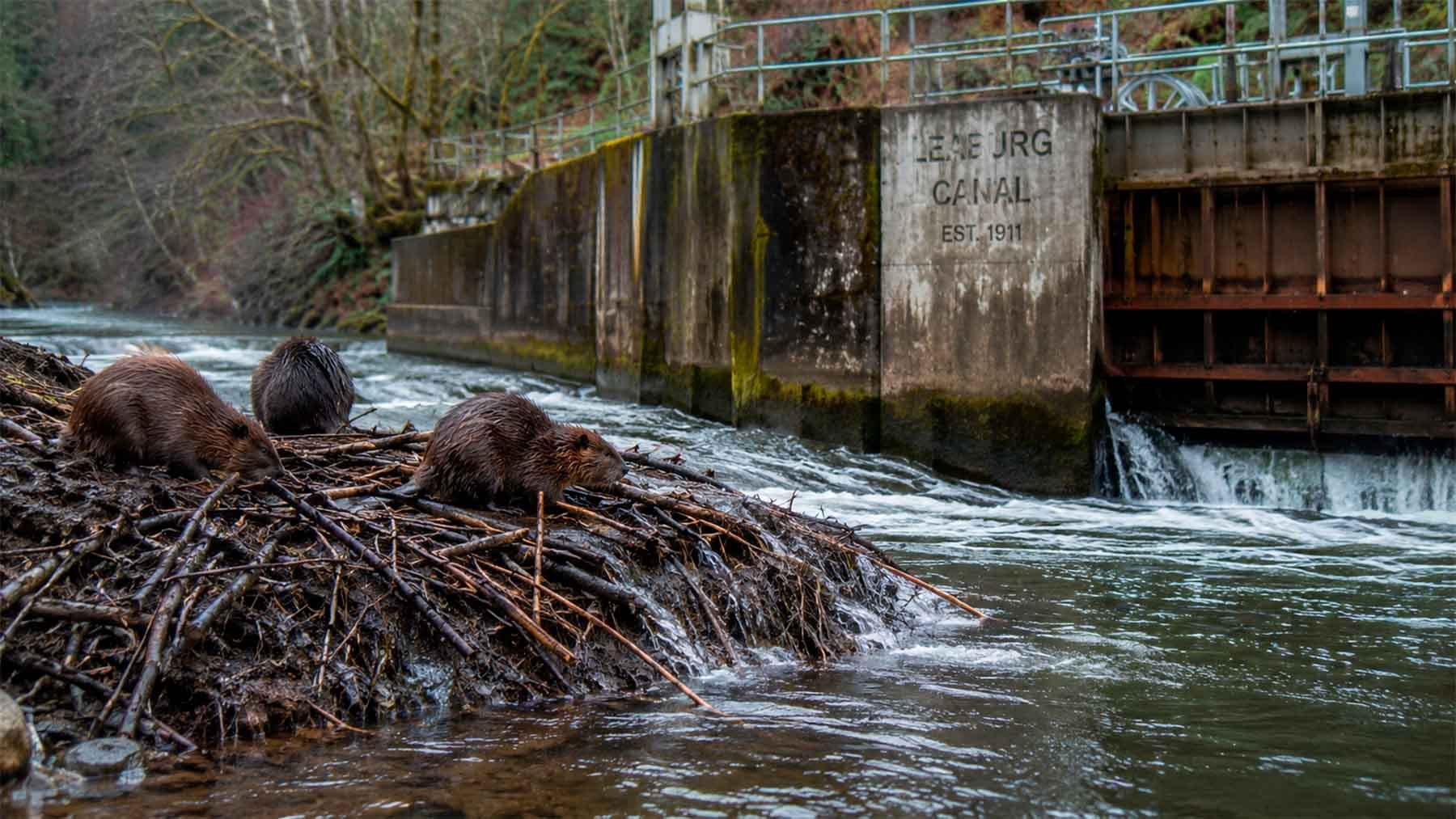
At first, nobody had noticed anything out of the ordinary with the Leaburg Canal in relation to Springfield, Oregon.
For over sixty years, the canal has been an integral component of the Leaburg Hydroelectric System, consisting of the Leaburg Dam and the Blue River Fish Hatchery located upstream.
The canal diverted water from the McKenzie River into a huge storage reservoir named Opal Lake. Once through the Opal Lake Reservoir, the water flowed down a tunnel to the Willamette River.
The hydroelectric system was well designed and worked for several decades without any major issues. All of this changed when beaver populations started constructing their own dams within the canal.
Eventually, what beavers constructed would become a problem that canal managers could no longer ignore.
A canal that could not leak
The Leaburg Hydroelectric Project is located along the McKenzie River. The project consists of the Leaburg Dam and the Leaburg Canal.
Although hydroelectric power production at this site ended, the canal continues to serve an important role in the overall system.
As EWEB lists the Leaburg Canal as a High-Hazard Facility, if it failed, people living downstream could be affected. As a result, there is limited opportunity to address any unforeseen issues associated with operating or maintaining the facility.
EWEB noted that increased beaver activity around the canal raised concerns about embankment stability.
Beavers and other burrowing animals can create cavities and weak spots in canal walls. Those weaknesses can threaten the structural integrity of the embankment.
Following the removal of three beavers and one nutria from the area between November 2025 and January 2026, EWEB continued to monitor conditions.
For those who operate the canal, their primary concern is not just the wildlife present, but the impact that wildlife can have on the canal itself.
The conflict kept getting worse
Beavers operate according to a very different set of priorities. Engineers designed the canal to move water through a fixed route.
To the beavers, the canal was something that needed attention. The canal kept attracting new beaver activity even after earlier structures were removed.
That difference kept creating problems at Leaburg.
EWEB says utility crews repeatedly removed beaver-built dams from within the canal system. Crews returned to the canal multiple times as new structures appeared.
Removing one structure did not guarantee that another would not appear later.
Each change in water movement created another maintenance and safety concern for canal operators.
The repeated interventions kept the issue active long after the first structures were removed.
The beavers built their own version of a dam
Beavers were not attempting to damage a hydroelectric facility.
They were simply behaving the way beavers normally do.
To the beavers, the canal looked like another place where a dam belonged.
Flowing water triggered the same response it would in a natural stream.
Their instinct was to slow the water
Those structures were designed by the animals to change water movement and create preferred conditions. In effect, the beavers were constructing their own small dams inside an existing waterway.
That behavior created the central problem.
Engineers wanted water to keep moving. Beavers wanted water to slow down.
The result was a continuous cycle of animal construction and human removal.
Eventually, EWEB determined that the activity posed sufficient risk to canal embankments to require intervention. The utility says it continues to monitor the area.
At present, EWEB believes the immediate situation has been resolved.
In the end, the beavers were not responding to a hydroelectric canal.
They were responding to flowing water in exactly the way beavers have for generations.
In another wetland, beavers built the exact dam Czech engineers needed after a project had stalled for years.
Read the whole thing?
Get the week's signal, not the noise
Our sharpest reporting on energy, climate and nature — free, once a week.