
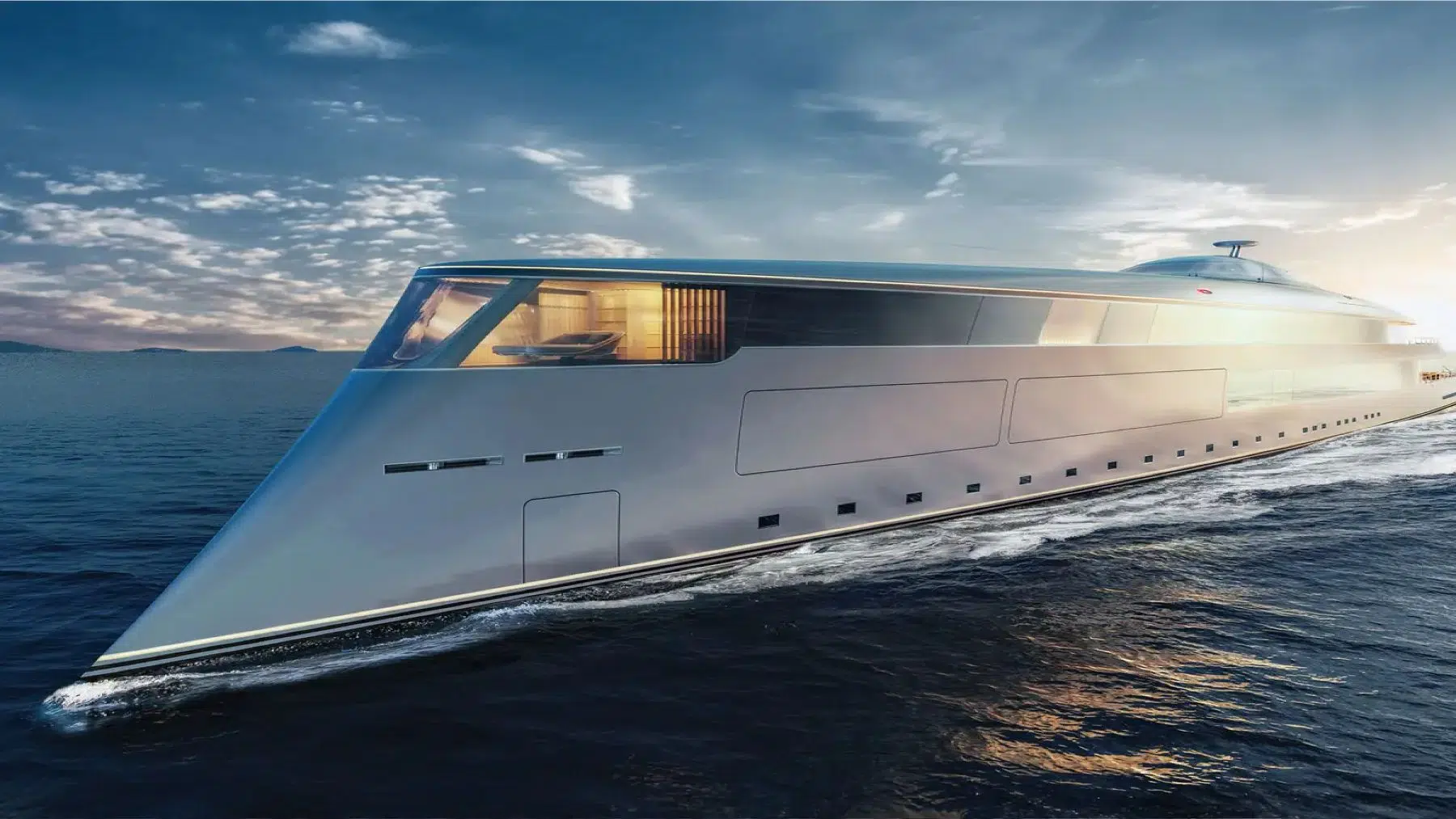
One of the richest men on Earth and the founder of Microsoft, Bill Gates, has a superyacht that is getting noticed for running on something that the automaker industry is spending millions of dollars to develop, hoping that in the future it will work on daily-use cars and be another alternative fuel. Meanwhile, only a handful of people and manufacturers have the structure and the conditions to pay for the fuel, and Bill Gates is one of them.
Bill Gates is selling his superyacht: It’s bigger than many buildings
The founder of the technological company that powers most parts of the world’s computers and developed one of the first pieces of software that revolutionized the tech industry also has other toys, on which he spends his free time. Bill Gates’ superyacht looks like one of the biggest out there, and there’s a reason for it: 15 cabins that can accommodate up to 30 guests at once.
Now, there is also room for storage, a kitchen, multiple bathrooms, and common areas. There’s also an office, gym, and private elevators and staircases to take Gates and his guests to other areas in the yacht. The billionaire had this project built over five years, and he has reportedly never even set foot on it. Now, it’s on the market for sale, but not many people can afford the $645 million superyacht with fuel that is not easily found.
The superyacht is not only massive: It runs on a special fuel
Bill Gates’ superyacht, called Breakthrough, is far from your typical billionaire toy. The 118.8-meter vessel runs on hydrogen, using a massive fuel cell system that lets it glide silently across the water without burning diesel. When it’s at anchor, the yacht can run for a week purely on hydrogen. And if Gates ever wanted to sneak through sensitive waters, it could cruise at 10 knots without a single drop of traditional fuel.
To get an idea of how powerful this system is: the yacht’s hydrogen setup produces more energy than what it would take to run thirty houses the size of Gates’ own mansion—yes, the 66,000-square-foot one. That’s an insane amount of energy for a private boat. Bill Gates’ yacht was built by Dutch shipyard Feadship and designed by RWD. It took five years to finish. It’s enormous, with enough room for 43 crew members and the 30 guests.
Not many shipyards can pull this off: Gates never got to see
It’s the first privately owned superyacht powered by hydrogen, but it’s not the only fuel from the future able to power boats. On the other hand, it was one of the reasons why it was so expensive. Building something like this is delicate work—any hydrogen leak could be dangerous—so only a few shipyards in the world could even attempt it. Feadship pulled it off, and now the yacht is on the market for those who can afford its $645 million price tag. Despite all this, Bill Gates has reportedly never even set foot on it.
Alternative fuels that could work simultaneously: CAT is at the forefront
The heavy use of diesel at sea has raised big concerns about ocean health and the wider impact of emissions on the climate. In response, Caterpillar has taken a step forward with its new engine for the CAT 3500E series, which can now run on methanol as a secondary fuel. The move toward dual-fuel marine engines is trending as companies try to cut emissions without losing the power needed to keep ships running, like most automakers are doing.
Read the whole thing?
Get the week's signal, not the noise
Our sharpest reporting on energy, climate and nature — free, once a week.


