

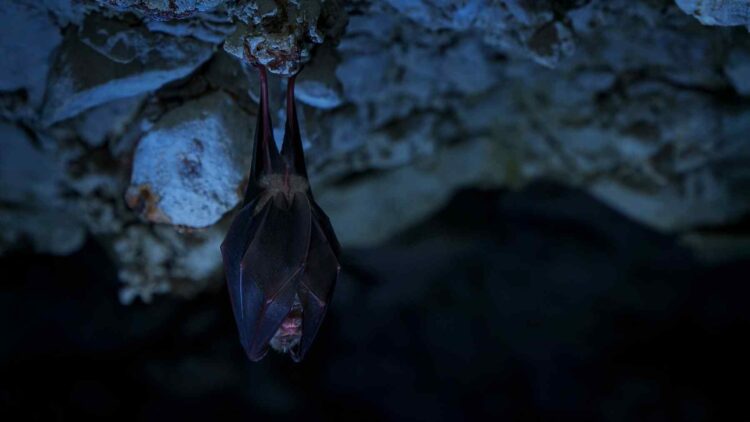
It doesn’t look dangerous at first.
Small. Nocturnal. Almost invisible in the dark.
But as it feeds, it leaves something behind—something you can’t see, and may not notice until it’s too late.
Now, scientists are watching closely as this animal moves north, raising concerns about a threat that doesn’t spread with noise or speed… but with silence.
So what exactly is coming?
How diseases quietly move between animals—and beyond
Not all outbreaks begin with a dramatic moment.
Many start quietly, passing from one animal to another without detection.
A bite. A drop of saliva. Contact with a surface.
That’s all it takes.
In fact, more than half of known human diseases are linked to animals in some way. And often, the real danger is not the animal itself—but what it carries.
Some species act as reservoirs, hosting pathogens without showing symptoms.
Others spread disease indirectly, leaving traces behind in places we never think to check.
And sometimes, a shift in geography is all it takes to turn a contained problem into something much larger.
That’s what has scientists paying attention now.
Because this is not just about one species.
It’s about what travels with it.
A slow expansion that is starting to raise alarms
In recent years, researchers have observed a gradual movement northward.
At first, it didn’t seem urgent.
Animal migration happens all the time, often driven by climate, food availability, or habitat changes.
But this case stood out.
Because the species involved has a very specific behavior—one that connects it directly to blood.
And that changes everything.
As sightings increased in parts of Mexico closer to the United States, scientists began to ask a more serious question.
What happens if it continues moving?
Not just for wildlife—but for livestock, ecosystems, and potentially humans.
Because, unlike many animals, this one doesn’t just interact with its environment.
It feeds from it.
And in doing so, it may carry something far more dangerous than expected.
The animal and the “invisible crisis” scientists fear
The species at the center of concern is the vampire bat.
And the crisis is tied to a disease known as Chronic Wasting Disease, or CWD.
Vampire bats feed on the blood of other animals, often targeting livestock or wild mammals. During that process, they can transfer pathogens from one host to another.
Recent research suggests they may be contributing to the spread of CWD in parts of Mexico.
And as their range expands northward, that risk could follow.
The Journal of Mammalogy says that CWD is not caused by a virus or bacteria.
It is caused by prions—misfolded proteins that trigger a chain reaction in the brain, damaging tissue and leading to severe neurological decline.
It has been called “zombie disease” because of the way it affects behavior and movement.
And once it appears, it is almost always fatal.
There is no cure.
No vaccine.
No easy way to contain it once it spreads.
Why this threat is harder to detect—and harder to stop
What makes this situation particularly concerning is how invisible it is.
Animals infected with CWD can carry the disease for long periods before showing symptoms.
During that time, they continue to interact, feed, and move—spreading prions into the environment.
Those prions can remain active in soil and on surfaces for years.
Now add a species that feeds on multiple animals across large distances.
The potential for transmission increases.
That does not mean a crisis is guaranteed.
Scientists believe that biological barriers may limit how easily CWD spreads between species, including to humans.
But livestock remains vulnerable.
And that’s where the real risk lies.
Because once the disease enters farming systems, the consequences could extend far beyond wildlife.
Food supply. Economic stability. Long-term ecological balance.
All are affected by something that cannot be seen—and is difficult to stop.
Which is why researchers are watching closely.
Not because the crisis is here yet. But because, if it arrives, it may not announce itself at all.