
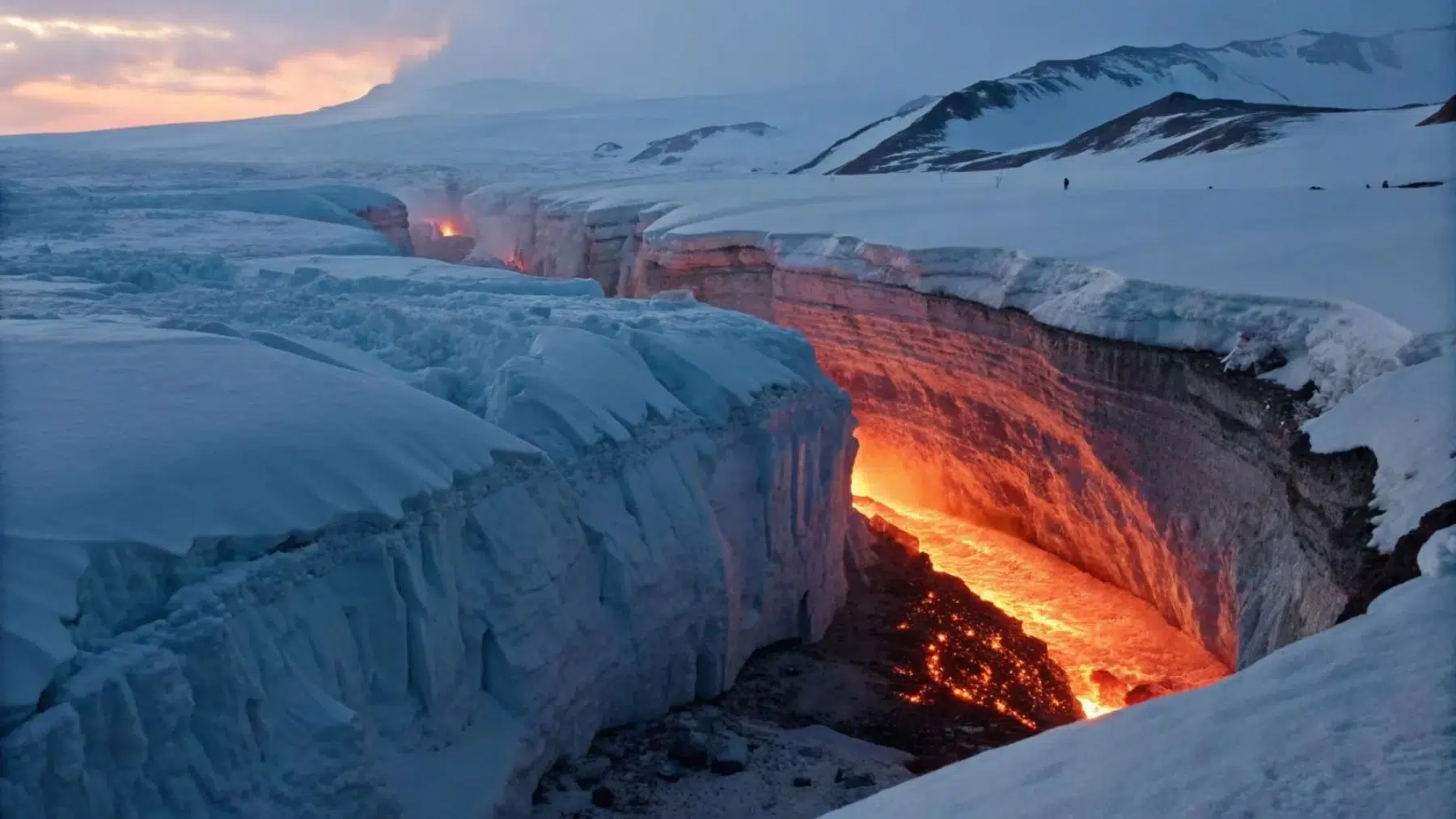
They say that opposites attract, and while it may not always be true when it comes to mankind, in the case of nature, the saying may be true. There’s a reason why a certain country is renowned as the Land of Fire and Ice, as boiling energy can be found under its ice thanks to its volcanic activity and glaciers. Iceland’s geothermal power supply exceeds its domestic photovoltaic and wind combined and will revolutionize the renewable energy sector.
The Land of Fire and Ice with boiling energy
This country is known for its Viking ancestors, and just like them, the present inhabitants welcome volcanic activity. The Land of Fire and Ice, more commonly referred to as Iceland, has geothermal energy in abundance, which has assisted the country in cementing a pioneering economy whilst embracing the transition to net zero, like the rest of the world.
Iceland uses its abundance of natural resources by utilizing the geothermal heat deep under the ice to power the country, and since the 1970s, it has done so in a more eco-friendly manner by wasting as little as possible. This pioneering approach was driven by a national need to stabilize energy prices and increase energy independence, catalyzed by the 1973 energy crisis.
Power and so much more is boiling from under the surface
Less than half a percent of the global power is provided by geothermal energy, yet Iceland has five geothermal power stations that provide almost 25% of its electricity and almost 90% of its central heating. Within Iceland, its geothermal power supply exceeds photovoltaics and wind combined, as its total geothermal power supply capacity is a whopping 799 MW, which is why Iceland is among the world’s top 10 geothermal production countries.
However, Iceland’s geothermal energy is for so much more than just power. Its uses include:
- Powering many of the country’s greenhouses, which provide high local food manufacturing levels
- Boosting tourism thanks to heated natural springs and swimming locations
HS Orka also plays another crucial role in the country besides producing 275MW of electric power and 175MW of thermal power capacity. The geothermal process results in natural carbon dioxide emissions, which HS Orka captures and transmits to the Blue Lagoon Research & Development Center, which generates algae for makeup. The natural carbon is also transmitted to e-fuel companies such as Carbon Recycling, which produces renewable methanol by adding hydrogen to the carbon.
“The most famous use case at the Resource Park is the Blue Lagoon geothermal spa. The Blue Lagoon’s water is basically the geothermal water that we have already used to produce electricity and hot water. In 2019, the Blue Lagoon’s revenues were 50% higher than HS Orka’s – and they are working from our waste!” – Sigurbergsson.
Potential shortages in the Land of Fire and Ice
Geothermal energy solutions have proven to be efficient; however, Iceland may be facing potential shortages. According to Vísir, the country has been experiencing droughts, and the lack of rainfall in 2022 resulted in its hot water reservoir to near its threshold. During extended periods of cold weather, companies in Iceland may have to ration their hot water. Lovísa Árnadóttir, the public relations officer for Samorka, confirmed that the hot-water usage has surpassed the population growth.
The capital of Reykjavik’s power demand will reportedly rise by 3% annually, worrying companies. Expanding utilities will be challenging due to the geothermal exploration complexity. It’s also difficult to navigate new geothermal systems. But, as stated by Hordur Arnarson, the CEO of Landsvirkjun HF:
The need to increase generation capacity “is quite urgent.”
As Iceland works hard to reach its goal of zero carbon by 2040, and thus join the global transition to renewable energies, we hope that viable solutions will be found to address the urgent need to boost the country’s power production capacity.
Read the whole thing?
Get the week's signal, not the noise
Our sharpest reporting on energy, climate and nature — free, once a week.


