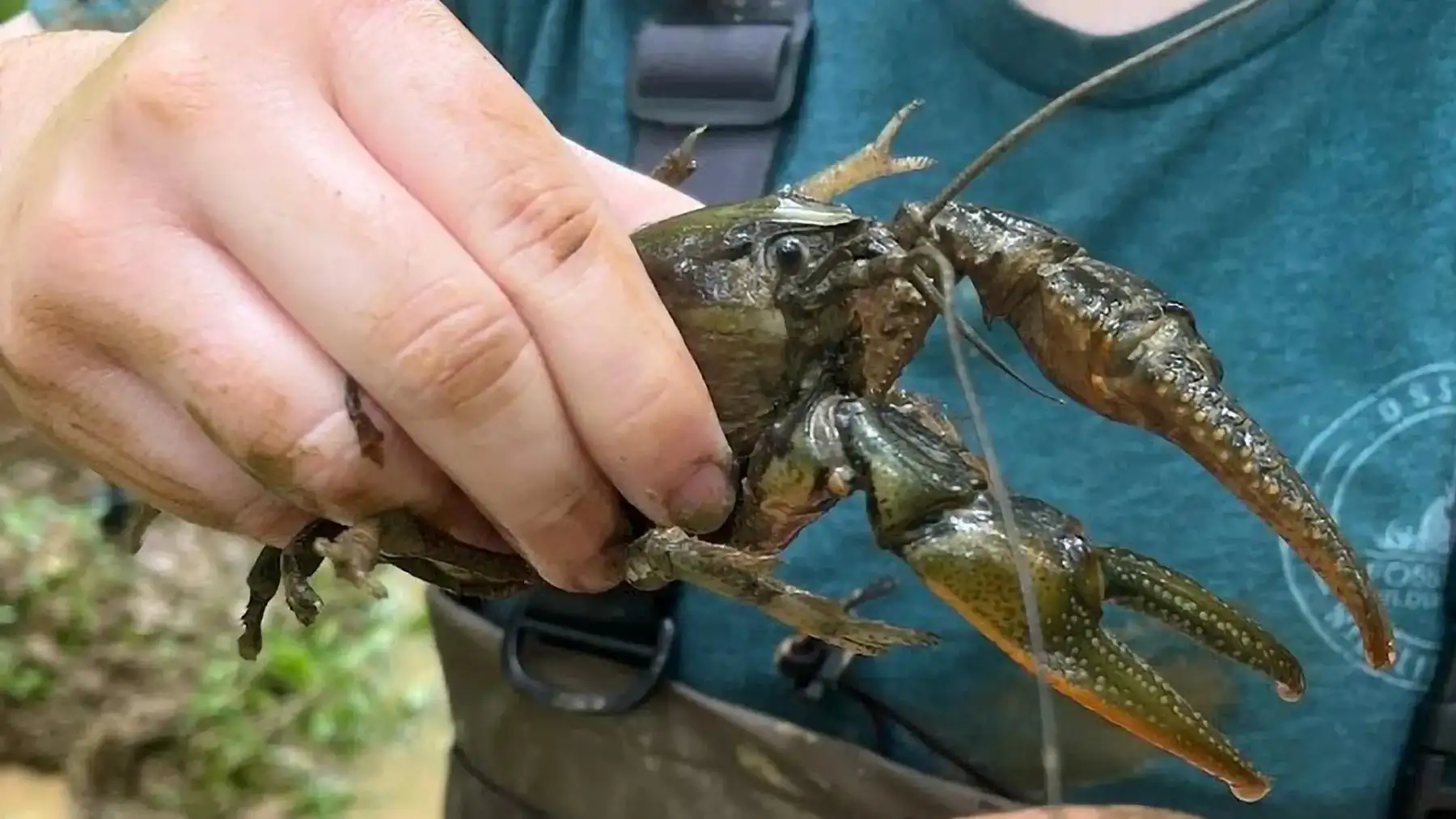
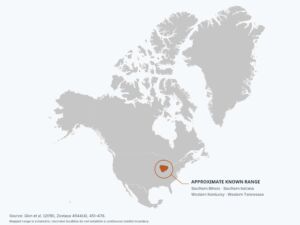
When biologist Caitlin Bloomer hauled an enormous crayfish out of the Kentucky mud, she was sure she’d made history. The creature — a burrowing crayfish locals call “Crawzilla” — was unlike anything she’d documented before. She brought it back to campus, barely containing her excitement. Her colleague’s response stopped her cold: “No way, I’ve caught bigger.”
That small professional dispute would soon trigger something neither of them expected — a coordinated nationwide search through museum collections and field records that uncovered a record-breaking specimen and a puzzling biological ceiling scientists are only beginning to explain.
A rivalry that sparked a nationwide search
Bloomer’s pride in Crawzilla didn’t fade quietly. It hardened into a question: who was actually right? What began as a friendly professional jab escalated into a genuine scientific effort. She started contacting biologists and museum curators across the country, asking them to dig through their collections for unusually large specimens.
The method was precise but decidedly low-tech. Researchers used calipers — instruments designed for exact measurement — to compare preserved crayfish from institutions nationwide, ultimately producing a ranked list of 20 exceptionally large individuals representing 18 different species. The findings were published in the journal Ecology.
Crawzilla didn’t claim the top spot but did make the list. “Mine was not the biggest, but it did make the top 20, so I’m super proud of it,” Bloomer said. “And it was also the only burrowing crayfish to make the list, so I’ll take the win.” Six of the 20 largest specimens came from the Illinois Natural History Survey alone.
Meet the real record-holder: a Tennessee bottlebrush crayfish
The undisputed champion turned out to be a Tennessee bottlebrush crayfish sitting in a collection at West Liberty University in West Virginia. It measured 86.6 millimeters — roughly 3.4 inches — not counting the tail, claws, or antennae.
It wasn’t a recent catch. Dr. Zac Loughman and his students collected it in 2011, and it had been quietly waiting in the university’s astacology collection ever since. That gap between capture and discovery says something worth sitting with: museum collections hold scientific value that can outlast the moment of the catch by years, even decades. “Its carapace alone is about the length of a credit card,” said Zackary Graham, an assistant professor of biology at West Liberty University, “and with the tail and claws, it stretches nearly the width of a sheet of notebook paper.”
An 80-millimeter ceiling — and no obvious reason why
Once researchers compiled their measurements, a pattern emerged that nobody had set out to find. Across wildly different species and habitats, the largest North American crayfish consistently topped out near 80 millimeters — a ceiling that was remarkably uniform given the diversity involved.
The team tested latitude, oxygen availability, and habitat type as possible explanatory factors. None showed a clear relationship with maximum body size. “We started looking at things like latitude, oxygen availability, and habitat type,” Bloomer said, “but we weren’t seeing any patterns.”
The contrast with crayfish elsewhere only sharpens the puzzle. The Tasmanian giant freshwater crayfish can grow dramatically larger. Why North American species seem to stop where they do — despite their enormous diversity — remains genuinely unresolved.
Shell, muscle, and the limits written in biology
With environmental factors ruled out, attention shifted toward the animals themselves. The leading hypothesis is that exoskeleton structure or muscle anatomy may impose a physical cap on growth. Something in the biology of North American crayfish, not their surroundings, may be setting the ceiling.
“We think that it could really be worthwhile to look at the physiology of crayfish to see if something there is influencing their body size,” Bloomer said. The team frames this as a starting point for future research, not a settled answer. Understanding what limits growth could eventually inform freshwater conservation decisions — particularly as habitats face increasing pressure from development and climate shifts.
What crayfish can teach us about scientific blind spots
Crayfish are about as familiar as aquatic animals get. Most people in North America encountered them as kids, flipping rocks in creeks — practically a universal entry point into caring about freshwater life, as Bloomer put it. And yet fundamental facts about their biology remain unknown.
Museum collections made this study possible. Without decades of preserved specimens stored across institutions, there would have been no dataset to analyze. The Smithsonian’s National Museum of Natural History alone contributed four specimens to the top 20 list.
Even the most familiar species can carry deep scientific mysteries. What started as a collegial argument in a Kentucky field may yet reshape how scientists understand growth and biological limits in freshwater ecosystems.
You can check the complete study here: Caitlin C. Bloomer, Susan B. Adams, Zanethia C. Barnett, Zackary A. Graham, Emmy M. Delekta, David M. Hayes, Zachary J. Loughman, Hugh MacIntosh, M. Worth Pugh, Karen Reed, Nathaniel F. Shoobs, Christopher A. Taylor, Eric R. Larson. North American crayfish: A quest for the biggest catch. Ecology, 2026; 107 (9) DOI: 10.1002/ecy.70471
Read the whole thing?
Get the week's signal, not the noise
Our sharpest reporting on energy, climate and nature — free, once a week.