China has a plan so fantastical that it sounds like something out of a sci-fi movie. The Asian country intends to install a solar farm in space. One scientist has compared it to building a Three Gorges Dam hydroelectric project in orbit, just with a function of harvesting a different kind of renewable energy.
The ambitious plan is the brainchild of a team from the forward-thinking Chinese Academy of Engineering, and all eyes are on the researchers as they formulate their complex strategy and develop the cutting-edge technology required to pull off such an incredible feat.
China’s technological daring knows no bounds: A solar farm for space
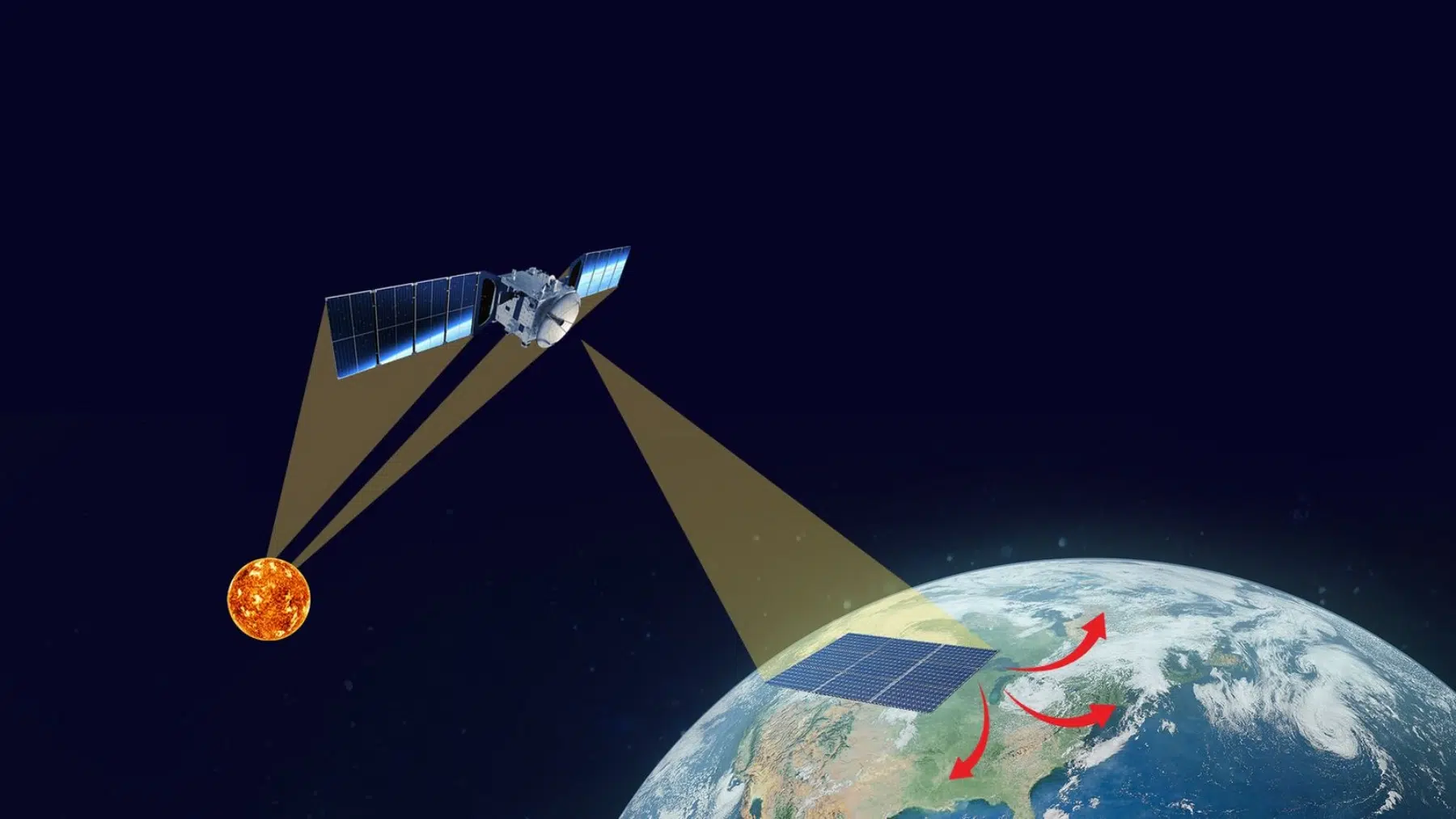
Long Lehao, a rocket scientist and member of the Chinese Academy group working on the space-orbiting solar project, says the plan involves constructing a solar array that’s one kilometer (0.621 miles) wide, which will have to be put together in space after sending the components up by super-heavy rockets. Organizing the array into position under space conditions is one of the biggest complexities of the challenging endeavor.
The space-based solar farm is intended to harvest energy at a constant rate, seeing as there’s no night and day to interrupt the collection cycle. The predicted efficiency is 10 times greater than that achieved by photovoltaic panels on Earth, and the energy will be beamed to a collector station on Earth after being converted to microwaves.
Researchers have confirmed that the ambitious space solar project is underway with earnestness
Long confirmed that the large-scale plan is a concrete one and developmental research is underway:
“We are working on this project now. It is as significant as moving the Three Gorges Dam to a geostationary orbit 36,000km above the Earth. This is an incredible project to look forward to.”
Long also divulged that the Long March-9, which is a reusable heavy-lift rocket that his team is also working on, looks like a viable option for transporting the PV modules for the solar farm into space. The rocket will have an estimated payload capacity of more than 150 tonnes, which is around the same as Elon Musk’s SpaceX’s Starship, which is currently under development.
The project is being compared to Three Gorges Dam
Although the Chinese space project is a solar power system, it’s being compared to China’s Three Gorges Dam hydroelectric installation due to the massive scope of both. Three Gorges, which is situated on the Yangtze River, took 17 years to build and is the largest power plant of its kind in the world. Its annual output is an incredible 100 billion kilowatt hours (kWh) per year.
How viable is the space solar plan?
The industrious Chinese have been talking about a space solar power installation for years, and a deadline of 2035 has been applied to having the first system in operation. Several years ago in 2019, an experimental space station started being developed in the Bishan National High-tech Zone in Chongqing.
Following this, another project sprung up, the Chasing Sun Project, in November 2023. This one is an undertaking by a team of scientists and researchers from the Xian University, who published test results for the world’s first complete ground verification system for a space solar power installation.
The Chasing Sun test project was a resounding success, demonstrating globally leading performance in beam collection efficiency, microwave power transmission, and power transfer efficiency.
Which other countries are in the race to install a solar farm in space?
China is not the only nation working towards space-based renewable energy harvesting solutions. US companies have also joined the sector, with one of them being renowned aerospace outfits Lockheed Martin and Northrop Grumman, both of which are in the technological development phase.
In 2022, the European Space Agency said it would carry out a feasibility study into space-based solar power generation, and the results should be enlightening. Japan has plans to test a space-based solar power station sometime in 2025 while NASA is looking in a whole new direction of renewable energy in space with a theory about using wind power to sustain manned Mars missions. It seems a certainty that solar power will be beamed to Earth from space in the next 20 years, and it’s an exciting time for the renewable energy sector.
Read the whole thing?
Get the week's signal, not the noise
Our sharpest reporting on energy, climate and nature — free, once a week.