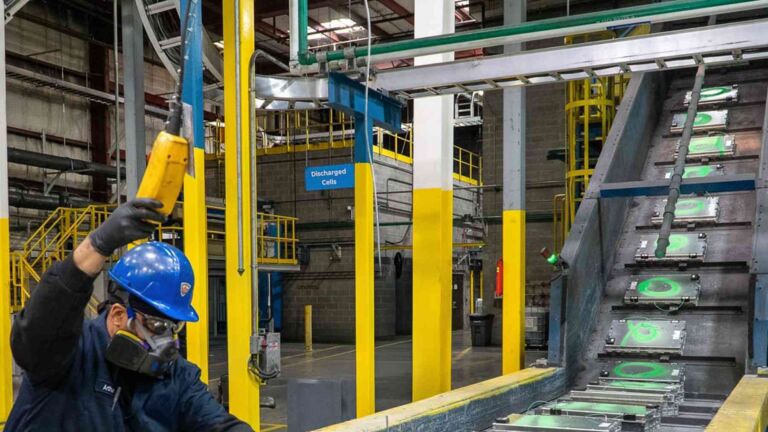
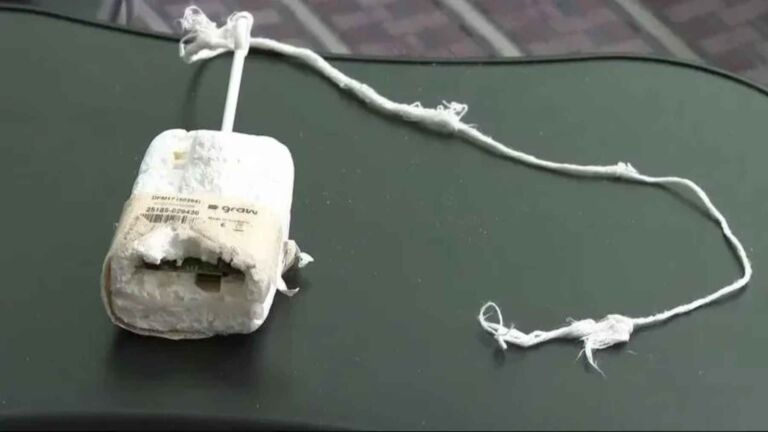
A bale of steel the size of a pallet, pressed out of old bedsprings and trucked to a mill.
Six months of those bales came back. The mill did not want them.
Price was never the problem. The problem was the cloth still wrapped around every spring.
A recycler in Commerce City, Colorado, laid this out in an account published on the sixteenth of August, 2023.
The steel had not changed at all. The spring had.
Which leaves one question. How does a cloth sleeve decide whether a bed gets recycled?
Why 1 cloth sleeve beats a shredder
Scrap steel is not priced by weight alone. It is priced by how clean it is.
An older innerspring is one welded cage of bare wire. Cut the cover, lift the cage out, crush it flat, and a mill buys it as wire.
A pocket unit is nothing like that. Every spring sits in its own sleeve of fabric, and the sleeves are glued to their neighbors in long rows.
That cloth is not something a baler burns off on the way past. Feed the assembly to a shredder and the fabric winds onto the cutters the way rope does.
So the only route to clean steel runs through a blade and a human arm, one pocket at a time.
Labor is spent per bed and the scrap pays per bed, which settles the arithmetic before the first cut.
800 pockets and 30 minutes of cutting
The object is heavier than most people picture, and there are a lot of them.
Trade groups put American discards at 15 to 20 million mattresses a year, which is the 50,000 a day that gets quoted everywhere.
Industry figures put the average mattress near 50 pounds, with as much as 40 pounds of that recoverable as steel.
A pocket unit carries somewhere between 800 and 2,000 of those sleeves, sometimes more, and every one of them is sewn shut.
Cutting the fabric alone ran to 30 minutes or more for a single mattress, before anything else in the bed was touched.
So the recycler tried the obvious shortcut instead and baled the units whole for a steel partner.
After six months the partner refused the loads, saying they were too hard on the machines.
30 percent of 1 state’s discards
How widespread this is depends on who is counting, and that is the honest weakness in the story.
A program report for California estimated that 30 percent of the state’s mattress discards carry pocket coils.
An Oregon nonprofit director who helped build a recycling alliance put the market share at 5 to 7 percent a decade earlier and near half today.
One of those is an estimate inside a program document and the other is a practitioner reading his own intake. No national count of pocket coil beds exists.
What the older design earns is better documented. A Minnesota operation recovered about 2 dollars a mattress, nearly all of it from steel.
Foundries want the cages crushed into bricks of 80 to 100 pounds first, because loose cages are shipping air.
What 4 state programs pay for
Here is the part the chemistry argument keeps crowding out.
Recycling happens where somebody charges for it, in the way that the same foam or buried blades turn into somebody’s budget.
California moved its fee from 16 to 18 dollars a unit on the first of April, 2026, Rhode Island went from 20.50 to 22.50 on the first of January, and the Colorado report sets out why that money is needed.
Four states run such a program. Connecticut opened in May of 2015, California followed that December, Rhode Island in May of 2016, Oregon on the first day of 2025, and the steel math shows what scrap alone returns.
Massachusetts took the other road and banned mattresses from the trash on the first of November, 2022, with no fee behind it.
Oregon’s first year brought in 134,121 mattresses and foundations, about 8 million pounds.
What nobody publishes is how many collected pocket coils are actually recycled.
What the next bed is built from
The fix is not at the landfill gate. It sits in the factory.
A pocket unit exists because it stops one sleeper’s movement from reaching the other, and that is a real gain nobody is going to hand back.
What could change is the joining. Sleeves clipped rather than glued, a cover that peels off in one piece, a mill willing to take the cloth and burn it away.
None of that is exotic. It is the ordinary thing a product gets once somebody downstream has standing to ask for it.
A pocket coil bed is a better place to sleep and a worse thing to take apart.
Only one of those two was ever designed on purpose.
Read the whole thing?
Get the week's signal, not the noise
Our sharpest reporting on energy, climate and nature — free, once a week.