Telescopes are helping scientists and astronomers to see planets, galaxies, comets, and asteroids millions of light years away from the Earth. Now, this new observatory will reveal new images that researchers have been wanting for too long. While space travel is not a reality, in-orbit telescopes continue to be one of the most important technologies ever created. The further we can see, the more things we will discover – maybe even reaching the nonobservable universe sometime in the future as the technology evolves.
The universe lets us see what the light permits
The observable universe is the cosmic structures and objects we can see due to the light traveling far enough to make it visible for us, and this does not mean that there isn’t more to see, and that’s everything. As the universe continues to expand rapidly, new galaxies can be formed, and others can be made visible with enough powerful tools.
With this in mind and a lot of theories about what’s out there, the first telescopes were invented centuries ago. Hundreds of years later, they evolved into observatories, and some of them were sent to orbit, such as the Hubble, Spitzer, and Chandra X-Ray. NASA is at the forefront of using these tools to make discoveries, but a new ally in the study of the cosmos being built quickly in Chile should jump ahead of many that currently exist.
New tool to help in cosmic studies
A brand-new observatory has just been activated in Chile, and it’s set to change the way we study the universe. Called the Vera C. Rubin Observatory, this powerful tool will scan the sky faster than any telescope before. With it, scientists hope to track new asteroids, study distant galaxies, and maybe even find signs of an unknown ninth planet in our solar system. The Rubin is funded by the National Science Foundation and the U.S. Department of Energy.
The observatory is located on Cerro Pachón, a mountain more than 2,700 meters above sea level. At its center is a massive 8.4-meter mirror and the largest digital camera ever built, with a resolution of 3,200 megapixels. Together, they’ll capture incredibly detailed images of space.
Images from the Rubin Observatory
Every 30 seconds, the telescope shifts slightly to point at a new part of the sky. In just a few days, it will have scanned the entire southern sky — and it will repeat this process over and over for the next ten years. The idea is to spot changes in space over time, like moving asteroids or forming stars.
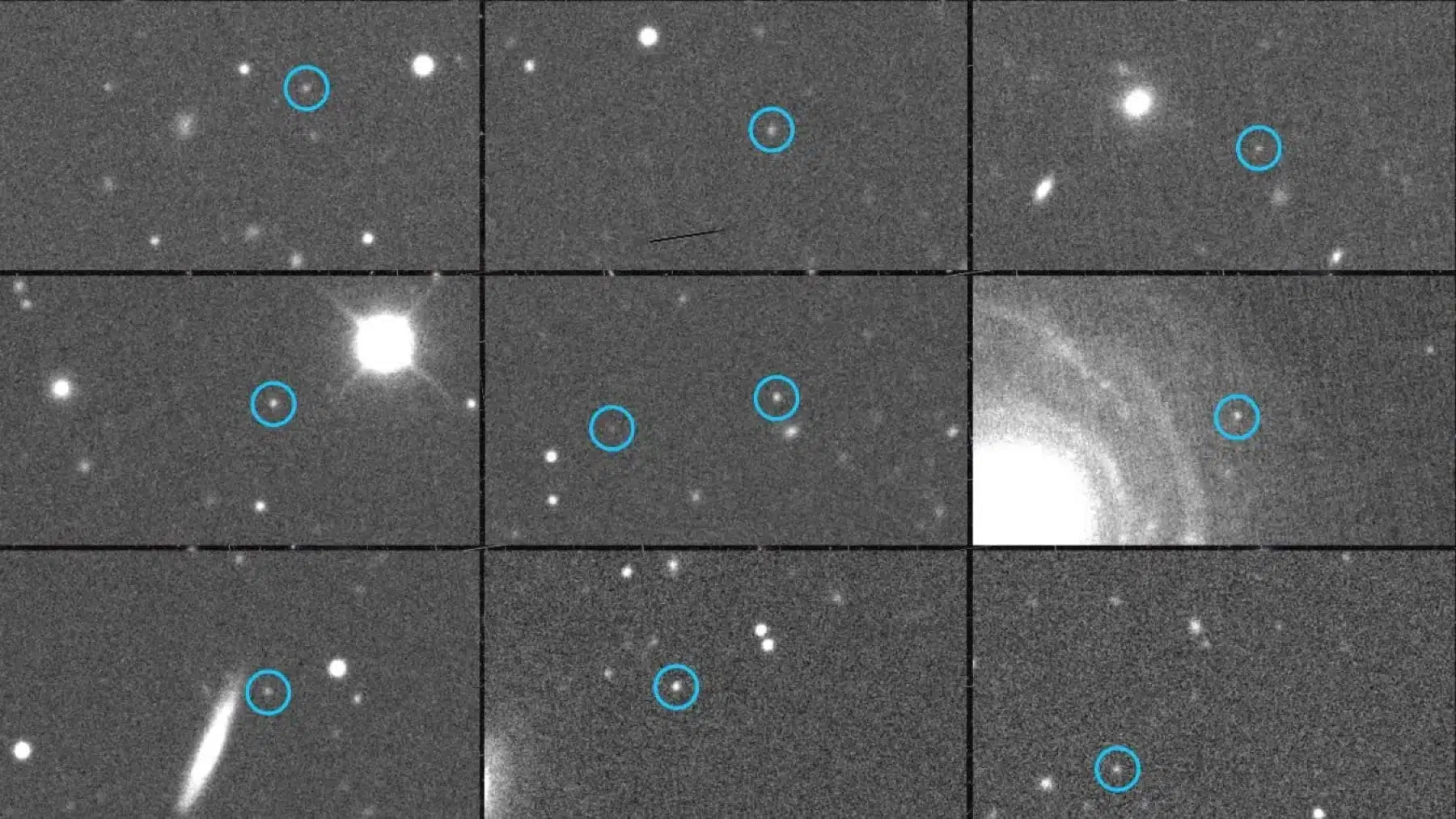
In its first test images, the Rubin already picked up 2,104 previously unknown asteroids, including seven near-Earth asteroids. It’s also expected to help astronomers study icy bodies beyond Neptune, and possibly provide evidence of the long theorized Planet Nine — a planet that could be ten times more massive than Earth.
The observatory can also be used for planetary defense
Near-Earth objects include asteroids, comets, and other space rocks that get close to Earth’s orbit. While most do not pose any real danger, there’s always a small chance one of them could collide with our planet. One of the most famous examples is the asteroid that wiped out the dinosaurs — it was about six miles wide and hit Earth around 66 million years ago.
The Rubin Observatory is expected to find around 90% of all potentially dangerous asteroids that are over 140 meters in diameter — that’s about the size of one and a half football fields. In just the first year or two of operation, the LSST project could discover millions of new asteroids. Right now, scientists have identified about 1.45 million of them, most of which are located in the asteroid belt between Mars and Jupiter.
Read the whole thing?
Get the week's signal, not the noise
Our sharpest reporting on energy, climate and nature — free, once a week.