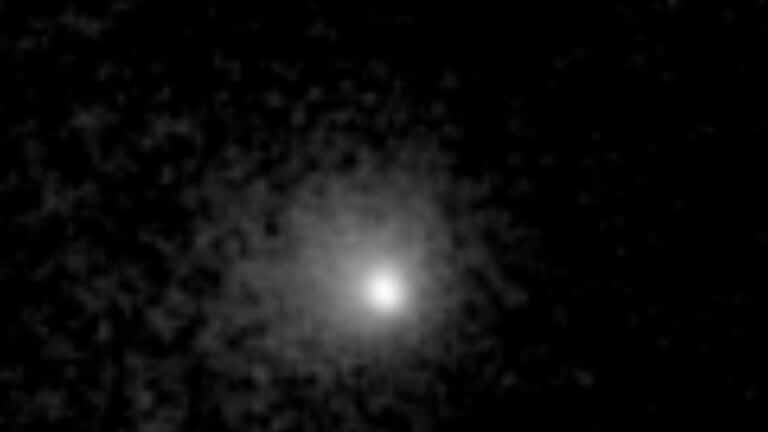
On a quiet Saturday afternoon, residents across eastern Massachusetts suddenly felt their windows rattle and their floors tremble. No storm was rolling in, no transformer had blown, and seismographs ruled out an earthquake. The culprit was a bolide — an exceptionally bright meteor roughly three feet wide that tore through the atmosphere at 75,000 miles per hour before violently breaking apart.
The explosion released energy equivalent to around 300 tons of TNT, and the shockwave was felt and heard from Delaware to Montreal. Now scientists are working to determine where the debris came down — and the answer may lie beneath the waters of Cape Cod Bay.
A Saturday Afternoon Shockwave
The event was precisely timed. At 2:06 p.m. EDT on May 30, NOAA’s GOES-19 weather satellite detected the incoming object, and NASA confirmed the sighting shortly after. Within minutes, social media filled with accounts from rattled residents across the region.
Witnesses described the experience as jarring and deeply disorienting. “The whole house, actually all houses in the neighborhood, shook. Much louder than a transformer exploding and definitely not an earthquake,” one resident of Melrose, north of Boston, reported. In Newtonville, to the west, another witness said the noise was enough to alarm a dog and suggest a large tree had fallen nearby.
The reports extended well beyond Massachusetts — people as far south as Delaware and as far north as Montreal described hearing or feeling the pressure wave. That geographic footprint reflects just how much energy the event released. A bolide is not simply a shooting star. It is an ultrabright meteor that fragments violently in the atmosphere, generating intense light and a powerful shockwave. Ordinary meteors burn up quietly; bolides announce themselves.
What Made This One So Loud
Speed was the central factor. At the moment of breakup, the rock was traveling at 75,000 miles per hour — fast enough to compress the air ahead of it into powerful pressure waves that radiated outward in every direction. Fragmentation occurred roughly 40 miles above the border between northeast Massachusetts and southeast New Hampshire. That altitude is high, but the energy involved was substantial, with experts estimating the explosion at approximately 300 tons of TNT equivalent.
The physics behind the sound is worth understanding. Shauna Edson, an astronomy educator at the Smithsonian’s National Air and Space Museum, explained that what people hear is the air compression caused by the object’s hypersonic speed. Sometimes, she noted, observers also hear the rock itself cracking apart under the extreme forces encountered during atmospheric entry — two distinct effects layered on top of each other.
Those combined forces — compressed air and physical fragmentation — produced the boom that shook windows from Boston’s suburbs all the way to the Canadian border.
Could Meteorites Be Sitting on the Seafloor?
After the explosion, attention shifted to what came next. Several weather surveillance instruments detected signals suggesting that pieces of the bolide may have fallen into Cape Cod Bay.
NASA, in a separate statement, used what it called “uber-serious scientific terms” to describe the scenario — referring to space rocks that land in water as a “fishy squisher.” The informal phrase is a small reminder that scientists, too, find this kind of event genuinely remarkable. The distinction between a meteor and a meteorite matters here: a meteor is the visible streak of light produced as a rock enters the atmosphere, while a meteorite is what actually reaches the ground. Only about five to ten percent of incoming space rocks survive atmospheric entry well enough to land intact, and recovery from open water would be extraordinarily difficult. Confirmation may never come.
How Common Are Events Like This?
Scientists estimate that roughly 48.5 U.S. tons of space rock fall toward Earth every day. That figure sounds significant, but the vast majority burns up completely, producing nothing more dramatic than a faint streak on a clear night.
Strong-boom bolides are a different matter entirely. Small meteors enter the atmosphere frequently, yet rarely generate the kind of pronounced sound and shaking that rattled eastern Massachusetts on May 30. Ken Mahan, lead meteorologist for the Boston Globe, confirmed that such a notable acoustic event is genuinely unusual.
2025 has offered several reminders that space debris is a constant presence: a seven-ton asteroid exploded over Ohio in March, a suspected meteorite punched through the roof of a Texas home, and two green meteors lit up the West Coast sky. Experts were clear that these events appear unrelated, not part of any unusual cluster. Visible, audible bolides remain rare for any specific region, and most people go their entire lives without experiencing one this close.
What Scientists Are Watching Now
Researchers will now work through satellite imagery and weather radar data to refine the bolide’s trajectory and map the potential strewn field — the area where fragments, if any survived, most likely landed. The American Meteor Society continues to collect eyewitness reports, and each new account helps scientists reconstruct the object’s path more precisely.
Even a single recovered meteorite would carry real scientific value. Space rocks are time capsules, preserving material from the earliest period of solar system formation — roughly 4.6 billion years ago. Studying their composition offers clues about the conditions that gave rise to the planets, Earth included. Whether fragments are ever pulled from Cape Cod Bay remains uncertain, but the data collected in the meantime will add one more point to the ongoing effort to understand what falls from the sky above us.
Read the whole thing?
Get the week's signal, not the noise
Our sharpest reporting on energy, climate and nature — free, once a week.