
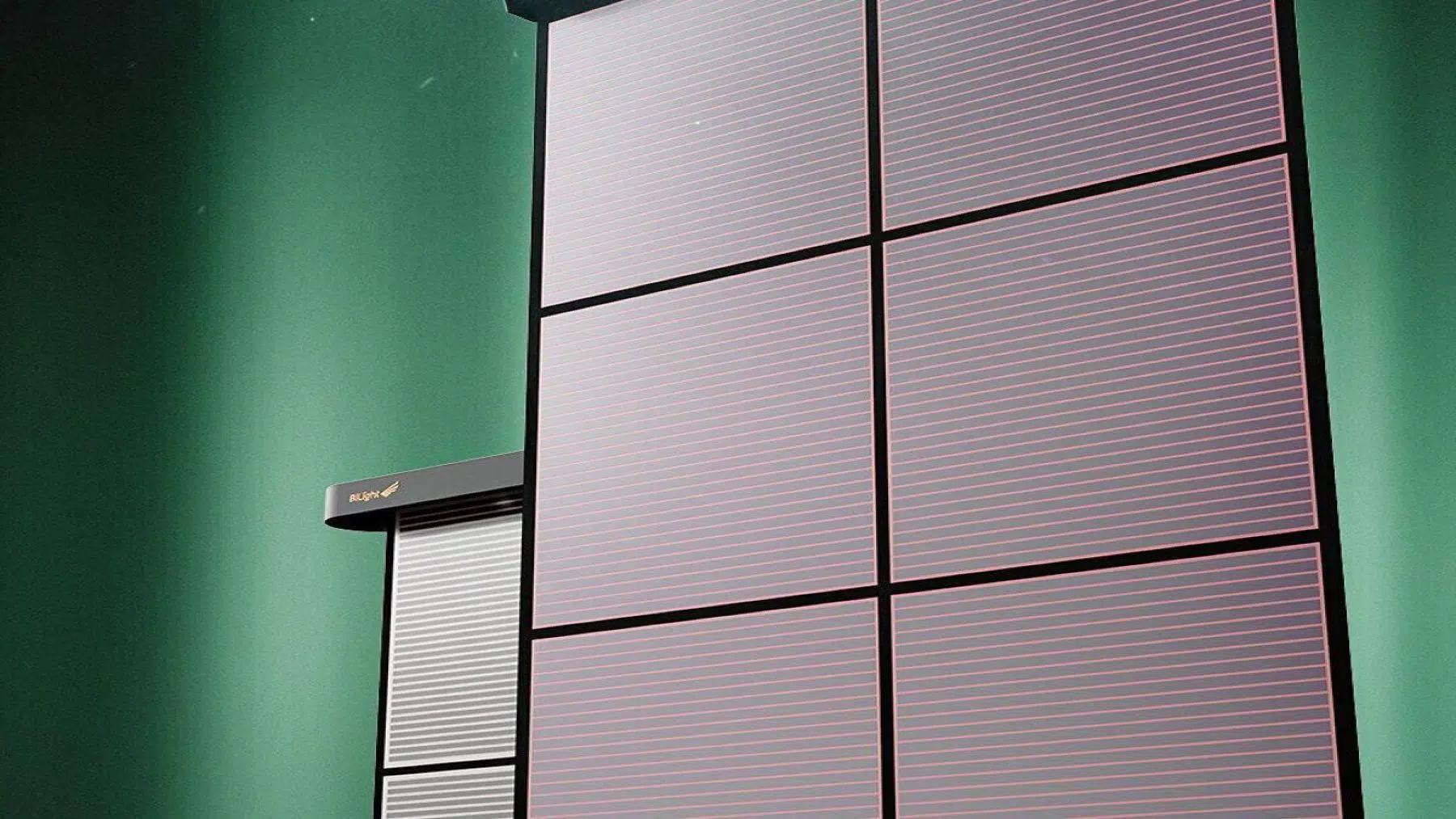
For many years, solar power was considered a fixed technology. Solar panels were placed on rooftops, arrays were installed in fields, and the majority of the process had become “bolt-on”, “mount,” or “fix-in-place”. Although the efficiency of solar power has increased, the overall design of the units has remained relatively unchanged.
New designs for greater flexibility
Engineers and designers have attempted to create new designs that would allow for greater flexibility. Examples include:
- Flexible panels
- Clear-coated solar panels
- Solar glass to make solar energy a part of our daily lives
Most of these technologies have been developed and tested, but they remain mostly as prototype technologies.
While solar energy continues to grow, buildings continue to use large amounts of energy simply because of their existence. In addition, the potential of generating power from large vertical surfaces, especially in urban environments, has yet to be realized.
A quiet revolution in thinking has occurred
During CES 2026, BiLight introduced what it calls the world’s first solar curtain – a fabric made with flexible perovskite photovoltaic material that can generate electricity while hanging as a typical window fabric. The curtain is approximately 0.1mm thick and works like other curtains in that it does not need to be installed in a different manner. According to BiLight, this type of technology allows for a home to be wrapped in solar panels, but in a way that does not alter the function or design of the home.
Reports indicate that the curtain can be hung from standard curtain rails and can be installed inside or outside of a structure. In addition, reports indicate that the curtain can be easily connected to an existing electrical system in a building. The curtain will not require additional structural support to install, as compared to traditional roof-mounted solar panels. The curtain will also not require replacing existing windows to provide the solar generation, as would be required to install solar glass.
The curtain uses perovskite photovoltaic (PV) material, which is a class of PV materials characterized by its high efficiency and extremely low thickness. Because the curtain uses perovskite PV material, it is able to generate electricity at a much lower thickness than would be possible if it used the more common silicon-based PV material. Therefore, the curtain is able to maintain sufficient flexibility to bend, fold, and move as needed while still providing sufficient surface area for energy generation.
Industry analysts view the potential impact of the curtain to be quite significant
There are huge amounts of surface area covered by curtains in homes, offices, hotels, etc., and most of these locations do not have sufficient rooftop space to accommodate additional solar panels. Instead of having to concentrate all of the power generation into a single location, the power generation becomes ambient and is incorporated directly into the building architecture.
BiLight acknowledges that there are currently some limitations associated with using the curtain
Specifically, BiLight states that there are some durability issues associated with perovskite PV materials and that the effects of long-term exposure to water vapor and ultraviolet (UV) radiation are an area of ongoing research. BiLight states that scaling up the production of the curtain and ensuring that it lasts over time is necessary before it can be widely deployed.
The fact that BiLight demonstrated the curtain at CES indicates that BiLight believes that the technology will be commercially viable in the near term. What makes the curtain interesting is not necessarily its ability to generate electricity, but rather its ability to integrate into people’s lives in a non-obtrusive manner. The curtain does not require homeowners to change their behavior, but rather requires energy to adapt to the homeowner’s current behavior.
Disclaimer: Our coverage of events affecting companies is purely informative and descriptive. Under no circumstances does it seek to promote an opinion or create a trend, nor can it be taken as investment advice or a recommendation of any kind.
Read the whole thing?
Get the week's signal, not the noise
Our sharpest reporting on energy, climate and nature — free, once a week.


