
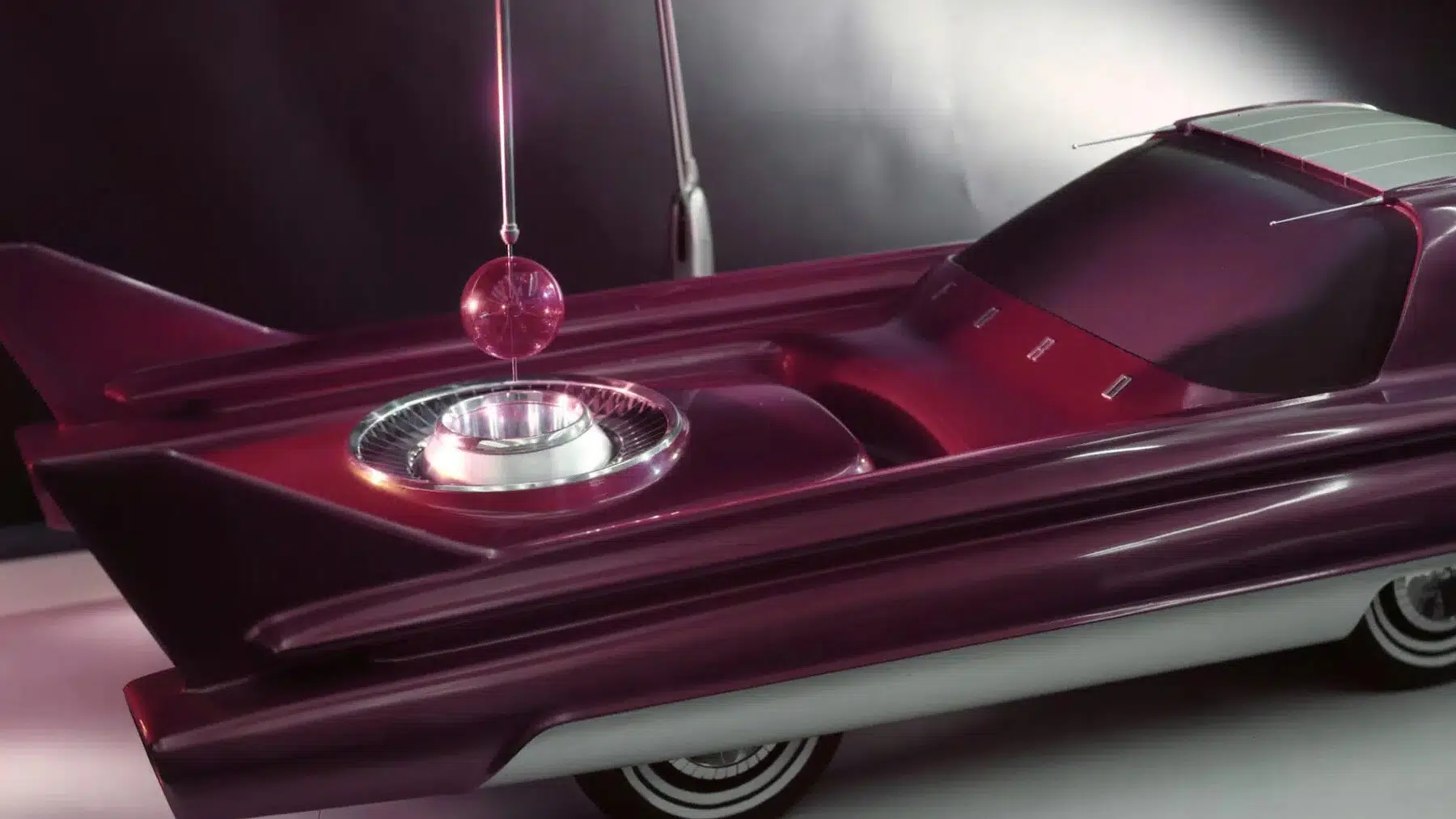
Ford has had a revolution of slogans throughout the years. Perhaps you remember “Built Ford Tough” and more recently, “Go Further.” Ford should have added “Dare to Dream” to its branding because Ford dared to dream of America’s first-ever nuclear-powered car. The idea may sound ridiculous, but in the 1950s, everyone had “atomic fever.” Some had hopes, others had fears, but after Pittsburgh became the first city powered by atomic energy, the future possibilities seemed limitless.
The dream of the first-ever nuclear-powered car
In 1958, the Ford Motor Company dreamed of a car powered by a minute nuclear reactor. Pittsburgh had already become the first city powered by the world’s first full-scale nuclear power plant before Ford released its first design study car in 1958. They named the dream car the Nucleon. The goal of the Nucleon was to drive 5,000 miles before stopping to refuel. If you think this goal was quite comical, wait until you see how Ford envisioned the Nucleon’s design, which some referred to as having “utterly comical dimensions.”
The Nucleon’s length and width would be 16.7 feet long and about 6.5 feet wide, respectively. The dimensions are comparable to the latest Ford Maverick pickup, just slightly wider. The Nucleon’s roof would have been about 3.5 feet high, and its wheelbase would have been about 5.8 feet. The Nucleon’s wheels were closely spaced together, yet mounted far apart to support the weight of its onboard reactor, which pushed the cabin out ahead of the front axle. We would call these dimensions quite comical indeed.
This is how the Nucleon would have worked
Ford visualized the Nucleon’s nuclear reactor to be placed in the vehicle’s rear. The Nucleon had a “replaceable power package,” meaning the nuclear reactor’s atomic core would occasionally have to be recharged. The “replaceable power package” would be offered in several sizes, which enabled “the driver to select his own horsepower.”
The reactor would produce power for “electronic torque converters,” presumably an electric motor-generator arrangement like a series hybrid. As good as the dream seemed, it had a significant number of challenges, especially energy conversions.
Why America never saw the first-ever nuclear-powered vehicle
America never got to see the first-ever nuclear-powered vehicle because the concept of the Ford Nucleon all but vanished after 1958 due to nuclear energy technology not being anywhere near ready to power a mass-produced passenger car. Even today, the Nucleon’s concept remains impossible.
“The problem with an automotive-scale reactor isn’t with accommodating the radioactive core, but with handling the energy it releases.” – L. Dale Thomas, deputy director of the Propulsion Research Center at the University of Alabama in Huntsville.
According to Thomas, the biggest challenge would be energy conversion, as the nuclear reactor would produce thermal energy that had to be converted into mechanical energy, namely, horsepower and torque. However, reactors cannot achieve the conversion as efficiently as an internal combustion engine would. The produced heat converts water into steam, then spins the generator’s turbine to produce electricity, which powers the car’s wheels. This method thus involves too many energy conversions that cause extra inefficiencies.
“And not due to the small reactor itself, which we do now understand how to construct and control, but rather the thermal-to-mechanical energy conversion and disposal of waste heat within the geometrical envelope of a personal vehicle.” – L. Dale Thomas.
So yes, in the 1950s, Ford caught the “atomic fever” and dared to dream. Even though a car from Ford is “built tough,” we do not think it would have been tough enough to make this dream feasible. Thankfully, Ford did not let this failure set them back, as they have released thousands of consumer favorites since the 1950s.
Read the whole thing?
Get the week's signal, not the noise
Our sharpest reporting on energy, climate and nature — free, once a week.


