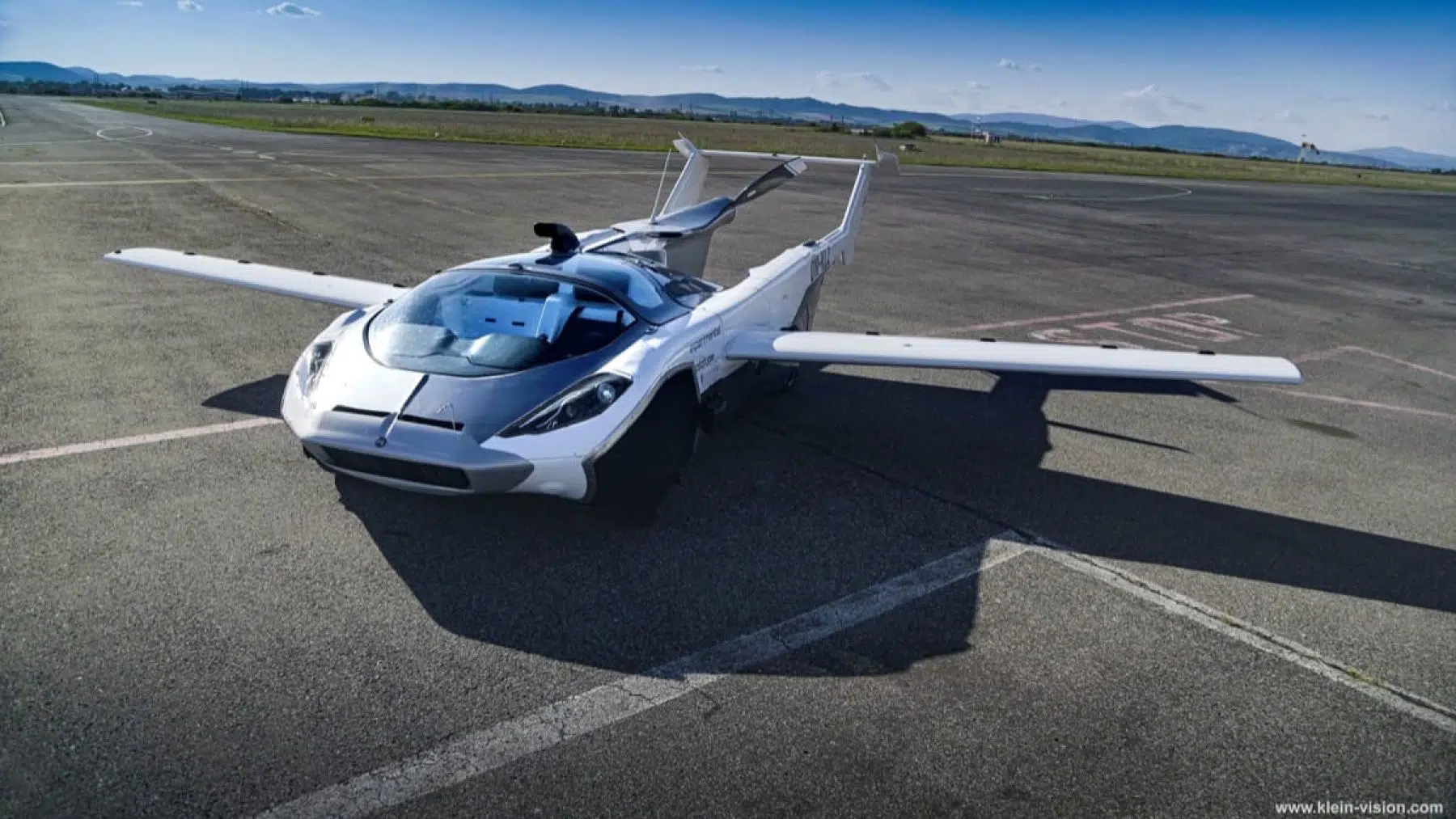
Flying cars are a staple of every science fiction lover’s imagination. From the very beginning, the concept was brought to life through cartoons and movies with a retro-futuristic aesthetic, but with the design of the cars changing drastically and a new, renewable source of energy emerging, what was once thought to be the futuristic flying cars is now fading away, as the need for helicopters propellers or aircraft turbine to fly remains, with electromagnetic technology still out of the picture for now.
Flying cars are not in the plans for many companies
Not many companies are focusing on creating flying cars, but there are a few in the private sector studying the possibilities of creating a transport vehicle different from helicopters and planes to transform the skies into highways. On the other hand, many projects have faced pushbacks or, as the idea has advanced, the focus has changed.
The amount of investment needed is one of the reasons why no flying cars have been fully developed so far. One of the references in this field was Lilium, a German aerospace company developing electric vertical aircraft. The company had its project for the eVTOL well-developed, but as the research advanced, the project had a major pushback.
Project pushback due to the lack of resources
In October 2024, the company filed for insolvency for the first time, which means it cannot pay its debts, and the company was close to shutting down its operations. However, a rescue seemed possible when Lilium signed an investment agreement from the Mobile Uplift Corporation (MUC), and the funding would be used to support the development of vertical aircraft, as well as the construction of a port near the Orlando International Airport in Florida.
However, the funds did not materialize, which led Lilium to file for insolvency a second time on Feb. 21, 2025, and cease operations. The company stated that discussions for alternative solutions were ongoing, but the likelihood of restructuring was minimal. As the need to find new vehicles is increasing, traditional vehicle companies such as Honda, BMW, and Mercedes are focusing on creating electric and hybrid cars, with hydrogen as another alternative fuel to power the future, and not creating a flying vehicle.
The aircraft would not be publicly commercialized
The Lilium eVTOL jet was designed to be an electric air taxi with vertical takeoff and landing capabilities. The aircraft would not be publicly commercialized, but rather used by corporations or other businesses to improve regional air mobility.
The reality of flying cars is very different from what movies and pop culture have presented to the masses. There is no electromagnetic propulsion system, combustion engines, or rocket-like propulsion. Companies like XPeng have developed a vehicle that can fly, but not in the way most people think. Jets like the ones from Lilium are most likely to be used by companies in airports to transport people or objects to nearby installations.
A pilot’s license is required to ‘drive’
In order to create an actual flying car, not only would the vehicle need to meet the safety standards of the local government, but also need to obtain a license to fly anywhere with a pilot. Today, it takes 2–3 months to obtain a license to become a pilot, depending on the type of license you are aiming for.
If you are looking to become a private pilot, it takes no more than three months. On the other hand, for a Commercial Pilot License and Airline Transport Pilot license, it requires more hours and time, depending on the training method. The future of flying cars will require not only vehicles with the capability of flying, but also the infrastructure and investment to support them, as shown by Lilium’s order pipeline of more than 780 aircraft that may never be fulfilled.
Read the whole thing?
Get the week's signal, not the noise
Our sharpest reporting on energy, climate and nature — free, once a week.