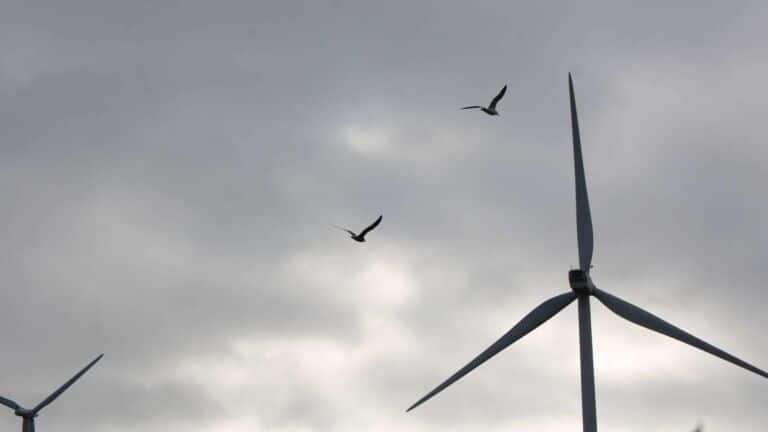
There is a single floating wind turbine 10 miles from shore in the Mediterranean Sea off the coast of France. Below the surface, natural reef structures do not exist in these currents.
This means vulnerable young fish are exposed to larger predators.
Marine biologists are testing whether deep water steel platforms used for offshore wind turbines can also become marine habitats for conservation. What is this new “hotel” for mollusks?
Submerged offshore infrastructure and coastal nursery habitats
The Mediterranean Sea holds rich marine life, but decades of coastal construction have removed extensive natural rocky reefs. In offshore waters deeper than out the coast, fish that have grown past the larval stage drift toward floating platforms looking for shelter in the currents.
In this part of the Gulf of Lion, the seafloor consists primarily of sand and silt. This environment is short on hiding spots.
The pilot platform has been placed 10 miles off the coast of France near Leucate. It is anchored in around 230 feet of water. Scientists observing the site noted that within just weeks of being in operation, young fish were gathering around the hull and mooring lines within weeks of turbine deployment.
However, smooth steel walls and thick cables lack tiny protective spaces. While adult fish swim easily around the anchor lines, fragile young fish remain exposed in open water.
Without crevices, standard floating wind turbine foundations attract open-water predators instead of protecting early fish life during their growth stages. Floating turbines offer some surface area, yet their flatness leaves small marine species defenseless.
Pressure from predators and a lack of protection
For young Mediterranean fish, moving from open water into settled coastal habitats brings severe danger. Mortality during this post-larval phase often exceeds 90 percent due to heavy predation in unprotected waters.
While floating steel structures draw marine life, unmodified hulls offer no place for young fish to hide.
Predatory species like sea bass and amberjacks regularly patrol around the submerged foundations. Because the young fish congregate near smooth steel walls without access to tiny gaps, they become easy prey for passing hunters. Unmodified offshore structures can quickly turn into concentrated feeding zones for large predators.
To turn deep water installations into functional nurseries, engineers and marine biologists needed to add complex micro-habitats directly to floating hulls, reports Principle Power. Because floating platforms move continuously with deep water swells, any attached habitat modules must endure constant hydrodynamic drag and wave vibration without detaching. This adds excessive weight or risks costly structural damage during severe Mediterranean storms.
Bio-inspired shell cages and early ecological observations
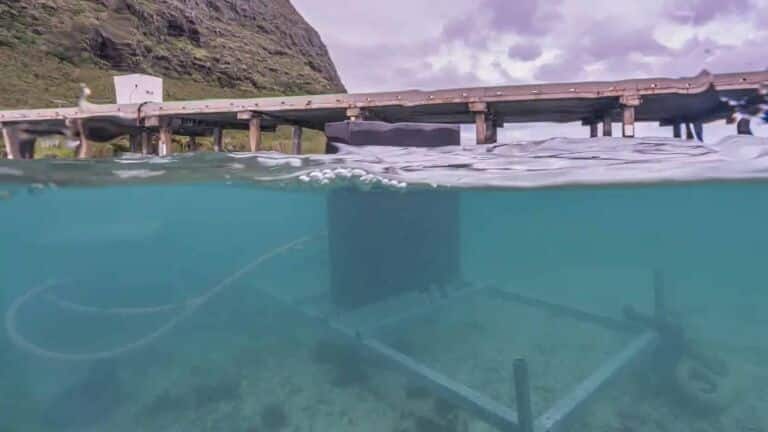
The 32 “hotels” are bio-inspired habitat cages made of steel and mounted along the submerged hull. Local seafood processing facilities supply weathered oyster and scallop shells, which are secured inside heavy-duty stainless steel mesh to withstand turbulent subsea currents. These stacked shells create a dense matrix of micro-crevices.
When young fish drift past, they swim deep into the shell gaps where larger predatory sea bass cannot fit, according to Ocean Winds.
The hope is to increase regional fish populations
Field observations show young fish using the cages within weeks of underwater installation. However, operational limits exist. Over time, biofouling from barnacles or sediment could clog the shell spaces. This means the available shelter will be gradually reduced.
This floating Leucate installation shows that this mechanism installed on floating foundations can provide safety for young fish in deep waters. Monitoring is limited to one test platform for now, so whether these structures noticeably increase regional fish populations across full commercial offshore wind farms cannot be measured yet.
Engineers are increasingly coming up with smart ways to get clean energy infrastructure to work with conservation, which is important as the world moves toward a future of green power.
Read the whole thing?
Get the week's signal, not the noise
Our sharpest reporting on energy, climate and nature — free, once a week.