A spring evening settled into the Mason County, Illinois countryside.
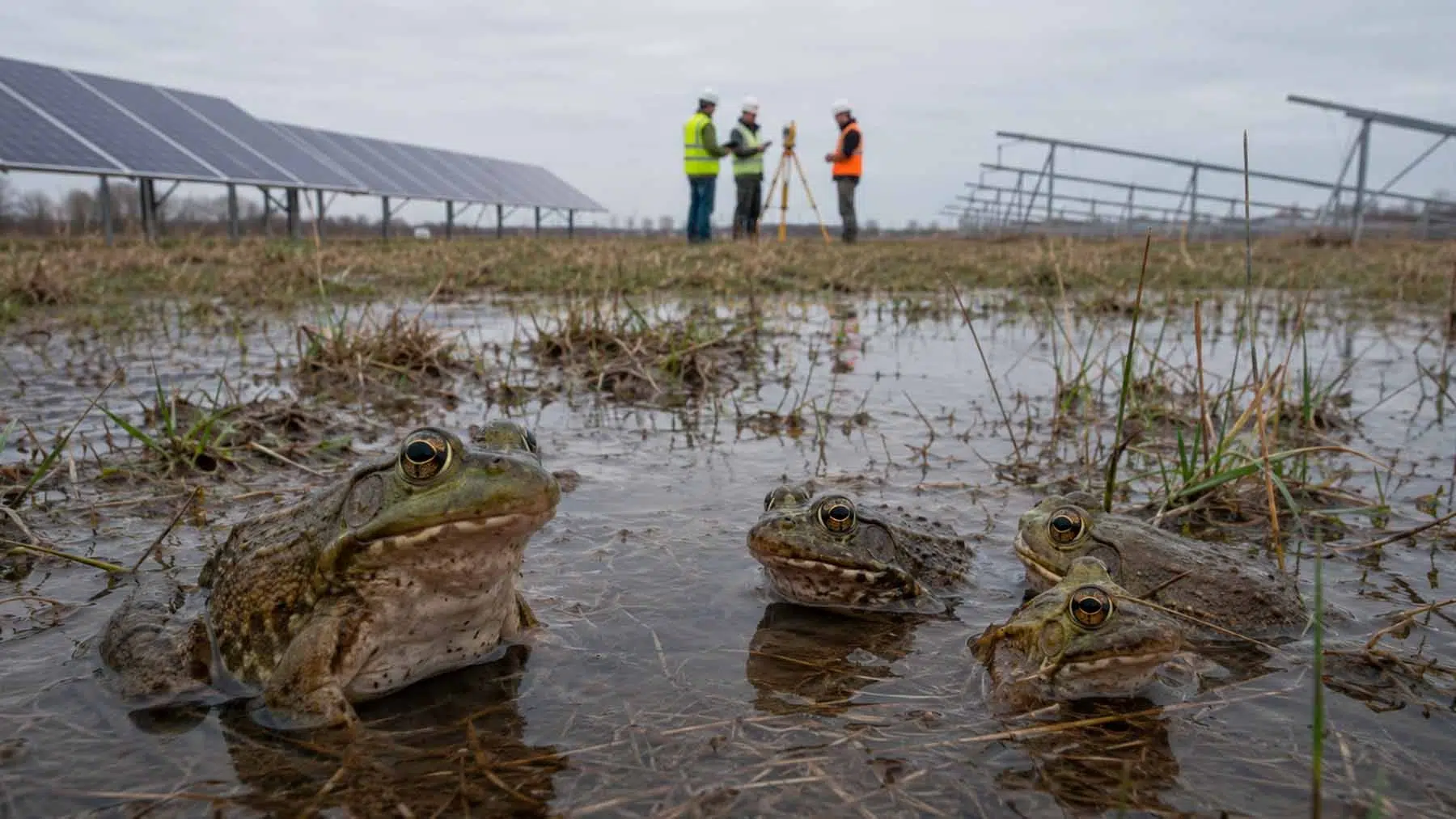
Engineers were evaluating the local farmland they had selected as a potential site for a proposed solar energy project.
At least initially, the overall appearance of the land looked good. It also looked good on the maps.
So far, so good. Things were generally heading in the right direction.
Then the frogs began to sing.
After sunset, their songs filled the air, echoing through the fields and drainage areas.
However, the sounds suggested there was something about the landscape that wasn’t immediately obvious.
Everything pointed toward an easy project
The Salt Creek Township Solar Project is being developed on farmland near Mason City, Illinois.
The project would generate large amounts of renewable electricity using a substantial area of agricultural land.
At first glance, the property appeared relatively uneventful. Fields stretched outward in almost every direction.
This made the potential for development appear straightforward. The future appeared bright and uncomplicated.
That’s exactly why the location got attention.
But things aren’t always as they seem.
Wetlands, streams, and low-lying areas existed throughout the landscape that were not always obvious during an initial visual assessment.
Environmental reviews eventually identified these features and helped determine where construction could take place.
Planning personnel faced a relatively simple task. Identify suitable land to build upon.
Avoid or minimize environmental constraints.
Build the solar farm.
One small creature made this process difficult.
The loudest clue came each evening at sunset
These frogs were very small. Most people wouldn’t even know if they had seen one.
However, their voices told a very different story.
Illinois Chorus Frogs produce calls that travel great distances during the breeding season.
A statement from the Illinois Government outlined the environmental review, including the frog call surveys conducted during the spring breeding season.
Researchers returned to the site each week to listen for those evening calls.
Their calls directed attention toward certain locations. Researchers soon realized those locations deserved a closer look.
The call surveys gradually revealed where the frogs kept returning.
Ordinary-sounding frog calls turned out to be valuable data points. Each survey added another piece to the picture of the land.
The frogs had already found what mattered
The frogs never studied engineering drawings.
They never attended planning meetings. They never discussed solar panels. Yet they contributed in their own unusual way.
They created sounds. Those sounds led researchers toward areas that deserved a closer look.
Their calls also helped identify wetlands and seasonal water features.
Finding those locations was significant because they represented both constraints and opportunities for the project’s design.
Ultimately, the area available for development was planned to avoid or accommodate as many of those features as possible.
The land had been leaving clues all along
In an unusual sense, the frogs acted as guides. They helped reveal parts of the landscape that might otherwise have been overlooked.
Useful information was hidden within the sounds coming from those shallow breeding areas.
Engineers listened. Environmental consultants listened.
The project team listened.
The frogs’ calls provided insight into the location of wetlands and other environmental constraints. Those findings helped guide decisions about where development should occur within the project footprint.
Ultimately, although neither knowingly nor intentionally, the frogs helped planners better understand the land.
The sounds coming from those breeding areas revealed places where nature had already established boundaries. The engineers simply discovered where those boundaries existed.
The area available for solar development remained largely unchanged.
The wetlands remained visible.
The breeding areas received appropriate consideration.
And a collective voice made up of thousands of tiny frogs played an unexpected role in shaping important planning decisions. All of it happened long before a single solar panel reached the field.
Read the whole thing?
Get the week's signal, not the noise
Our sharpest reporting on energy, climate and nature — free, once a week.