
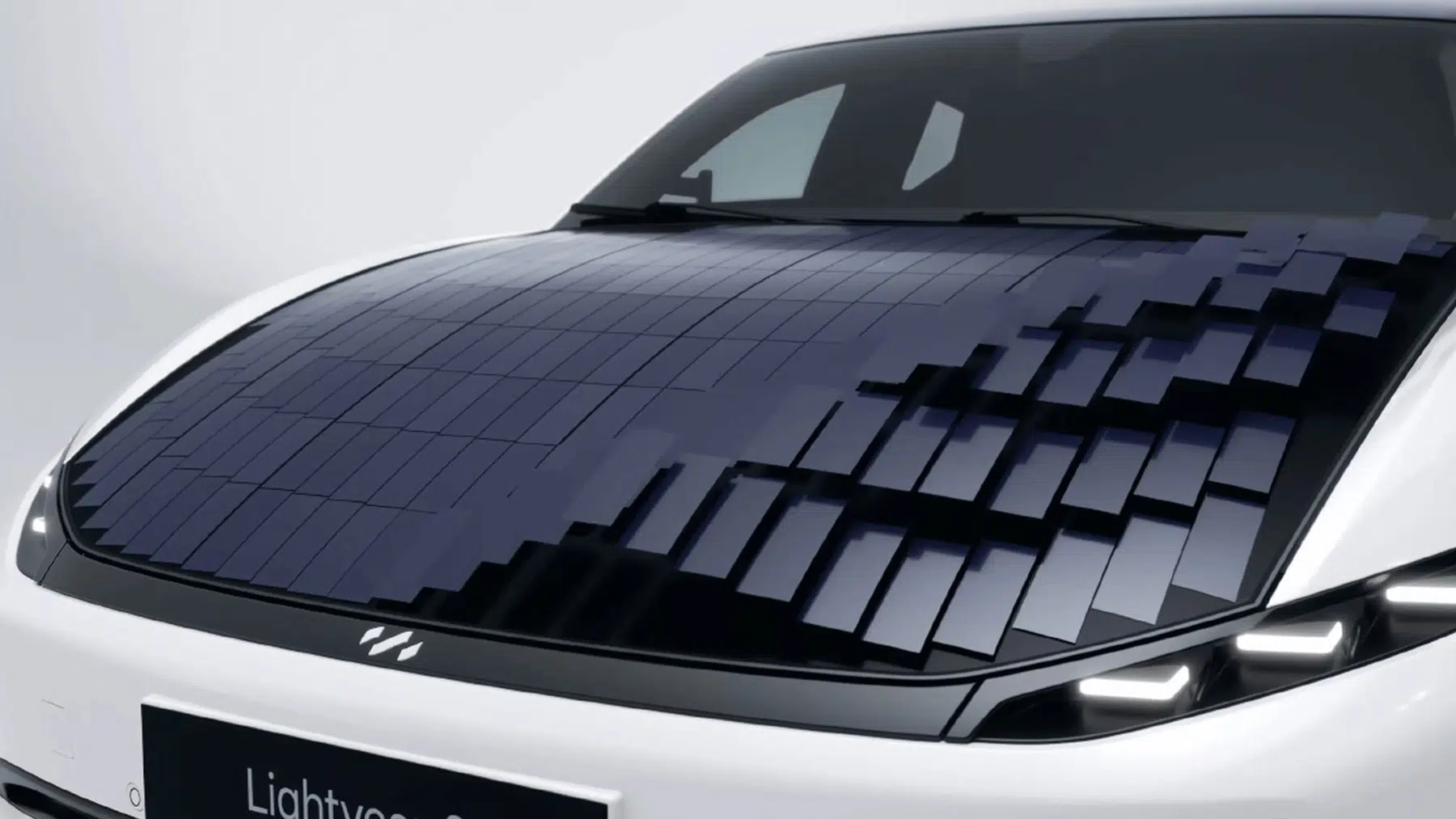
A groundbreaking fuel-less car was due to hit the market in mid-2021 and the company that developed it, Lightyear, was so confident that the model would be released commercially that they started accepting pre-orders.
At the time, it appeared that the zero-emissions solar vehicle technology that several vehicle manufacturers have been attempting to perfect for years was finally achieved by the developers at Lightyear. But sadly, it wasn’t to be, and no one’s gotten it right yet.
The Lightyear One was going to combine renewable solar energy with electricity
The Lightyear One concept was envisioned to run on electricity, which is hardly an innovation, but it’s the planned electrical energy source that made it revolutionary. Solar panels were going to cover the hood and roof of the vehicle, which would then power the engine after solar energy was converted to electricity.
The company that developed the vehicle, Lightyear, is a startup that was founded in 2016. One may have thought that it would have been the Japanese or the Germans who came up with the idea, but it was the Dutch.
A range of 450 miles had everyone excited
The first model was going to be called the Lightyear One, and it was supposed to offer an impressive range of 450 miles. Lightyear started accepting reservations on its website whereby drivers could sign up to be one of the first to secure a unit. The release date was set for 2021 and a reserve deposit of $19,000 was required of the total price of $149,000.
Dutch startup Lightyear appears to have abandoned its solar plans entirely
After the failure of the Lightyear One, the company has apparently given up on solar-powered vehicles (at least, for now). A recent press release states that along with a change of management has come a shift of focus to on-board solar charging systems for automotives.
Lightyear ran into financial problems
In October 2023 already, signs of change were visible at Lightyear. Then-CEO Lex Hoefsloot stated at the time that plans for the production of the Lightyear 2 were being put on hold and that the focus would be on the development and production of solar modules for electric vehicles produced by other manufacturers.
Nothing else had been reported about the Lightyear 2, although it’s still featured on the company’s website.
What’s the current status at Lightyear?
Co-founder Hoefsloot is no longer the CEO of Lightyear, but he remained on board after the 2023 shift, reportedly to “support a smooth transition in the coming period and to focus on the longer-term potential of the company.” Previous Head of Product Solar Bonna Newman was appointed as the new CEO, supported by experienced CFO Marnix Borghouts.
Lightyear discontinued the series production of its debut model Lightyear 0 (formerly known as the Lightyear One) in January 2023, which came as a surprise. Commercial production had only just begun in December 2022, but the company ran into financial difficulties and had to file for insolvency.
CEO Newman expressed confidence in Lightyear’s future:
“Lightyear has demonstrated how highly efficient electric vehicles combined with on-board solar will accelerate the energy transition and benefit the world. Lightyear has set the stage for a new era of solar-powered mobility. I look forward to partnering our amazing team with the automotive industry to ensure the best on-board solar technology is available to everyone.”
Although Lightyear is moving in a different direction with the development of solar charging systems for transport applications, there’s still a chance that the Lightyear 2 or even a new model may be delivered in the future. Solar energy harvesting technology is growing in leaps and bounds and it’s not at all implausible that we’ll see sun-powered cars on the roads in the future. In fact, we may even see nuclear-powered vehicles being produced as developers are already looking to thorium as a fuel.
Read the whole thing?
Get the week's signal, not the noise
Our sharpest reporting on energy, climate and nature — free, once a week.


