Something changed in the summer of 2025, and satellites caught the whole thing from above.
Greenland’s ice sheet, the largest in the world outside Antarctica, turned grey.
Not all of it, not all at once, but enough that scientists tracking it from orbit stopped and looked twice.
What they found buried inside that discoloration tells a story far beyond a single bad melt season.
A summer that rewrote the record books in three days
Every July, warm Atlantic air rolls north and presses down on Greenland’s ice.
Most summers, the melting stays confined to the lower coastal edges where the ice is thinnest.
This past July was different.
A prolonged period of extensive melting ran from roughly July 7 to July 20, tipping the 2025 season above the long-term average for total melt-day extent.
For three days in a row, melting covered more than 80 percent of the ice sheet, peaking at 81.2 percent, the highest value in the dataset going back to 1981.
Picture a sheet of ice twice the size of Texas, almost all of it weeping at once.
The narwhal hunt that arrived too early
The season had already been acting strangely before July arrived.
Back in spring, the southern edge of the ice sheet began losing mass weeks ahead of schedule.
The melt season began with a significant spike across the south, and sea ice broke up unusually early in north-west Greenland, allowing the traditional narwhal hunt to start much earlier than usual.
For the Indigenous hunters who time their year by the sea ice, that early opening was not a gift.
It was a signal that the frozen calendar they have relied on for generations is shifting under their feet.
Evidence has emerged of a lengthening summer season, with melt continuing into September in 2024, well beyond the end of August when Greenland’s short summer typically draws to a close, including unusual spikes across the north and all down the west coast.
The grey stain that makes everything worse
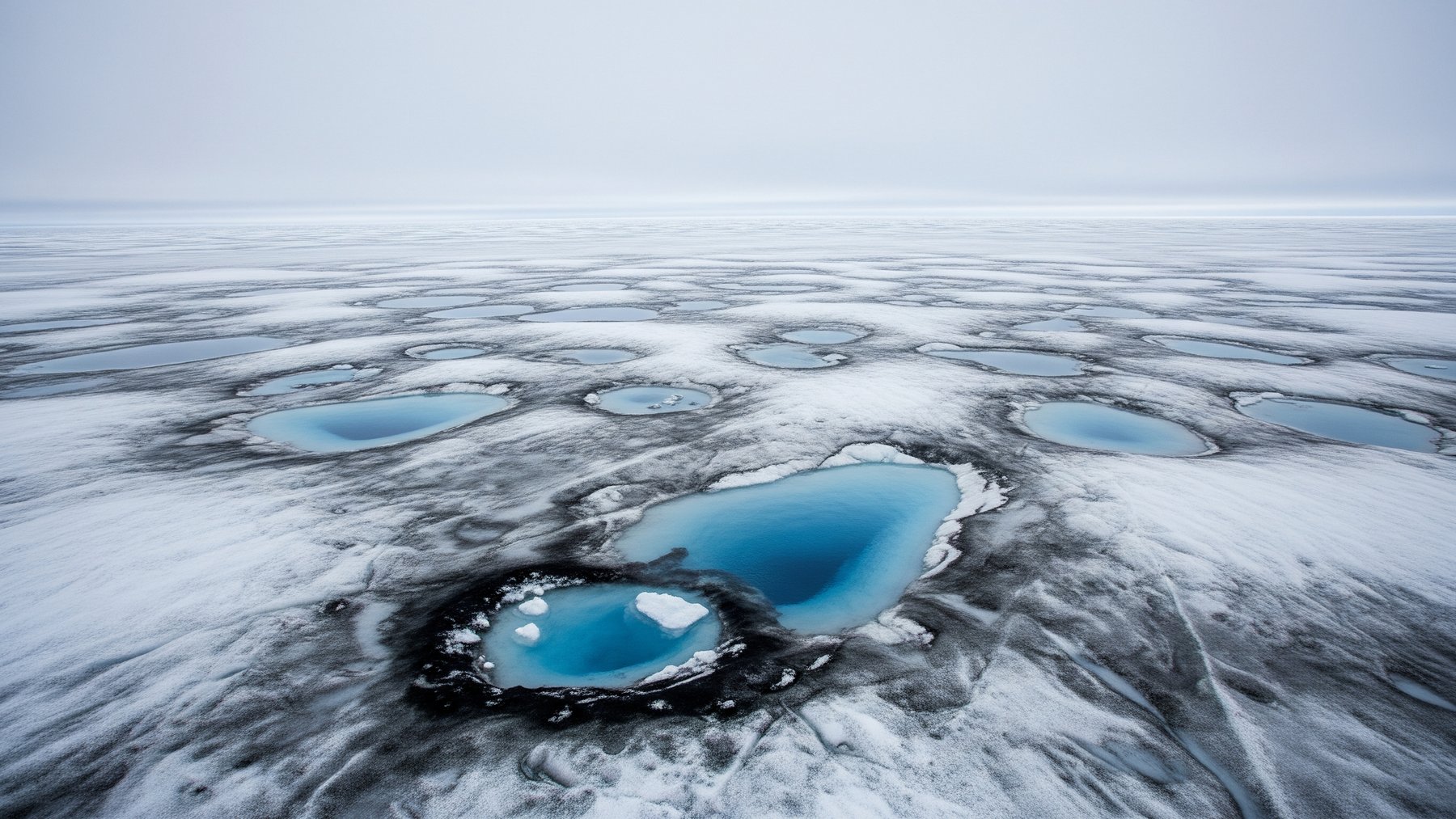
Look at the satellite images from August 2025 and you see something hard to explain at first glance.
The ice is not just white and blue anymore.
A vast expanse of grey, dirty ice became visible, caused by black carbon and dust that had accumulated on the surface.
As snow melted away, those impurities were left behind, darkening the ice and reducing its ability to reflect sunlight.
That darker surface absorbed more solar energy and melted even faster, feeding itself.
Scientists call this the albedo feedback, one of the most important self-reinforcing loops in all of climate science.
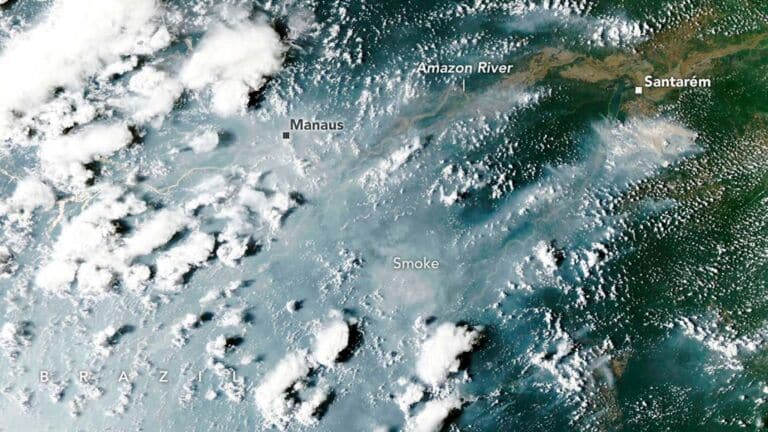
Albedo dropped below average in late August, coinciding with smoke from North American wildfires along the west coast of Greenland.
In other words, summer wildfires thousands of miles to the south were darkening Arctic ice and nudging the melt further along.
105 billion tonnes and a streak that goes back nearly 30 years
When scientists added everything up for the 2024-25 season, the Greenland ice sheet had lost 105 billion tonnes of ice.
Greenland is closing in on three decades of continuous annual loss, with 1995-96 being the last year the giant ice sheet actually grew.
That is nearly 30 years without a single year in the black.
A study in Nature Communications found that extreme melting events are now happening more often, covering larger areas, with mechanisms driving them that remain incompletely understood.
The cold meltwater pouring off Greenland is already nudging the currents that regulate winters across the US East Coast, and researchers who examined the 2023 heat record say these feedbacks are still being systematically underestimated, a concern echoed by scientists tracking what satellites measured inside the ice that same season.
Where the ice goes from here, and a reason not to look away
The 2025 season was not the worst on record overall.
It was a moderately intense melt season in a 47-year satellite record that has seen far more damaging years.
That honest caveat matters, but the details inside a moderate season are what unsettle scientists most.
Extreme melt events are becoming more frequent, more extensive, and more severe, yet the mechanisms driving them remain incompletely understood.
What is understood is that the darkening feedback has no off switch once it starts.
Seven of the ten most extreme melt events have occurred after 2000, with meltwater anomalies in the largest events reaching up to three times their synoptic average.
The hopeful part is real: a moderate 2025 shows the system has not yet crossed the point of no return.
The ice sheet still grows back a little every September, narwhals still push through the fjords each spring, and new sea ice still forms on a cold winter’s night.
The question the grey stain keeps asking is how many more seasons of soot, smoke, and record July heat it can absorb before the feedback loop does the answering for us.
Read the whole thing?
Get the week's signal, not the noise
Our sharpest reporting on energy, climate and nature — free, once a week.