A narrow steel walkway runs for six tenths of a mile straight down a forested slope, bolted to the top of something far bigger than itself.
Underneath it, bands of rusted iron hold together slats of century old wood, nine feet across.
Moss has taken over the seams.
Hikers walk out over rushing water they can hear long before the trees open up and they can see it.
Below, salmon, steelhead and lamprey now move freely through a reach the structure once helped block for 87 years.
So what is this thing, and why was it ever left standing at all?
A pressure pipe that lost its river but kept its frame
A penstock is the enclosed pipe that carries river water under pressure down to a turbine, and this one did that job for most of a century. It ran roughly four miles from the old Powerdale Dam to a powerhouse just outside town, feeding electricity to the city of Hood River.
The pipe was never one material. Some stretches were steel, others wood staves cinched by heavy metal bands, the choice following the terrain and the era of construction. Hikers still pass original wood slats held together by giant rusted hoops.
Once the turbines stopped turning, the pipe’s one job vanished. The water had nowhere left to go, so the structure simply stood empty on the slope.
The maintenance catwalk that became a three mile hike
Crews needed a way to walk the length of the penstock to check joints and leaks, so a narrow service catwalk was built directly on top of the pipe. That walkway outlasted the power project, and it is now a hiking route that happens to run along retired power infrastructure, with handrails on both sides.
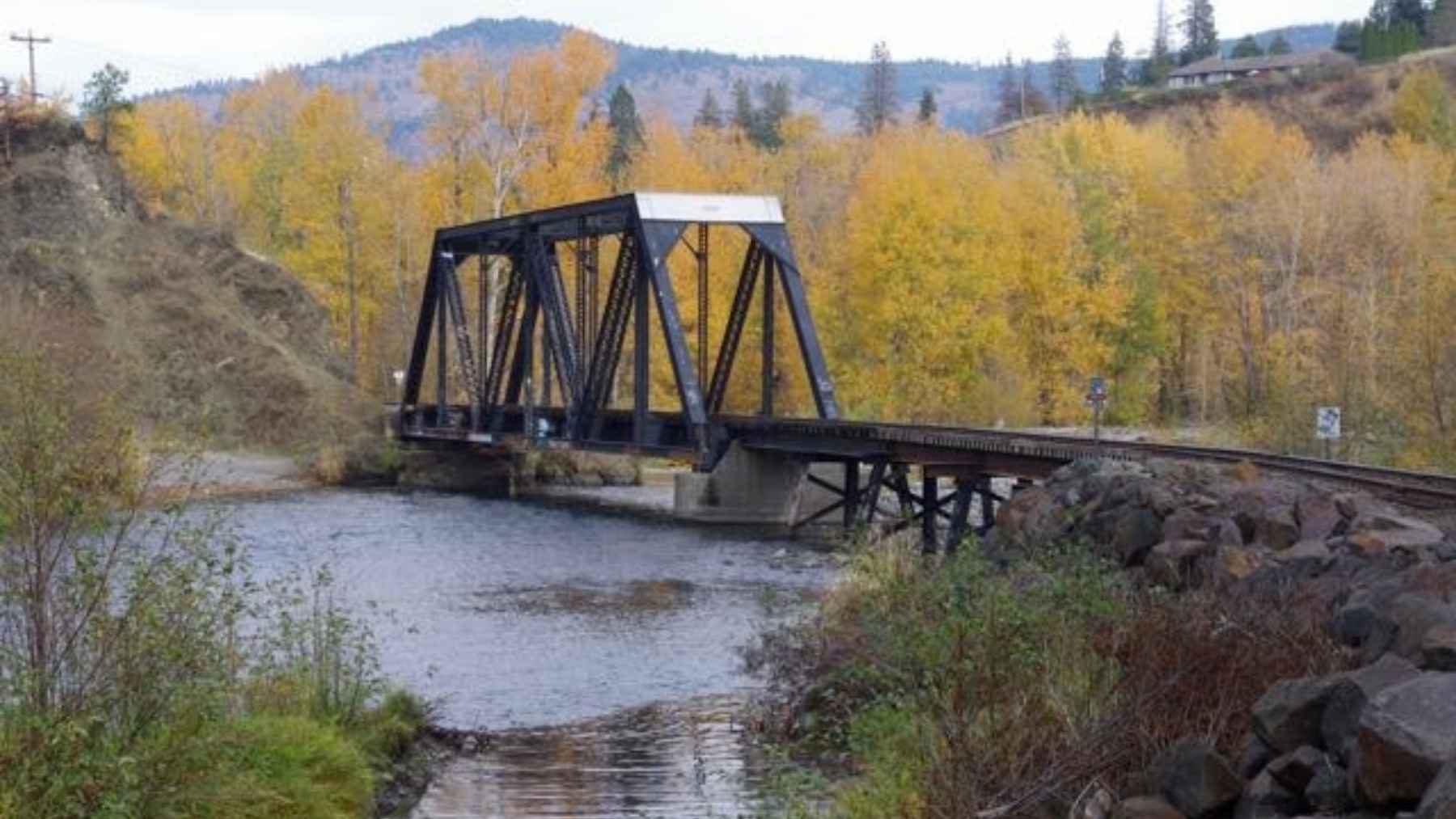
The approach is as industrial as the destination. Hikers park near a graffiti covered powerhouse off the highway, cross active railroad tracks, and walk a dirt path before the pipeline rises out of the ground beneath them. The round trip runs about three miles with almost no climbing.
The catwalk ends abruptly at a washout, where a flood tore out the pipe and the supports that once carried it over the river. Much of the century old pipe has since been hauled away, and what remains is losing pieces to weather rather than demolition crews.
Steelhead and lamprey spread upstream after the 2010 removal
Powerdale Dam was built in 1923 and removed in the summer of 2010, with demolition and channel rebuilding running from April through October. The flood of November 2006 had already destroyed a section of penstock and left the plant unusable, and a 2003 settlement with agencies, tribes and conservation groups had set the shutdown date.
When the lower coffer dam was breached that September, the river ran through the reach unencumbered for the first time in nearly nine decades. Summer steelhead have since been documented several miles up the East Fork and as far as Punchbowl Falls on the West Fork.
A mark recapture study presented to fisheries scientists estimated wild steelhead smolt output averaged about 14,000 a year before removal and about 31,000 in the five years after, though researchers noted flow variability is also a significant factor.
About 400 acres changed hands once the power stopped flowing
Letting a retired penstock stand costs less than demolishing it, and the land around Powerdale tells a similar story at a larger scale. In March 2013, roughly 400 acres of property transferred from the utility that ran the plant to a conservation land trust, which took about 300 acres, and to Hood River County, which took about 100.
The corridor runs some 3.5 miles from the former dam site downstream, part of the decommissioning settlement. Crews later pulled half a mile of 10 foot steel pipeline in 2014 and placed 100 logs as jam structures.
That budget logic shapes what happens to any aging piece of power gear, whether it is a hydro penstock or a tidal turbine pulled off the seafloor after months underwater. Crews removed what blocked the river and left what did not.
Years later, what the pipe still has left to lose
No published timeline says when the rest of the penstock will finally give way. Flooding has already claimed stretches of it, and nothing suggests that process has stopped.
That is the honest limit of this kind of afterlife. A retired penstock walked by hikers is not restored wilderness, it is industrial hardware decaying in place while the river around it recovers, a tension that echoes further downstream where sea lions still gather below dams that remain standing.
Which is the small, hopeful part of the story. A river held back for 87 years now carries steelhead past a rusting pipe that once helped divert them, and for now, both the fish and the pipe are allowed to exist side by side.
Read the whole thing?
Get the week's signal, not the noise
Our sharpest reporting on energy, climate and nature — free, once a week.