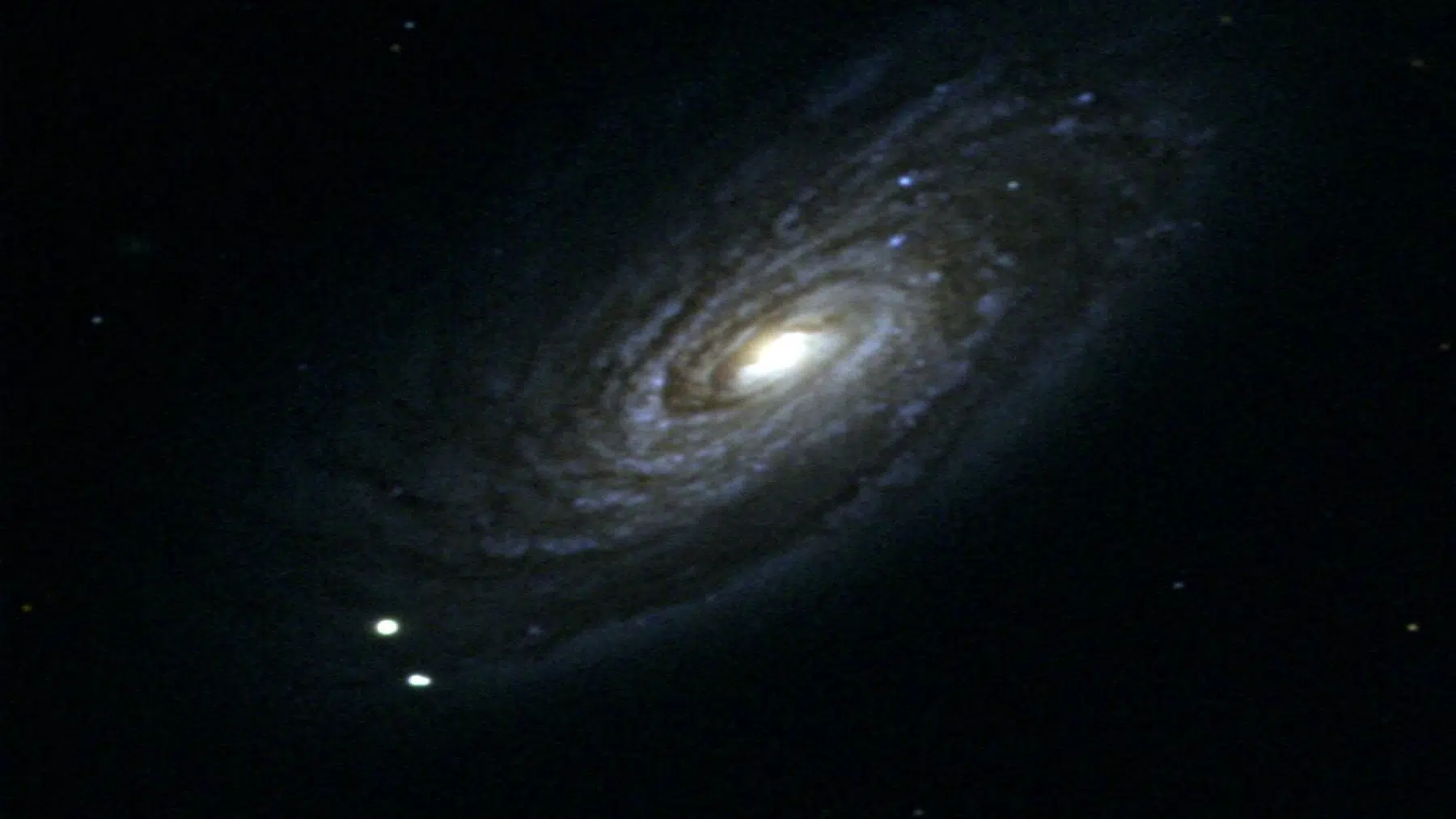
At first, M88 appeared to be just another normal spiral galaxy.
It was bright, had a lot of internal structure, and plenty of raw material for making new stars. But then came some unexpected Hubble images.
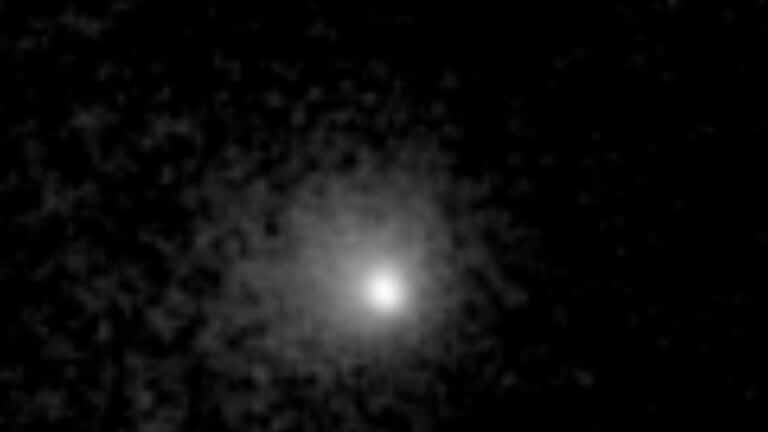
Gas was being stripped away from the galaxy, almost as if it were disintegrating due to friction in space.
The pictures raised a question for the astronomical community: What is the “cosmic invisible force,” and how did it escape all of our theories?
M88’s journey through the Virgo Cluster
M88 is located in the Virgo Cluster, a very crowded area containing many galaxies.
There’s more going on here than what can actually be seen.
As it moves through the Virgo Cluster, large quantities of gas trail off the back side. These trails look similar to those left behind by boats traveling on water.
They contain the fuel required to produce new stars.
As it continues to travel through this cluster over time, its ability to make new stars will be limited.
The early visible warning signs in M88
When astronomers observed M88’s behavior and noticed its changes, it took them a while to realize how concerned they should be.

Astronomers do not see the universe at one instant.
Instead, they compare what they see now with earlier data collected by older telescopes such as Hubble.
When they compared the earlier data with the newer observations, they saw three things clearly:
- Star-forming rates were decreasing.
- The outer layers of the galaxy seemed thinner.
- The tail of gas was increasing.
Because what was happening to M88 wasn’t random, scientists started to see it as part of a broader pattern tied to where it was. Other galaxies in the same environment were showing this as well.
Many different galaxies were experiencing this, so they realized there had to be an outside force influencing their behavior.
But no matter how much data scientists collected, nothing explained what that force was or what would prevent M88 from resisting it.
The NASA Hubble Space Telescope provided additional information that helped scientists understand what was happening.
The force quietly stripping the galaxy away
When scientists began analyzing M88’s changes and its possible causes more closely, they found themselves in a situation that was somewhat counterintuitive.
It was not because two galaxies had collided. Nor was it due to gravitational forces tearing the galaxy into pieces.
Instead, M88’s behavior was tied to conditions in the environment surrounding it, factors that scientists had not initially accounted for.
A slow and steady loss with no escape
Ram pressure stripping is what’s causing the gas to be pulled away.
As M88 moves through the Virgo Cluster, it travels through a massive cloud of diffuse gas.
That gas is hot and pressurized, and it creates resistance against the galaxy. Over time, the pressure builds until it becomes strong enough to remove gas from the galaxy.
It does not happen quickly or violently.
But it happens consistently, and that is the real issue facing galaxies such as M88.
They cannot escape this environment, slow down, or move away from the pressure building against them.
And so the galaxy continues to lose the material needed for continued survival.
Eventually, galaxies like M88 will run out of gas and have little to no potential to produce new stars. What may appear to observers as a healthy galaxy is actually being systematically depleted from the outside.
Over time, as more gas is removed from M88, it will fade into obscurity.
If this is already happening here, how many other galaxies out there are quietly losing the same battle?
Read the whole thing?
Get the week's signal, not the noise
Our sharpest reporting on energy, climate and nature — free, once a week.