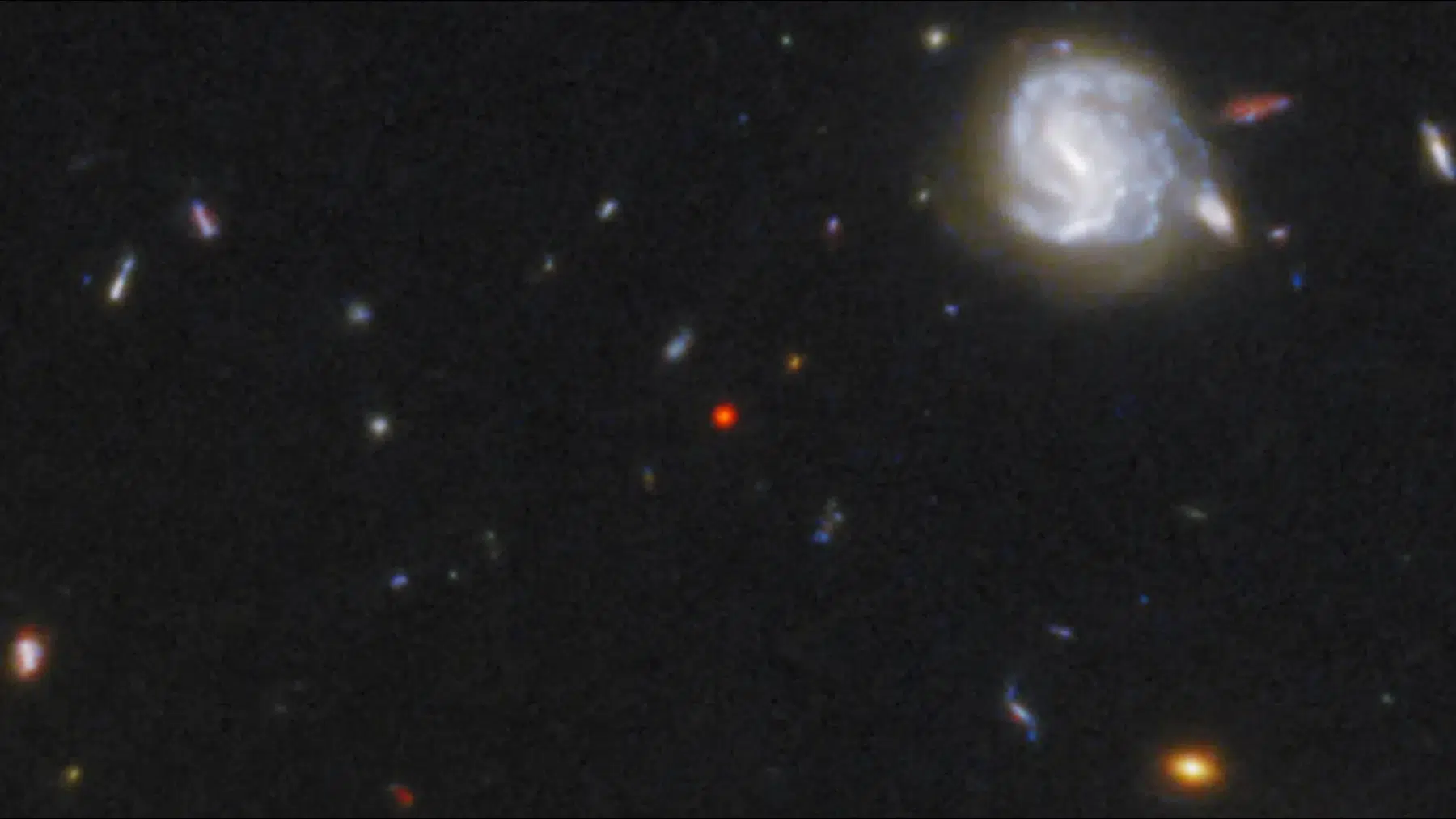
Using the James Webb Space Telescope, researchers have discovered something strange in space, something small was lighting up the darkness with a bright glow. The kind of light seen coming from galaxies a lot bigger than these tiny red dots. The “little red dots,” as they are being called, are the newest mysteries in space.
What do these little red dots spotted by the James Webb Space Telescope mean?
These red dots have fanned the flames of debate. Everything from their size, their glow, and the number of these red dots has fueled the dialogue around this discovery. Astronomers have been debating just how large these are and how bright they appear to be. Certain truths about the universe have been called into question by this discovery.
As observation of these red dots progressed, more questions arose, leaving researchers all the more puzzled. These red dots do not exhibit the telltale signs of normal galaxies. Something about the light they emitted was irregular; their color was too red, and their energy signatures did not match anything experts had encountered before. Are these red dots the result of early star formation or simply an unseen oddity of space? These questions orbited the minds of astronomers who would be even more perplexed when they came to learn what these red dots truly are, and you are sure to be just as shocked.
The truth about the tiny red dots and what they actually are
These tiny red dots were not regular galaxies but hybrids. Systems where burgeoning galaxies and feeding supermassive black holes share the same space. What the James Webb Space Telescope was able to detect is a stunning discovery. Matter is being pulled in by black holes in a fiery process, which makes this region of space glow the way it does.
This discovery has added an intensity of its own when it comes to discussions and outlooks around the early universe. It has always been assumed that galaxies took millions of years to achieve a maturation in which black holes of this magnitude could exist. This exciting discovery by the James Webb Space Telescope shows that supermassive black holes were around just 570 million years after the Big Bang, which, in the grand scheme of the universe, is not a long time at all. The light that radiates from these “red dots” has journeyed over 13 billion light-years to reach us, which means these hybrids are easily among the oldest cosmic structures ever seen.
The James Webb Space Telescope frames the past in its lens
The James Webb Space Telescope made the process easy for researchers who believe these may be some of the brightest lights there are in space. The Webb has sharp clarity and infrared technology that make it better at achieving discoveries like this compared to other telescopes.
This all could very well mean that black holes and galaxies evolved together, using each other’s energy and, in essence, shaping space itself as they formed. The young galaxies formed stars, and their black holes grew larger and together, this affected the maturation of these galaxies.
These red dots might change some perceptions about space
They might even help us figure out how galaxies like the Milky Way came to be. Researchers are in search of the next surprise in space. Nobody thought these tiny red dots would flip our understanding of the early universe.
The James Webb Space Telescope didn’t just spot something new—it showed us these tiny red dots, which have changed our thinking of things in space. It’s stretched what we know and raised a whole bunch of new questions. The universe will continue to shock us for years to come, the more we keep exploring it.
Read the whole thing?
Get the week's signal, not the noise
Our sharpest reporting on energy, climate and nature — free, once a week.