
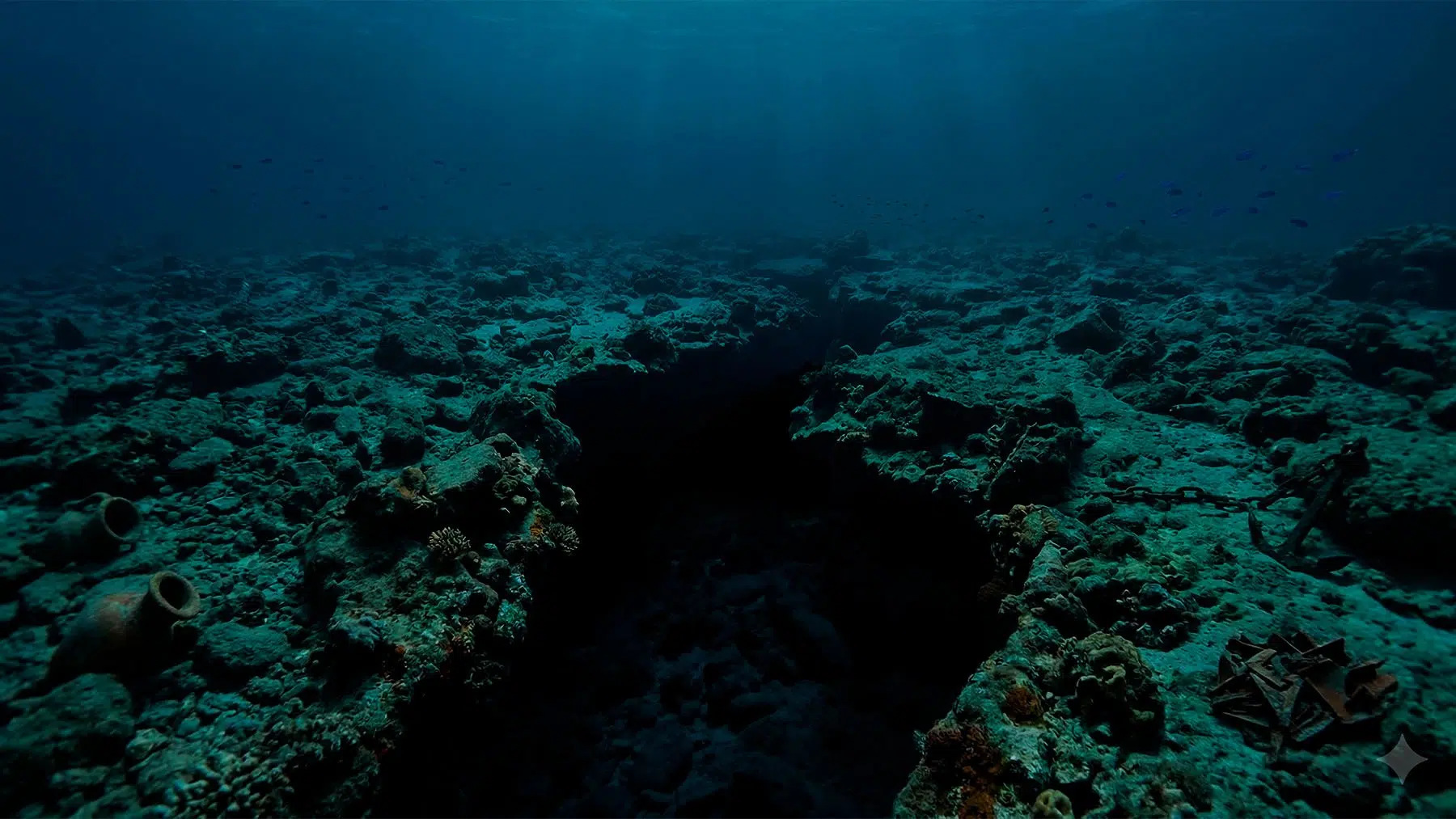
The Arctic holds some amazing forms of life.
For generations, the mysteries of the Arctic have been a challenge to understand. With new expeditions heading to the iconic freezing part of the world, scientists have made a remarkable discovery that has enabled us to create a new era of scientific research that will unfold over the coming years.
How would the discovery of a frozen world change your view of the planet?
How our mastery of technology redefined the human experience
Some anthropologists have argued that we as humans are biologically incomplete without the world of technology we have developed.
They argue that through our mastery of fire, the oldest tech on the planet, we have developed a new ability to digest foods that were previously impossible for us to stomach. We now understand that our brains and bodies are capable of much more than we ever knew.
The Industrial Revolution essentially disconnected us from our biological limits.
Through our progress, we have created a world of energy generation that our ancestors could only dream of. We now produce more energy in a single day than a medieval village could make in a lifetime.
New technology is emerging faster than we ever could have conceived
Our ability to study the planet has progressed hand-in-hand with our technological prowess over the past century.
Events like the Consumer Electronics Show have seen some of the largest corporations and tech companies giving the world a glimpse into the future of tech, with some astonishing creations being unveiled to the world.
Such as the latest AI-powered robot that has been specifically designed to do the more mundane household chores that we hate.
And the way we study our one and only home has changed, too. New expeditions to the most arid and empty regions of the globe have found remarkable discoveries that will change the way we look at the world and ourselves, to be honest.
Finding strange, unexplained forms of life can be a challenge for even the most advanced technology.
What this team found deep on the seafloor of the Fram Strait will play a vital role in the scientific progression we are making over the coming years and possibly long after that, too.
A recent study, “Deep-sea gas hydrate mounds and chemosynthetic fauna discovered at 3640 m on the Molloy Ridge, Greenland Sea,” published in Nature, has found a hidden world for science to explore.
What lies 10,000 feet beneath the ice of the Greenland Sea?
A team of scientists has found the deepest known gas hydrate mounds in the world.
The discovery has revealed a thriving and hidden ecosystem of life deep under the Greenland Sea on the Molloy Ridge. Using a remotely operated vehicle, researchers found Freya gas mounds that are made of frozen methane and crude oil.
The sites release huge plumes of methane bubbles approximately 10,990 feet below the water’s surface.
Despite the temperatures and overall volatile environment, these mounds are covered in a world of microscopic life, like siboglinid tubeworms, amphipods, rissoid snails, and even rare stalked sponges.
Scientists have been working extremely hard to study the unexplained creatures and regions of the world that have remained hidden for decades.
The discovery has enabled a new evolutionary link to be established
Researchers making unexpected discoveries have contributed to some interesting findings in recent years. But this discovery has shown us that the fauna on-site is remarkably similar to life found at hydrothermal vents at similar depths in the ocean.
The findings allow us to develop the understanding that life around these freezing temperatures is very similar to other distinct environments in the ocean. How will this discovery change future expeditions in the Arctic?
Read the whole thing?
Get the week's signal, not the noise
Our sharpest reporting on energy, climate and nature — free, once a week.


