Japanese manufacturers have been the main players in the automotive history for decades. From sustainable fuel to small yet powerful engines, all the way to creating the most impactful designs of the 1990s – Japan is the hub for masterpieces. The Nissan Skyline, Honda NSX, Mazda RX-7, every car has a story behind and that is what made the country one of the leaders in creating vehicles: dedication. Now, a new mechanism is coming with the promise of being one of the best ever. While many automakers are committing fully to battery-electric platforms, Mazda continues to chart a more measured path.
Japan leads in innovation, but also follows the tradition
The company has consistently emphasized a multi-solution strategy, investing not only in electrification but also in refining internal combustion. In 2019, Mazda introduced the Skyactiv-X — a spark-controlled compression ignition motor that combined the efficiency of diesel with the responsiveness of gasoline. It was a technical milestone that underscored Mazda’s belief that combustion could still evolve alongside emerging technologies.
This approach aligns with Mazda’s broader vision to reduce emissions without abandoning the core driving dynamics that define its brand. The company has pledged to achieve carbon neutrality across its entire supply chain by 2050, and part of that effort includes exploring carbon-neutral fuels and more thermally efficient engines.
Rather than viewing combustion as obsolete, Mazda sees it as a platform worth reimagining — especially for markets where EV infrastructure remains limited, or customer adoption is slower. This mindset sets the stage for its latest development, which could mark a significant leap forward in sustainable performance engineering.
Mazda is still betting on internal combustion
Mazda is still betting on internal combustion. As part of its long-term strategy, the company is developing a new four-cylinder gas engine that will carry the next generation of its Skyactiv technology. The upcoming engine, called Skyactiv-Z, is set to replace both the Skyactiv-X engines sold in markets abroad and the Skyactiv-G units currently offered in North America.
Some details were quietly shared in August during a quarterly financial presentation, and reported last week by Motor1. According to Mazda, the Skyactiv-Z will be built to meet stricter emission regulations, including the LEV IV standards recently approved by CARB in the United States. The state-of-the-art machine will run at a Lambda 1 air-fuel ratio — a perfectly balanced mix that helps reduce tailpipe emissions.
While no technical specs have been released yet — such as horsepower, torque, or whether the motor will be turbocharged — Mazda says it plans to launch the new unit in 2027. Eventually, the Skyactiv-Z system will also be applied to the company’s inline-six engines.
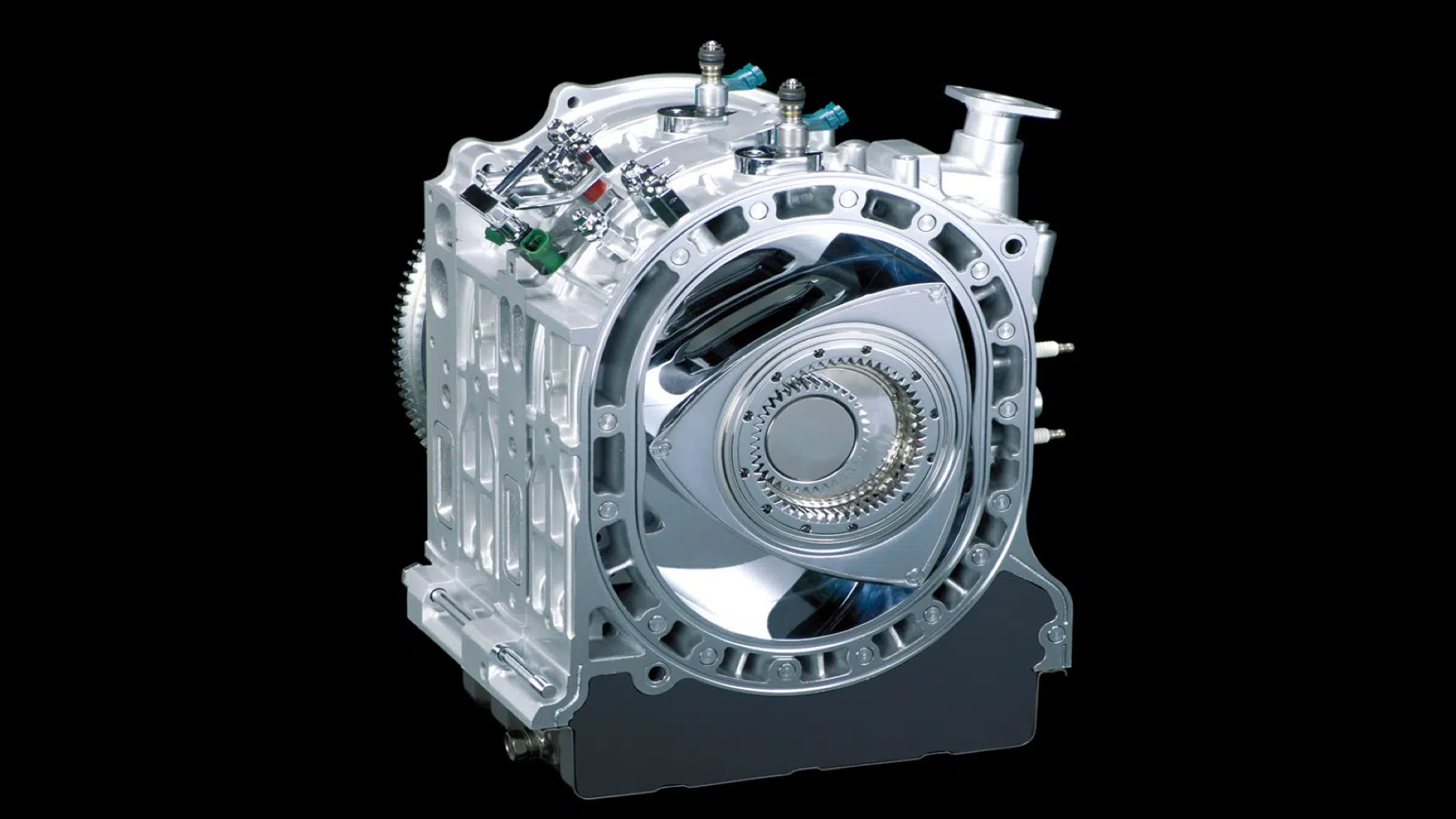
Mazda also confirmed it’s still working on rotary engine development. That came earlier in 2024 when the company, alongside Toyota and Subaru, announced a joint effort on next-gen combustion pieces. Mazda’s focus is on integrating rotary setup into EV setups, with prototypes including single- and dual-rotor configurations. There’s no specific timeline for release, but according to Mazda, progress is ongoing.
How company was created and early steps
Mazda’s timeline in the automotive industry dates back to 1920 when it was founded under the name of Toyo Cork Kogyo Co. Initially, the company’s focus was to sell cork products. Later, it started to sell machine tools. A decade later, Toyo created its first vehicle: a three-wheeled truck. This launched the brand into the automotive world, and it was in 1984 when they officially adopted the name Mazda – the focus now was to build vehicles with comfort for passengers and trucks, until the decision to take a shot in a sport car. One of the most iconic cars to follow was the Miata – the little car with eyes. From that moment on, it changed the industry forever.
Read the whole thing?
Get the week's signal, not the noise
Our sharpest reporting on energy, climate and nature — free, once a week.